

POMHEX |
Catalog No.GC62487
 One-Click Copy Product Info
|

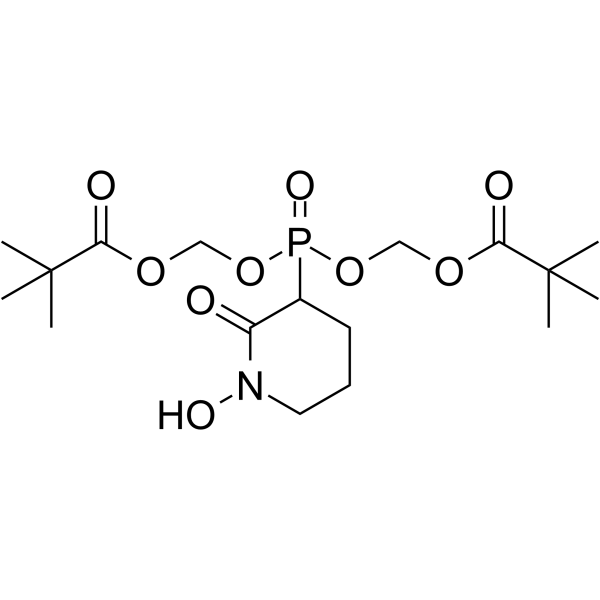
POMHEX, una mezcla racémica y un profÁrmaco de pivaloiloximetilo (POM) de HEX permeable a las células, es un potente inhibidor de la enolasa especÍfico de ENO2.
Products are for research use only. Not for human use. We do not sell to patients.
Cas No.: 2004714-34-3
Sample solution is provided at 25 µL, 10mM.
_1-3.$$$39978408@51.jpg');)
_1-9.$$$38538795@65.jpg');)
_1-9.$$$39112701@51.jpg');)
_1-7.$$$37316672@70.jpg');)
_366-372.$$$36198801@70.jpg');)
.$$$38565142@65.jpg');)
_1867-1883.$$$33248023@67.jpg');)
_eads6055.$$$39977546@45.jpg');)
_eadm9805.$$$40080571@45.jpg');)
_eadj3020.$$$39666821@45.jpg');)
_1-20.$$$39757301@28.jpg');)
_1-24.$$$38898113@28.jpg');)
_273-287.$$$36806353@46.jpg');)
_1-16.$$$37156877@44.jpg');)
_1-19.$$$37460805@44.jpg');)
_1291-1307.$$$34518654@46.jpg');)
POMHEX is a cell-permeable POM prodrug of HEX, a specific inhibitor of enolase 2 (ENO2). POMHEX can be used in studies related to ENO1-deficient cancers such as glioblastoma (GBM) and glycolytic metabolic reprogramming[1-4].
In vitro, POMHEX (35–50nM) was applied to oligodendroglioma cells (SF10417, BT88, BT54, TS603, NCH612) for 72 hours. POMHEX inhibited ENO2-dependent enolase activity, suppressed cell proliferation, and arrested cell cycle progression[5]. POMHEX (10μM) was applied to bevacizumab-resistant/regorafenib-resistant colorectal cancer cells (HCT116, SW620) for 24 hours. POMHEX reduced intracellular levels of the ENO2-derived metabolite phosphoenolpyruvate (PEP) and downregulated signaling along the PEP–HDAC1–β-catenin axis, thereby inhibiting β-catenin transcriptional activity. When combined with anti-angiogenic agents (bevacizumab/regorafenib), POMHEX further impaired the survival of drug-resistant cells[6].
In vivo, POMHEX (10mg/kg; once weekly; intra-articular injection) was administered to C57BL/6J mice for 16 consecutive weeks. POMHEX alleviated cartilage destruction and matrix loss in age-related osteoarthritis, maintained cartilage proteoglycan content and anabolic phenotype, suppressed catabolic expression including MMP3/MMP13, reduced osteophyte formation and improved subchondral bone microstructural changes, and relieved pain abnormalities[7]. POMHEX (20mg/kg; intraperitoneal injection; every other day) combined with bevacizumab (10mg/kg; intraperitoneal injection; twice weekly) was given to BALB/c nude mice bearing subcutaneous xenografts of bevacizumab-resistant HCT116 colorectal cancer for 15 days. The combination of POMHEX and bevacizumab inhibited tumor growth, reduced Ac-K49-β-catenin signaling activity in tumor tissues, decreased Ki67-positive proliferating cells and CD31-positive microvessel density, and increased cleaved caspase-3-positive apoptotic signals[8].
References:
[1] Yan VC, Pham CD, Ballato ES, et al. Prodrugs of a 1-Hydroxy-2-oxopiperidin-3-yl Phosphonate Enolase Inhibitor for the Treatment of ENO1-Deleted Cancers. J Med Chem. 2022 Oct 27;65(20):13813-13832.
[2] Yan VC, Barekatain Y, Lin YH, et al. Comparative Pharmacology of a Bis-Pivaloyloxymethyl Phosphonate Prodrug Inhibitor of Enolase after Oral and Parenteral Administration. ACS Pharmacol Transl Sci. 2023 Jan 6;6(2):245-252.
[3] Roster CP, LaVigne D, Milanes JE, et al. Enolase Inhibitors as Early Lead Therapeutics against Trypanosoma brucei. Pathogens. 2023 Oct 28;12(11):1290.
[4] Wang Q, Lang Z, Yin G, et al. Analysis on the involvement of phosphoglycerate mutase 1 in the aerobic glycolysis of melanoma cells. Int J Biol Macromol. 2024 Dec;283(Pt 4):137898.
[5] Udutha S, Batsios G, Taglang C, et al. The 1p/19q co-deletion induces targetable and imageable vulnerabilities in glucose metabolism in oligodendrogliomas. Neuro Oncol. 2026 Mar 21:noag063.
[6] Wang C, Huang M, Lin Y, et al. ENO2-derived phosphoenolpyruvate functions as an endogenous inhibitor of HDAC1 and confers resistance to antiangiogenic therapy. Nat Metab. 2023 Oct;5(10):1765-1786.
[7] Lin YH, Satani N, Hammoudi N, et al. An enolase inhibitor for the targeted treatment of ENO1-deleted cancers. Nat Metab. 2020 Dec;2(12):1413-1426.
[8] Hua F, Nan J, Wu R, et al. Enolase 2-mediated lactylation-dependent disruption of the GNL3-MDM2-p53 axis in age-related osteoarthritis. Cell Mol Biol Lett. 2026 May 26.
| Cell experiment [1]: | |
Cell lines | HCT116 (human colorectal carcinoma), SW620 (human colorectal adenocarcinoma) |
Preparation Method | Cells were maintained in Dulbecco's minimal essential medium (DMEM) supplemented with 10% heat-inactivated fetal bovine serum and 1% penicillin–streptomycin at 37°C in a humidified atmosphere containing 5% CO₂. Regorafenib-resistant HCT116 and SW620 cells were treated with POMHEX at 10μM, either alone or in combination with regorafenib (10μM). |
Reaction Conditions | 10μM; 24h |
Applications | POMHEX reduced the intracellular phosphoenolpyruvate (PEP) concentration in bevacizumab-resistant HCT116 cells, reduced the protein levels of Ac-K49-β-catenin and the neuroendocrine differentiation marker SYP in drug-resistant CRC cells, inhibited β-catenin transcriptional activity in both bevacizumab-resistant and regorafenib-resistant CRC cells, and synergized with regorafenib (10μM) to reduce the viability of regorafenib-resistant CRC cells. |
| Animal experiment [2]: | |
Animal models | 18-month-old male C57BL/6J mice (natural aging-related osteoarthritis model) |
Preparation Method | Mice were anesthetized with ketamine hydrochloride (200mg/kg) and xylazine (10mg/kg) via intraperitoneal injection, and POMHEX was administered into the knee joint via intra-articular injection using a 30-gauge needle once weekly for 16 weeks. |
Dosage form | 10mg/kg; intra-articular injection; once weekly for 16 weeks |
Applications | POMHEX improved cartilage integrity with smoother articular surfaces, enhanced proteoglycan content and elevated anabolic marker (collagen II) expression while reducing catabolic markers (MMP3, MMP13) and p53 protein levels in articular cartilage; micro-CT analysis revealed reduced osteophyte formation and improved subchondral bone architecture with lower OA pathology scores; POMHEX additionally alleviated pain sensitivity and normalized gait parameters. |
References: | |
| Cas No. | 2004714-34-3 | SDF | |
| Formula | C17H30NO9P | M.Wt | 423.4 |
| Solubility | DMSO : 100 mg/mL (236.18 mM; Need ultrasonic) | Storage | Store at -20°C |
| General tips | Please select the appropriate solvent to prepare the stock solution according to the
solubility of the product in different solvents; once the solution is prepared, please store it in
separate packages to avoid product failure caused by repeated freezing and thawing.Storage method
and period of the stock solution: When stored at -80°C, please use it within 6 months; when stored
at -20°C, please use it within 1 month. To increase solubility, heat the tube to 37°C and then oscillate in an ultrasonic bath for some time. |
||
| Shipping Condition | Evaluation sample solution: shipped with blue ice. All other sizes available: with RT, or with Blue Ice upon request. | ||
| Prepare stock solution | |||

|
1 mg | 5 mg | 10 mg |
| 1 mM | 2.3618 mL | 11.8092 mL | 23.6183 mL |
| 5 mM | 472.4 μL | 2.3618 mL | 4.7237 mL |
| 10 mM | 236.2 μL | 1.1809 mL | 2.3618 mL |
Step 1: Enter information below (Recommended: An additional animal making an allowance for loss during the experiment)
 g
μL
g
μL
Step 2: Enter the in vivo formulation (This is only the calculator, not formulation. Please contact us first if there is no in vivo formulation at the solubility Section.)
Calculation results:
Working concentration: mg/ml;
Method for preparing DMSO master liquid: mg drug pre-dissolved in μL DMSO ( Master liquid concentration mg/mL, Please contact us first if the concentration exceeds the DMSO solubility of the batch of drug. )
Method for preparing in vivo formulation: Take μL DMSO master liquid, next addμL PEG300, mix and clarify, next addμL Tween 80, mix and clarify, next add μL saline, mix and clarify.
Method for preparing in vivo formulation: Take μL DMSO master liquid, next add μL Corn oil, mix and clarify.
Note: 1. Please make sure the liquid is clear before adding the next solvent.
2. Be sure to add the solvent(s) in order. You must ensure that the solution obtained, in the previous addition, is a clear solution before proceeding to add the next solvent. Physical methods such as vortex, ultrasound or hot water bath can be used to aid dissolving.
3. All of the above co-solvents are available for purchase on the GlpBio website.
Quality Control & SDS
- View current batch:
- Purity: >98.00% Appearance: A solid
- COA (Certificate of Analysis)
- SDS (Safety Data Sheet)
- Datasheet
Average Rating: 5 (Based on Reviews and 9 reference(s) in Google Scholar.)