

KCC009 |
Catalog No.GC64531
 One-Click Copy Product Info
|

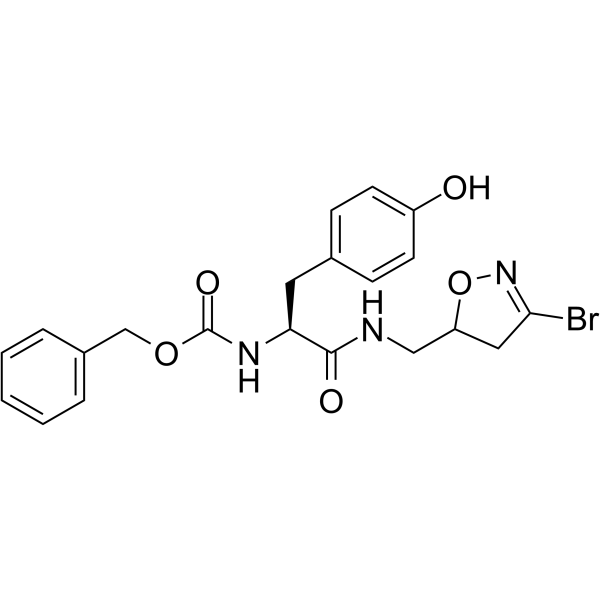
KCC009, un inhibidor de la transglutaminasa 2 (TG2), induce radiosensibilizaciÓn independiente de p53.
Products are for research use only. Not for human use. We do not sell to patients.
Cas No.: 744198-19-4
Sample solution is provided at 25 µL, 10mM.
_1-3.$$$39978408@51.jpg');)
_1-9.$$$38538795@65.jpg');)
_1-9.$$$39112701@51.jpg');)
_1-7.$$$37316672@70.jpg');)
_366-372.$$$36198801@70.jpg');)
.$$$38565142@65.jpg');)
_1867-1883.$$$33248023@67.jpg');)
_eads6055.$$$39977546@45.jpg');)
_eadm9805.$$$40080571@45.jpg');)
_eadj3020.$$$39666821@45.jpg');)
_1-20.$$$39757301@28.jpg');)
_1-24.$$$38898113@28.jpg');)
_273-287.$$$36806353@46.jpg');)
_1-16.$$$37156877@44.jpg');)
_1-19.$$$37460805@44.jpg');)
_1291-1307.$$$34518654@46.jpg');)
KCC009, a highly specific and irreversible inhibitor of transglutaminase 2 (TG2), can induce p53-independent radio-sensitization[1]. KCC009 can disrupt the adhesion plaque complex on the surface of glioblastoma cells, resulting in a decrease in cell migration ability, making the cells more sensitive to chemotherapy and leading to cell death[2]. KCC009 has been widely used to promote apoptosis of glioma and meningioma cells, and to enhance the chemosensitivity of cells[3].
In vitro, KCC009 pretreatment (250μM) for 1 hour can inhibit the production of cytokines in UV-irradiated keratinocytes and reduce the transcriptional activity of NF-κB[4]. Pretreatment of KCC009 (3.91μM; 24 hours) increased the expression of p21, Bax, p-caspase-3, and decreased expressions of Bcl-2 and Cyclin D in irradiated (6Gy) H1299/WT-p53 cells[5]. Treatment with 1mM KCC009 for 24 hours can induce apoptosis in U87 cells, accompanied by cell detachment from the cell culture plate and loss of cell membrane integrity[6].
In vivo, KCC009 treatment via intraperitoneal injection (20mg/kg; three times a day) for 6 days can alleviate the liver hypertrophy induced by 3,5-diethoxycarbonyl-1,4-dihydrocollidine (DDC) in mice[7]. Daily intraperitoneal injection of a 50mg/kg dose of KCC009 for 6 weeks prevented the increase in total calcium extraction in the aortic tissue of rats induced by warfarin [8].
References:
[1] Frese-Schaper M, Schardt J A, Sakai T, et al. Inhibition of tissue transglutaminase sensitizes TRAIL-resistant lung cancer cells through upregulation of death receptor 5[J]. FEBS letters, 2010, 584(13): 2867-2871.
[2] Yuan L, Behdad A, Holmes T, et al. Tissue transglutaminase 2 inhibitor, KCC009 results in disruption of focal adhesion complexes in glioblastoma cells with subsequent loss of cellular motility and sensitization to cell death[J]. Cancer Research, 2008, 68(9_Supplement): LB-193-LB-193.
[3] Yuan L, Behdad A, Siegel M, et al. Tissue transgluaminase 2 expression in meningiomas[J]. Journal of neuro-oncology, 2008, 90(2): 125-132.
[4] Lee S J, Lee K B, Son Y H, et al. Transglutaminase 2 mediates UV-induced skin inflammation by enhancing inflammatory cytokine production[J]. Cell death & disease, 2017, 8(10): e3148-e3148.
[5] Huayin S, Dong Y, Chihong Z, et al. Transglutaminase 2 inhibitor KCC009 induces p53-independent radiosensitization in lung adenocarcinoma cells[J]. Medical science monitor: international medical journal of experimental and clinical research, 2016, 22: 5041.
[6] Yuan L, Choi K, Khosla C, et al. Tissue transglutaminase 2 inhibition promotes cell death and chemosensitivity in glioblastomas[J]. Molecular cancer therapeutics, 2005, 4(9): 1293-1302.
[7] Strnad P, Siegel M, Toivola D M, et al. Pharmacologic transglutaminase inhibition attenuates drug-primed liver hypertrophy but not Mallory body formation[J]. FEBS letters, 2006, 580(9): 2351-2357.
[8] Beazley K E, Banyard D, Lima F, et al. Transglutaminase inhibitors attenuate vascular calcification in a preclinical model[J]. Arteriosclerosis, thrombosis, and vascular biology, 2013, 33(1): 43-51.
| Cell experiment [1]: | |
Cell lines | U87 cells |
Preparation Method | U87 cells were cultured in MEM medium supplemented with 10% fetal bovine serum (FBS), 100units/ml penicillin, 100μg/ml streptomycin, 0.1mM nonessential amino acids, 1mM sodium pyruvate, and 2mM glutamine at 37℃ in the presence of 5% CO2. After cells reached 60% confluence, groups were treated with vehicle (1% DMSO) or with 0.1, 0.5, and 1.0mM KCC009, respectively, for 24h. Analyze the rate of cell apoptosis. |
Reaction Conditions | 0.1, 0.5, and 1mM; 24h |
Applications | KCC009 treatment significantly enhanced the apoptosis of U87 cells in a dose-dependent manner. |
| Animal experiment [2]: | |
Animal models | C3H mice |
Preparation Method | C3H mice (8-week-old) were housed in temperature (23±2°C) and light-controlled (12:12-hour light-dark cycle) animal care facility. Mice were fed a powdered diet containing 0.1% DDC for 3 months. Mice were recovered for 4 weeks on a standard diet (termed “primed mice” after recovery), then divided into 3 groups (8 mice/group). One group was given KCC009 alone (20mg/kg; three times a day), and the remaining two groups were re-fed the DDC-containing diet (6 days) either alone or with KCC009 (20mg/kg; three times a day). Collect the mouse liver for analysis. |
Dosage form | 20mg/kg; three times a day for 6 days; i.p. |
Applications | KCC009 treatment alleviated the liver hypertrophy induced by DDC in mice. |
References: | |
| Cas No. | 744198-19-4 | SDF | |
| Formula | C21H22BrN3O5 | M.Wt | 476.32 |
| Solubility | DMSO : 250 mg/mL (524.86 mM; Need ultrasonic) | Storage | 4°C, protect from light |
| General tips | Please select the appropriate solvent to prepare the stock solution according to the
solubility of the product in different solvents; once the solution is prepared, please store it in
separate packages to avoid product failure caused by repeated freezing and thawing.Storage method
and period of the stock solution: When stored at -80°C, please use it within 6 months; when stored
at -20°C, please use it within 1 month. To increase solubility, heat the tube to 37°C and then oscillate in an ultrasonic bath for some time. |
||
| Shipping Condition | Evaluation sample solution: shipped with blue ice. All other sizes available: with RT, or with Blue Ice upon request. | ||
| Prepare stock solution | |||

|
1 mg | 5 mg | 10 mg |
| 1 mM | 2.0994 mL | 10.4971 mL | 20.9943 mL |
| 5 mM | 419.9 μL | 2.0994 mL | 4.1989 mL |
| 10 mM | 209.9 μL | 1.0497 mL | 2.0994 mL |
Step 1: Enter information below (Recommended: An additional animal making an allowance for loss during the experiment)
 g
μL
g
μL
Step 2: Enter the in vivo formulation (This is only the calculator, not formulation. Please contact us first if there is no in vivo formulation at the solubility Section.)
Calculation results:
Working concentration: mg/ml;
Method for preparing DMSO master liquid: mg drug pre-dissolved in μL DMSO ( Master liquid concentration mg/mL, Please contact us first if the concentration exceeds the DMSO solubility of the batch of drug. )
Method for preparing in vivo formulation: Take μL DMSO master liquid, next addμL PEG300, mix and clarify, next addμL Tween 80, mix and clarify, next add μL saline, mix and clarify.
Method for preparing in vivo formulation: Take μL DMSO master liquid, next add μL Corn oil, mix and clarify.
Note: 1. Please make sure the liquid is clear before adding the next solvent.
2. Be sure to add the solvent(s) in order. You must ensure that the solution obtained, in the previous addition, is a clear solution before proceeding to add the next solvent. Physical methods such as vortex, ultrasound or hot water bath can be used to aid dissolving.
3. All of the above co-solvents are available for purchase on the GlpBio website.
Quality Control & SDS
- View current batch:
- Purity: >98.00% Appearance: A solid
- COA (Certificate of Analysis)
- SDS (Safety Data Sheet)
- Datasheet
Average Rating: 5 (Based on Reviews and 30 reference(s) in Google Scholar.)