
Inicio>>Signaling Pathways>> Others>>NSC 617145

NSC 617145

Catalog No.GC18507

NSC 617145 es un inhibidor selectivo de la helicasa del sÍndrome de Werner (WRN) con un valor IC50 de 230 nM. NSC 617145 inhibe la WRN ATPasa e induce roturas de doble cadena (DSB) y anomalÍas cromosÓmicas. NSC 617145 muestra selectividad para WRN sobre helicasas BLM, FANCJ, ChlR1, RecQ y UvrD.

Products are for research use only. Not for human use. We do not sell to patients.
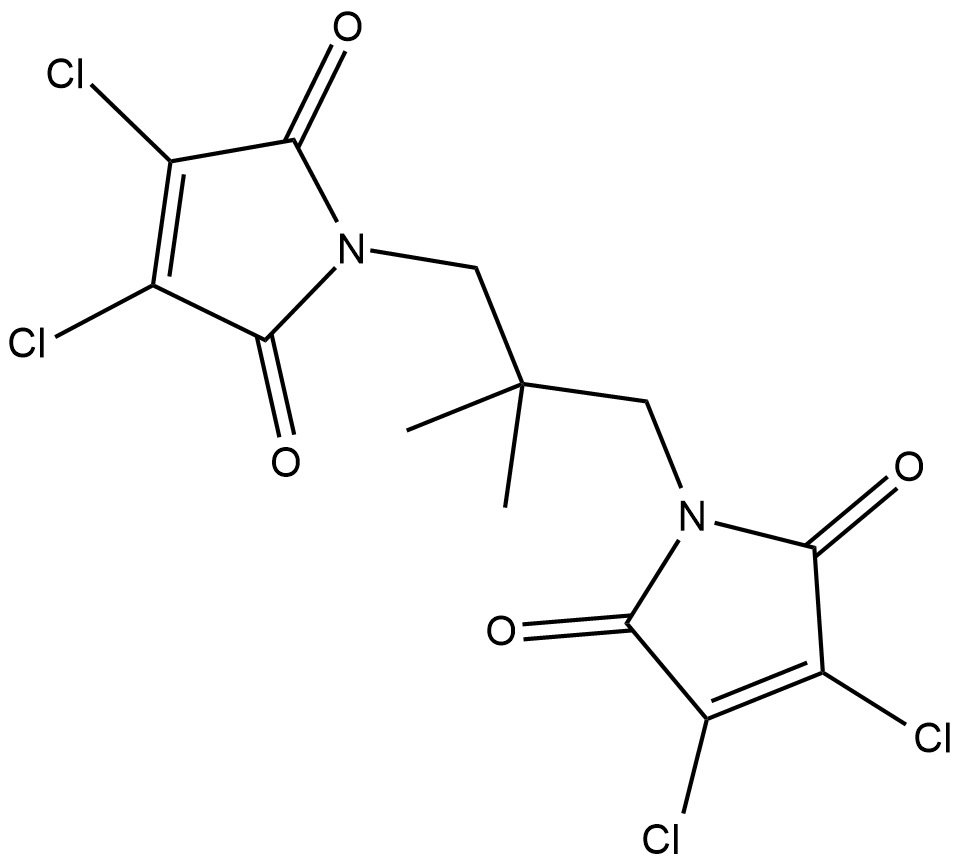
NSC 617145 Chemical Structure

Cas No.: 203115-63-3

Tamaño Precio Disponibilidad Cantidad
10mM (in 1mL DMSO)
62,00 $
Disponible
1mg
24,00 $
Disponible
5mg
56,00 $
Disponible
10mg
84,00 $
Disponible
50mg
196,00 $
Disponible
100mg
315,00 $
Disponible

Tel:(909) 407-4943 Email: sales@glpbio.com


Reseñas de cliente

Based on customer reviews.

Sample solution is provided at 25 µL, 10mM.

Product has been cited by 3 publications

Description of NSC 617145

NSC 617145 is targeted inhibitor of werner syndrome helicase (WRN) helicase, with an IC50 value of 230nM [1]. NSC 617145 can induce synthetic lethality via a genetic-based and/or chemically induced mechanism and render human cells deficient in the Fanconi Anemia (FA) pathway hypersensitive to the DNA cross-linking agent mitomycin C (MMC) in a WRN-dependent manner[2]. NSC 617145 has been widely used as an anti-cancer agent and has been applied in various cancer cell models to induce DNA damage[3].

In vitro, NSC 617145 treatment for 48 hours significantly inhibited the proliferation of PC3 cells, K562 cells, and HeLa cells, with IC50 values of 184.6 ± 36.3, 20.3 ± 11.5, and 237.0 ± 120.2nM, respectively[4]. Treatment with 250nM NSC 617145 for 4 days significantly reduced the number of LMY1 cells and induced cell apoptosis[5]. NSC 617145 treatment for 48 hours exhibited significant cytotoxicity in normal human liver LX2 cells and normal human renal epithelial HK2 cells, with the IC50 values of 1.81 ± 0.27μM and 5.64 ± 0.96μM, respectively[6].

References:
[1] Aggarwal M, Banerjee T, Sommers J A, et al. Werner syndrome helicase has a critical role in DNA damage responses in the absence of a functional fanconi anemia pathway[J]. Cancer research, 2013, 73(17): 5497-5507.
[2] Datta A, Brosh Jr R M. New insights into DNA helicases as druggable targets for cancer therapy[J]. Frontiers in molecular biosciences, 2018, 5: 59.
[3] Aggarwal M, Banerjee T, Sommers J A, et al. Targeting an Achilles’ heel of cancer with a WRN helicase inhibitor[J]. Cell cycle, 2013, 12(20): 3329-3335.
[4] Li H, Yu J, Yu G, et al. Design and synthesis of N-aryl-2-trifluoromethyl-quinazoline-4-amine derivatives as potential Werner-dependent antiproliferative agents[J]. Molecular Diversity, 2025, 29(1): 195-214.
[5] Moles R, Bai X T, Chaib-Mezrag H, et al. WRN-targeted therapy using inhibitors NSC 19630 and NSC 617145 induce apoptosis in HTLV-1-transformed adult T-cell leukemia cells[J]. Journal of hematology & oncology, 2016, 9(1): 121.
[6] Yu J, Yu G, Cheng S, et al. Quinazoline Derivative kzl052 Suppresses Prostate Cancer by Targeting WRN Helicase to Stabilize DNA Replication Forks[J]. International Journal of Molecular Sciences, 2025, 26(13): 6093.

Protocol of NSC 617145

Cell experiment [1]:

Cell lines

LMY1 cells

Preparation Method

LMY1 cells were cultured in RPMI-1640 medium supplemented with penicillin, streptomycin and 10% fetal bovine serum (FBS). The cells were treated with NSC 617145 (0.02, 0.2, 2, and 20μM) or DMSO as a control. After 96 hours, the inhibition of cell growth was measured by cell counting.

Reaction Conditions

0.02, 0.2, 2, and 20μM; 96h

Applications

NSC 617145 treatment significantly inhibited the cell proliferation of LMY1 cells.

References:
[1] Moles R, Bai X T, Chaib-Mezrag H, et al. WRN-targeted therapy using inhibitors NSC 19630 and NSC 617145 induce apoptosis in HTLV-1-transformed adult T-cell leukemia cells[J]. Journal of hematology & oncology, 2016, 9(1): 121.

Chemical Properties of NSC 617145

Cas No. 203115-63-3 SDF
Chemical Name 1,1'-(2,2-dimethyl-1,3-propanediyl)bis[3,4-dichloro-1H-pyrrole-2,5-dione
Canonical SMILES CC(CN(C(C(Cl)=C1Cl)=O)C1=O)(C)CN2C(C(Cl)=C(Cl)C2=O)=O
Formula C13H10Cl4N2O4 M.Wt 400
Solubility 1mg/mL in DMSO, 2mg/mL in DMF Storage Store at -20°C
General tips Please select the appropriate solvent to prepare the stock solution according to the solubility of the product in different solvents; once the solution is prepared, please store it in separate packages to avoid product failure caused by repeated freezing and thawing.Storage method and period of the stock solution: When stored at -80°C, please use it within 6 months; when stored at -20°C, please use it within 1 month.
To increase solubility, heat the tube to 37°C and then oscillate in an ultrasonic bath for some time.
Shipping Condition Evaluation sample solution: shipped with blue ice. All other sizes available: with RT, or with Blue Ice upon request.

Complete Stock Solution Preparation Table of NSC 617145

Prepare stock solution
1 mg 5 mg 10 mg
1 mM 2.5 mL 12.5 mL 25 mL
5 mM 500 μL 2.5 mL 5 mL
10 mM 250 μL 1.25 mL 2.5 mL
  • Molarity Calculator

  • Dilution Calculator

  • Molecular Weight Calculator

Mass
=
Concentration
x
Volume
x
MW*


**When preparing stock solutions always use the batch-specific molecular weight of the product found on the vial label and MSDS / CoA (available online).

Calculate

In vivo Formulation Calculator (Clear solution) of NSC 617145

Step 1: Enter information below (Recommended: An additional animal making an allowance for loss during the experiment)

mg/kg g μL

Step 2: Enter the in vivo formulation (This is only the calculator, not formulation. Please contact us first if there is no in vivo formulation at the solubility Section.)

% DMSO % % Tween 80 % ddH2O
%DMSO %

Calculation results:

Working concentration: mg/ml;

Method for preparing DMSO master liquid: mg drug pre-dissolved in μL DMSO ( Master liquid concentration mg/mL, Please contact us first if the concentration exceeds the DMSO solubility of the batch of drug. )

Method for preparing in vivo formulation: Take μL DMSO master liquid, next addμL PEG300, mix and clarify, next addμL Tween 80, mix and clarify, next add μL ddH2O, mix and clarify.

Method for preparing in vivo formulation: Take μL DMSO master liquid, next add μL Corn oil, mix and clarify.

Note: 1. Please make sure the liquid is clear before adding the next solvent.
2. Be sure to add the solvent(s) in order. You must ensure that the solution obtained, in the previous addition, is a clear solution before proceeding to add the next solvent. Physical methods such as vortex, ultrasound or hot water bath can be used to aid dissolving.
3. All of the above co-solvents are available for purchase on the GlpBio website.

Product Documents

Quality Control & SDS

View current batch:

Reseñas

Review for NSC 617145

Average Rating: 5 ★★★★★ (Based on Reviews and 1 reference(s) in Google Scholar.)

5 Star
100%
4 Star
0%
3 Star
0%
2 Star
0%
1 Star
0%
Review for NSC 617145

GLPBIO products are for RESEARCH USE ONLY. Please make sure your review or question is research based.

Required fields are marked with *

You may receive emails regarding this submission. Any emails will include the ability to opt-out of future communications.
