

AC 253 |
رقم الكتالوجGC50495
 One-Click Copy Product Info
|

مانع للأميلين (AMY3)
Products are for research use only. Not for human use. We do not sell to patients.
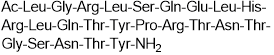
Cas No.: 151804-79-4
Sample solution is provided at 25 µL, 10mM.
_1-3.$$$39978408@51.jpg');)
_1-9.$$$38538795@65.jpg');)
_1-9.$$$39112701@51.jpg');)
_1-7.$$$37316672@70.jpg');)
_366-372.$$$36198801@70.jpg');)
.$$$38565142@65.jpg');)
_1867-1883.$$$33248023@67.jpg');)
_eads6055.$$$39977546@45.jpg');)
_eadm9805.$$$40080571@45.jpg');)
_eadj3020.$$$39666821@45.jpg');)
_1-20.$$$39757301@28.jpg');)
_1-24.$$$38898113@28.jpg');)
_273-287.$$$36806353@46.jpg');)
_1-16.$$$37156877@44.jpg');)
_1-19.$$$37460805@44.jpg');)
_1291-1307.$$$34518654@46.jpg');)
AC 253 is an amylin (AMY3) receptor antagonist. AC 253 inhibits 125I-adrenomedullin binding (IC50=25nM) and blocks adrenomedullin-stimulated cAMP generation[1-2]. AC 253 is used in research related to Alzheimer's disease and diabetes[3-4].
In vitro, N2a cells were pre-treated with AC 253 (10μM) for 8 hours, followed by co-culture with AMY3 receptor-enriched extracellular vesicles (EVs) and Aβ (10μM) for 48 hours. AC 253 blocked the protective effect of AMY3 EVs against Aβ-induced cytotoxicity[5]. Human fetal microglial cells were pre-treated with AC 253 (10μM) for 24 hours, followed by exposure to Amylin (1μM) or Aβ1-42 (1μM) for 6 hours. AC 253 blocked the Aβ- or Amylin-induced increase in intracellular calcium and attenuated the activation of NLRP3 and caspase-1 as well as the release of TNFα and IL-1β[6].
In vivo, Sprague-Dawley rats fasted for 24 hours were pre-treated with an intraperitoneal injection of AC 253 (500μg/kg) 1 hour before the onset of darkness. AC 253 significantly attenuated the anorectic effects induced by cholecystokinin (CCK; 0.5μg/kg) and bombesin (BBS; 0.5μg/kg)[7]. AC 253 (2.4μg/day) was continuously administered via intracerebroventricular infusion to TgCRND8 Alzheimer's disease model mice for 5 months. AC 253 significantly improved the spatial memory and learning ability of the mice, increased the expression of synaptic proteins (synapsin 1 and synaptophysin), and reduced the activation of the microglial marker Iba-1[8].
References:
[1] Coppock HA, Owji AA, Austin C, et al. Rat-2 fibroblasts express specific adrenomedullin receptors, but not calcitonin-gene-related-peptide receptors, which mediate increased intracellular cAMP and inhibit mitogen-activated protein kinase activity. Biochem J. 1999 Feb 15;338 ( Pt 1)(Pt 1):15-22.
[2] Jhamandas JH, Li Z, Westaway D, et al. Actions of β-amyloid protein on human neurons are expressed through the amylin receptor. Am J Pathol. 2011 Jan;178(1):140-9.
[3] Lutz TA, Tschudy S, Rushing PA, et al. Attenuation of the anorectic effects of cholecystokinin and bombesin by the specific amylin antagonist AC 253. Physiol Behav. 2000 Sep 15;70(5):533-6.
[4] Soudy R, Kimura R, Patel A, et al. Short amylin receptor antagonist peptides improve memory deficits in Alzheimer's disease mouse model. Sci Rep. 2019 Jul 29;9(1):10942.
[5] Soudy R, Kimura R, Fu W, et al. Extracellular vesicles enriched with amylin receptor are cytoprotective against the Aß toxicity in vitro. PLoS One. 2022 Apr 14;17(4):e0267164.
[6] Fu W, Vukojevic V, Patel A, et al. Role of microglial amylin receptors in mediating beta amyloid (Aβ)-induced inflammation. J Neuroinflammation. 2017 Oct 6;14(1):199.
[7] Lutz TA, Tschudy S, Rushing PA, et al. Attenuation of the anorectic effects of cholecystokinin and bombesin by the specific amylin antagonist AC 253. Physiol Behav. 2000 Sep 15;70(5):533-6.
[8] Soudy R, Patel A, Fu W, et al. Cyclic AC253, a novel amylin receptor antagonist, improves cognitive deficits in a mouse model of Alzheimer's disease. Alzheimers Dement (N Y). 2016 Dec 10;3(1):44-56.
| Cell experiment [1]: | |
Cell lines | N2a mouse neuroblastoma cells |
Preparation Method | N2a cells were grown in DMEM with 5% FBS. AC 253 (10μM) was used to preincubate the cells for 8 hours, followed by the addition of AMY3 receptor-enriched extracellular vesicles (EVs) and Aβ for 48 hours in serum-free media. |
Reaction Conditions | 10μM; 8h preincubation. |
Applications | Pre-treatment with the AC 253 blocked the cytoprotective effects of AMY3 EVs against Aβ-induced toxicity. |
| Animal experiment [2]: | |
Animal models | TgCRND8 transgenic mice and wild-type (Wt) littermate mice |
Preparation Method | Mice were implanted with minipumps for continuous intracerebroventricular infusion of AC 253 (2.4μg/day in artificial CSF) or artificial CSF (control) for 5 months beginning at the age of 3 months. Behavioral tests (Morris Water Maze and T-maze) were performed at 8 months of age. |
Dosage form | 2.4μg/day; intracerebroventricular; for 5 months. |
Applications | Chronic intracerebroventricular infusion of AC 253 improved spatial memory and learning deficits in aged TgCRND8 mice. AC 253 increased the expression of synaptic proteins synapsin 1 and synaptophysin, and significantly reduced the expression of the microglial marker Iba-1. |
References: | |
| Cas No. | 151804-79-4 | SDF | |
| Formula | C122H196N40O39 | M.Wt | 2847.11 |
| الذوبان | Soluble in DMSO | Storage | Store at -20°C |
| General tips | Please select the appropriate solvent to prepare the stock solution according to the
solubility of the product in different solvents; once the solution is prepared, please store it in
separate packages to avoid product failure caused by repeated freezing and thawing.Storage method
and period of the stock solution: When stored at -80°C, please use it within 6 months; when stored
at -20°C, please use it within 1 month. To increase solubility, heat the tube to 37°C and then oscillate in an ultrasonic bath for some time. |
||
| Shipping Condition | Evaluation sample solution: shipped with blue ice. All other sizes available: with RT, or with Blue Ice upon request. | ||
| Prepare stock solution | |||

|
1 mg | 5 mg | 10 mg |
| 1 mM | 351.2 μL | 1.7562 mL | 3.5123 mL |
| 5 mM | 70.2 μL | 351.2 μL | 702.5 μL |
| 10 mM | 35.1 μL | 175.6 μL | 351.2 μL |
Step 1: Enter information below (Recommended: An additional animal making an allowance for loss during the experiment)
 g
μL
g
μL
Step 2: Enter the in vivo formulation (This is only the calculator, not formulation. Please contact us first if there is no in vivo formulation at the solubility Section.)
Calculation results:
Working concentration: mg/ml;
Method for preparing DMSO master liquid: mg drug pre-dissolved in μL DMSO ( Master liquid concentration mg/mL, Please contact us first if the concentration exceeds the DMSO solubility of the batch of drug. )
Method for preparing in vivo formulation: Take μL DMSO master liquid, next addμL PEG300, mix and clarify, next addμL Tween 80, mix and clarify, next add μL saline, mix and clarify.
Method for preparing in vivo formulation: Take μL DMSO master liquid, next add μL Corn oil, mix and clarify.
Note: 1. Please make sure the liquid is clear before adding the next solvent.
2. Be sure to add the solvent(s) in order. You must ensure that the solution obtained, in the previous addition, is a clear solution before proceeding to add the next solvent. Physical methods such as vortex, ultrasound or hot water bath can be used to aid dissolving.
3. All of the above co-solvents are available for purchase on the GlpBio website.
Quality Control & SDS
- View current batch:
- Purity: >99.00% Appearance: A solid
- COA (Certificate of Analysis)
- SDS (Safety Data Sheet)
- Datasheet
Average Rating: 5 (Based on Reviews and 35 reference(s) in Google Scholar.)