

ML-290 (Synonyms: RXFP1 Agonist 8) |
رقم الكتالوجGC18594
 One-Click Copy Product Info
|

ML-290 هو الأول من نوعه في فئته وقوي مستقبلات الببتيد العائلي ريلاكسين / الأنسولين (RXFP1) ومنشط للجينات المضادة للليف ، مع EC50 من 94 نانومتر
Products are for research use only. Not for human use. We do not sell to patients.
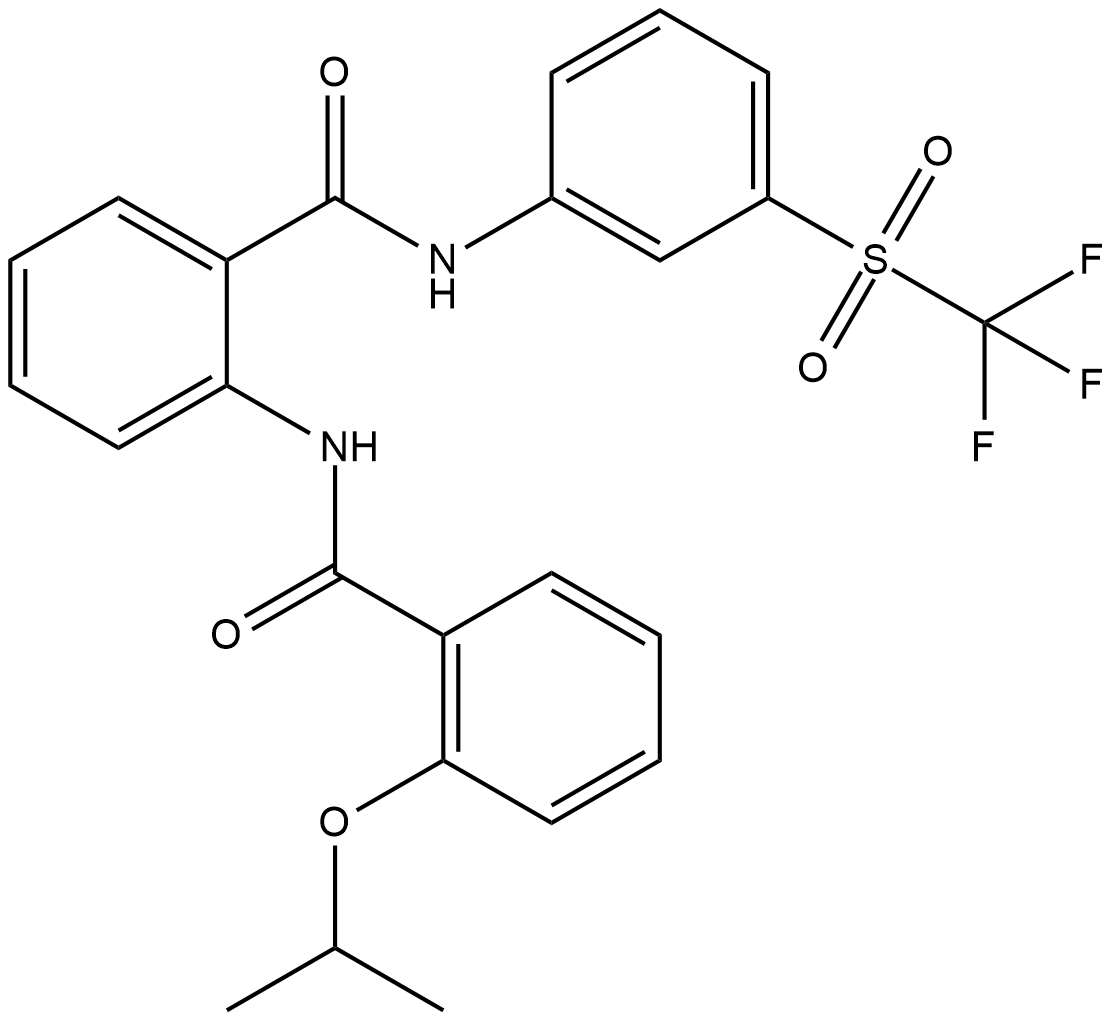
Cas No.: 1482500-76-4
Sample solution is provided at 25 µL, 10mM.
_1-3.$$$39978408@51.jpg');)
_1-9.$$$38538795@65.jpg');)
_1-9.$$$39112701@51.jpg');)
_1-7.$$$37316672@70.jpg');)
_366-372.$$$36198801@70.jpg');)
.$$$38565142@65.jpg');)
_1867-1883.$$$33248023@67.jpg');)
_eads6055.$$$39977546@45.jpg');)
_eadm9805.$$$40080571@45.jpg');)
_eadj3020.$$$39666821@45.jpg');)
_1-20.$$$39757301@28.jpg');)
_1-24.$$$38898113@28.jpg');)
_273-287.$$$36806353@46.jpg');)
_1-16.$$$37156877@44.jpg');)
_1-19.$$$37460805@44.jpg');)
_1291-1307.$$$34518654@46.jpg');)
ML-290 is the first potent, selective, and metabolically stable small-molecule biased allosteric agonist of the relaxin receptor RXFP1, with an EC50 value of 94nM[1,2]. ML-290 is metabolically stable and commonly used in research on fibrosis and inflammation-related diseases, such as chronic kidney disease and liver fibrosis[2,3].
In vitro, treatment of human cardiac fibroblasts (HCF) with ML-290 (1μM) for 72h promoted MMP-2 expression and inhibited TGF-β1-induced phosphorylation of Smad2 and Smad3[1]. In human hepatic stellate cells (HSCs), ML-290 (5μM) treatment for 72h reduced COL1A1 gene expression while increasing the expression of MMP1 and PPARGC1A[4]. In LX-2 cells, a 24h treatment with ML-290 (100μM) downregulated RXFP1 mRNA expression by 9.8 ± 6.4-fold[5]. In HEK293T cells transiently transfected with two rabbit RXFP1 receptor variants (R1-RXFP1 and R2-RXFP2), ML-290 (5μM) treatment for 60min effectively stimulated cAMP production, though with lower potency compared to its effect on human RXFP1[6].
In vivo, a single intraperitoneal injection of ML-290 (37mg/kg) concurrently with CCl4 in humanized hRXFP1/hRXFP1 mice significantly suppressed the upregulation of pro-fibrotic genes (Acta2, Col1a1, and Tgfb1) in the liver at 20h post-treatment[4]. Intravenous administration of ML-290 (100μg/25 g body weight) in humanized hRXFP1/hRXFP1 female mice significantly increased heart rate within 26-40min after injection[7]. In a unilateral ureteral obstruction (UUO) model, intraperitoneal injection of ML-290 (30mg/kg; once daily) for 5 days in humanized hRXFP1/hRXFP1 mice significantly reduced renal apoptosis and inhibited Erk1/2 activity[8].
References:
[1] KOCAN M, SARWAR M, ANG S Y, et al. ML290 is a biased allosteric agonist at the relaxin receptor RXFP1[J]. Scientific Reports, 2017, 7: 2968.
[2] XIAO J, CHEN C Z, HUANG Z, et al. Discovery, optimization, and biological activity of the first potent and selective small-molecule agonist series of human relaxin receptor 1 (RXFP1)[EB/OL]. Probe Reports from the NIH Molecular Libraries Program, 2013-05-08.
[3] NG H H, MEDINA D, AGOULNIK A I, et al. A Novel Human Relaxin Receptor Agonist, ML290, Attenuates Atherosclerosis-and Chronic Kidney Disease-Induced Vascular Calcification in Mice[J]. Circulation, 2020, 142(Suppl_3): A17021-A17021.
[4] KAFTANOVSKAYA E M, NG H H, SOULA M, et al. Therapeutic effects of a small molecule agonist of the relaxin receptor ML290 in liver fibrosis[J]. The FASEB Journal, 2019, 33(11): 12435.
[5] MCBRIDE A, HOY A M, BAMFORD M J, et al. In search of a small molecule agonist of the relaxin receptor RXFP1 for the treatment of liver fibrosis[J]. Scientific Reports, 2017, 7: 10806.
[6] HUANG Z, MYHR C, BATHGATE R A D, et al. Activation of relaxin family receptor 1 from different mammalian species by relaxin peptide and small-molecule agonist ML290[J]. Frontiers in Endocrinology, 2015, 6: 128.
[7] KAFTANOVSKAYA E M, SOULA M, MYHR C, et al. Human relaxin receptor is fully functional in humanized mice and is activated by small molecule agonist ML290[J]. Journal of the Endocrine Society, 2017, 1(6): 712-725.
[8] NG H H, SOULA M, RIVAS B, et al. Anti-apoptotic and matrix remodeling actions of a small molecule agonist of the human relaxin receptor, ML290 in mice with unilateral ureteral obstruction[J]. Frontiers in Physiology, 2021, 12: 650769.
| Cell experiment [1]: | |
|
Cell lines |
HCFs (fibrosis in human cardiac fibroblasts) |
|
Preparation Method |
HCFs were treated with ML-290 (1μM) for 72h and analysed for MMP-2 expression. The optical density (OD) of MMP-2 was measured using a GS710 Calibrated Imaging Densitomer. HCFs were plated into 24-well plates (0.7 × 10⁵ cells/well) and grown overnight to achieve a confluent monolayer. Cells were treated with ML-290 (1μM) in combination with TGF-β1 (2ng/ml final concentration) for 72h. Cells were serum-starved in M199 medium for 24h prior sample collection. Levels of p-Smad2 and p-Smad3 were detected using Sure-fire kits. |
|
Reaction Conditions |
1μM; 72h |
|
Applications |
ML-290 (1μM) increased MMP-2 expression in HCFs by 40%. Cells treated with TGF-β1 (2ng/ml) showed a 2.21 ± 0.17-fold increase in p-Smad2 and 1.41 ± 0.07-fold increase in p-Smad3. 1μM ML-290 (p-Smad2: 1.58 ± 0.34-fold/basal, p < 0.05; p-Smad3: 1.15 ± 0.05-fold/basal, p < 0.01) significantly inhibited the TGF-β1-induced increase in p-Smad2 and p-Smad3 in HCFs. |
| Animal experiment [2]: | |
|
Animal models |
C57BL/6 (humanized hRXFP1/hRXFP1 female mice) |
|
Preparation Method |
Heart rate (HR) was measured by tail cuff using a Non-Invasive Blood Pressure System. Basal measurements were recorded each minute for the first 10min. ML-290 (100μg/25g body weight) was administered via intravenous injection in the tail vein after which HR was recorded for 40min. |
|
Dosage form |
100μg/25g body weight; i.v. |
|
Applications |
IV injection of ML-290 (100μg/25g body weight) increased HR in unconscious hRXFP1 females but not wild-type (Wt) females. |
|
References: |
|
| Cas No. | 1482500-76-4 | SDF | |
| المرادفات | RXFP1 Agonist 8 | ||
| Chemical Name | 2-[[2-(1-methylethoxy)benzoyl]amino]-N-[3-[(trifluoromethyl)sulfonyl]phenyl]-benzamide | ||
| Canonical SMILES | O=S(C1=CC=CC(NC(C2=CC=CC=C2NC(C3=C(OC(C)C)C=CC=C3)=O)=O)=C1)(C(F)(F)F)=O | ||
| Formula | C24H21F3N2O5S | M.Wt | 506.5 |
| الذوبان | 0.14mg/mL in ethanol, 25mg/mL in DMSO, 30mg/mL in DMF | Storage | Store at -20°C |
| General tips | Please select the appropriate solvent to prepare the stock solution according to the
solubility of the product in different solvents; once the solution is prepared, please store it in
separate packages to avoid product failure caused by repeated freezing and thawing.Storage method
and period of the stock solution: When stored at -80°C, please use it within 6 months; when stored
at -20°C, please use it within 1 month. To increase solubility, heat the tube to 37°C and then oscillate in an ultrasonic bath for some time. |
||
| Shipping Condition | Evaluation sample solution: shipped with blue ice. All other sizes available: with RT, or with Blue Ice upon request. | ||
| Prepare stock solution | |||

|
1 mg | 5 mg | 10 mg |
| 1 mM | 1.9743 mL | 9.8717 mL | 19.7433 mL |
| 5 mM | 394.9 μL | 1.9743 mL | 3.9487 mL |
| 10 mM | 197.4 μL | 987.2 μL | 1.9743 mL |
Step 1: Enter information below (Recommended: An additional animal making an allowance for loss during the experiment)
 g
μL
g
μL
Step 2: Enter the in vivo formulation (This is only the calculator, not formulation. Please contact us first if there is no in vivo formulation at the solubility Section.)
Calculation results:
Working concentration: mg/ml;
Method for preparing DMSO master liquid: mg drug pre-dissolved in μL DMSO ( Master liquid concentration mg/mL, Please contact us first if the concentration exceeds the DMSO solubility of the batch of drug. )
Method for preparing in vivo formulation: Take μL DMSO master liquid, next addμL PEG300, mix and clarify, next addμL Tween 80, mix and clarify, next add μL saline, mix and clarify.
Method for preparing in vivo formulation: Take μL DMSO master liquid, next add μL Corn oil, mix and clarify.
Note: 1. Please make sure the liquid is clear before adding the next solvent.
2. Be sure to add the solvent(s) in order. You must ensure that the solution obtained, in the previous addition, is a clear solution before proceeding to add the next solvent. Physical methods such as vortex, ultrasound or hot water bath can be used to aid dissolving.
3. All of the above co-solvents are available for purchase on the GlpBio website.
Quality Control & SDS
- View current batch:
- Purity: >98.00% Appearance: A solid
- COA (Certificate of Analysis)
- SDS (Safety Data Sheet)
- Datasheet
Average Rating: 5 (Based on Reviews and 33 reference(s) in Google Scholar.)