

Azeliragon |
Catalog No.GC19053
 One-Click Copy Product Info
|

L'azéliragon (TTP488) est un inhibiteur biodisponible par voie orale du récepteur des produits terminaux de glycation avancée (RAGE) en cours de développement comme traitement potentiel pour ralentir la progression de la maladie chez les patients atteints de la maladie d'Alzheimer (MA) légère.
Products are for research use only. Not for human use. We do not sell to patients.
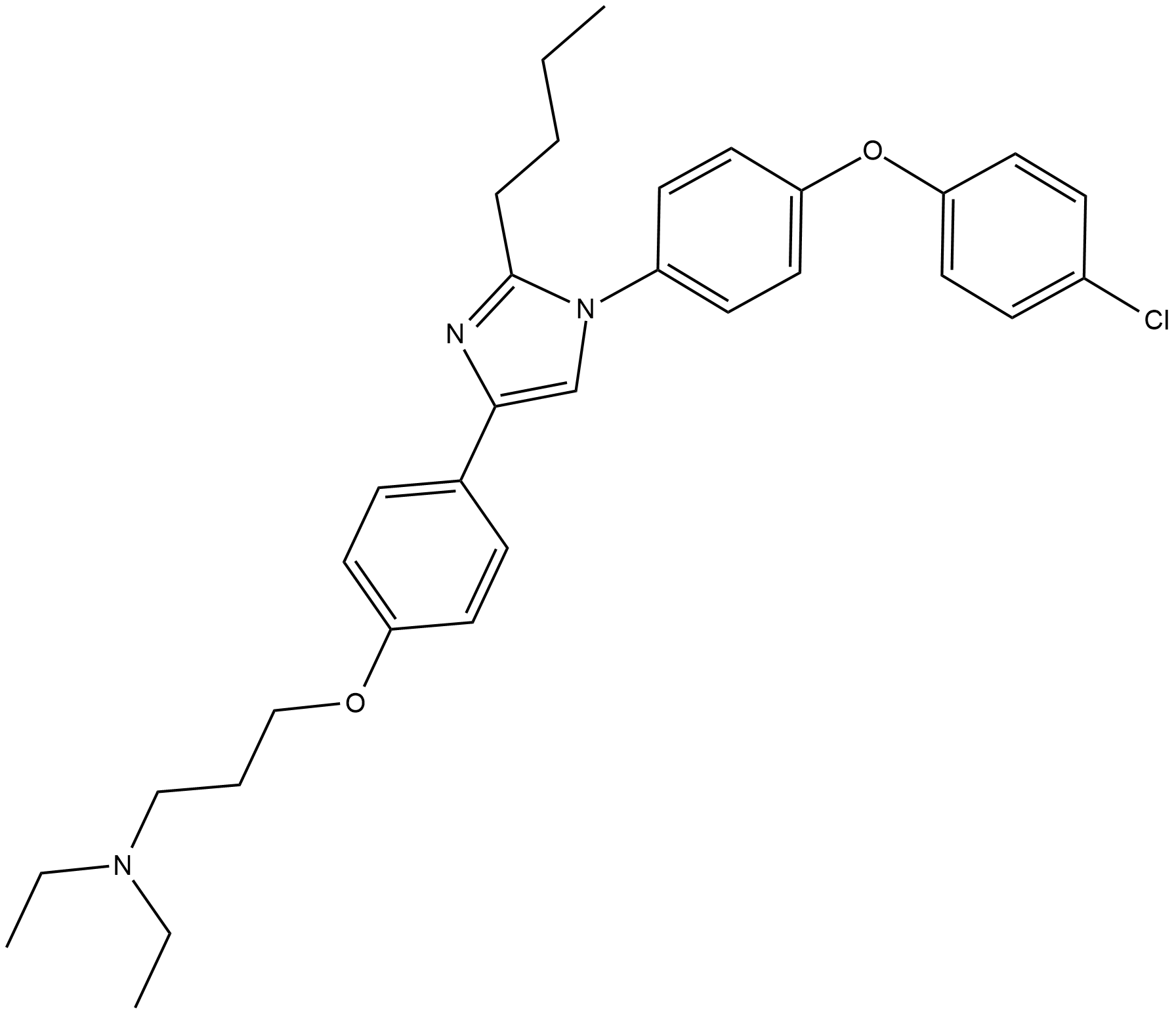
Cas No.: 603148-36-3
Sample solution is provided at 25 µL, 10mM.
_1-3.$$$39978408@51.jpg');)
_1-9.$$$38538795@65.jpg');)
_1-9.$$$39112701@51.jpg');)
_1-7.$$$37316672@70.jpg');)
_366-372.$$$36198801@70.jpg');)
.$$$38565142@65.jpg');)
_1867-1883.$$$33248023@67.jpg');)
_eads6055.$$$39977546@45.jpg');)
_eadm9805.$$$40080571@45.jpg');)
_eadj3020.$$$39666821@45.jpg');)
_1-20.$$$39757301@28.jpg');)
_1-24.$$$38898113@28.jpg');)
_273-287.$$$36806353@46.jpg');)
_1-16.$$$37156877@44.jpg');)
_1-19.$$$37460805@44.jpg');)
_1291-1307.$$$34518654@46.jpg');)
Azeliragon is a receptor for advanced glycation end-products (RAGE) antagonist. Azeliragon blocks binding of RAGE to ligands including AGEs, Aβ, HMGB1 and S100B to inhibit receptor activation. Azeliragon reduces release of pro-inflammatory factors including IL-1, TNF-α and IL-6 by suppressing downstream inflammatory signals such as NF-κB. Azeliragon is useful for studies on Alzheimer's disease, diabetes-associated cognitive impairment, neuroinflammation and tumor RAGE signaling[1-4].
In vitro, treatment of osteoclast precursors/pre-osteoclasts with 100ng/mL Azeliragon for 3 days inhibited RANKL/M-CSF-induced osteoclast differentiation and mature osteoclast formation from bone marrow-derived cells[5]. Treatment of 4175 and 4T1 cells with 1μM Azeliragon for 24-72 hours weakened cell adhesion to extracellular matrix proteins including collagen, laminin and fibronectin, and reduced cell migration and invasion abilities[6]. Pretreatment of SH-SY5Y cells with 100μM Azeliragon for 1 hour followed by treatment with 300μg/mL Advanced glycation end products (AGEs) for 24 hours increased cell viability and maintained neurite structure, decreased intracellular and mitochondrial reactive oxygen species, downregulated RAGE and NOX4 expression, inhibited PERK-eIF2α-ATF4-CHOP signaling, restored Bcl-2/Bax balance, inhibited caspase-9 and caspase-3 activation, and reduced cytochrome c translocation from mitochondria to cytoplasm and DNA fragmentation[7].
In vivo, daily intraperitoneal injection of 100μg/day or 110μg/day Azeliragon to C57BL/6 mice for 28 days reduced osteoclast numbers on vertebral cancellous and femoral cortical bone surfaces, decreased osteoblast-related gene expression in tibia, increased empty lacunae proportion and elevated bone IL-6 and MCP-1 gene expression, and restored gastrocnemius, extensor digitorum longus and quadriceps muscle mass and myogenesis-related gene expression[8]. Oral administration of 10mg/kg Azeliragon in drinking water to ob/ob mice for 15 days reduced total AGE and MG-H1 levels in bladder tissue, decreased collagen strength, and lowered total urine output[9]. Intraperitoneal injection of 20mg Azeliragon to Aβ1-42-induced SD rats for 5 days shortened latency and increased platform quadrant residence time and distance in Morris water maze, reduced NLRP1/NeuN-positive cell numbers, alleviated neuronal Nissl body loss and apoptosis, and decreased caspase-1, IL-1β and IL-18 protein expression and activity[10].
References:[1] Reddy VP, Aryal P, Soni P. RAGE Inhibitors in Neurodegenerative Diseases. Biomedicines. 2023 Apr 9;11(4):1131.
[2] Luque M, Morales-Gallego M, Sanz-Alvarez M, et al. Cancer-associated fibroblast-derived protein S100-A11 influences the response to anti-HER2 therapies in HER2-positive breast cancer. Neoplasia. 2026;78:101318.
[3] Kim EY, Dryer SE, et al. RAGE and aVβ3-integrin are essential for suPAR signaling in podocytes. Biochim Biophys Acta Mol Basis Dis. 2021 Oct 1;1867(10):166186.
[4] Burstein AH, Sabbagh M, Andrews R, et al. Development of Azeliragon, an Oral Small Molecule Antagonist of the Receptor for Advanced Glycation Endproducts, for the Potential Slowing of Loss of Cognition in Mild Alzheimer's Disease. J Prev Alzheimers Dis. 2018;5(2):149-154.
[5] Davis HM, Valdez S, Gomez L, et al. High mobility group box1(HMGB1) protein regulates osteoclastogenesis through direct actions on osteocytes and osteoclasts in vitro. J Cell Biochem. 2019 Oct;120(10):16741-16749.
[6] Magna M, Hwang GH, McIntosh A, et al. RAGE inhibitor TTP488(Azeliragon) suppresses metastasis in triple-negative breast cancer. npj Breast Cancer. 2023;9:59.
[7] Lai MC, Tzeng YC, Liu WY, et al. Phycocyanobilin as a Functional Food-Derived Nutraceutical Candidate for Modulating the RAGE/NOX4 Axis in Neurodegenerative Disorders. Nutrients. 2026 Feb 13;18(4):617.
[8] Davis HM, Essex AL, Valdez S, et al. Short-term pharmacologic RAGE inhibition differentially effects bone and skeletal muscle in middle-aged mice. Bone. 2019 Jul;124:89-102.
[9] Oliveira AL, Medeiros ML, Campos ATP, et al. The RAGE Inhibitor TTP488(Azeliragon) Improves Diabetic Bladder Dysfunction in Leptin-Deficient Obese Mice. Antioxidants. 2025 Jun 27;14(7):793.
[10] Yang L, Liu Y, Wang Y, et al. Azeliragon ameliorates Alzheimer's disease via the Janus tyrosine kinase and signal transducer and activator of transcription signaling pathway. Clinics (Sao Paulo). 2021;76:e2348.
| Cell experiment [1]: | |
|
Cell lines |
4175, 4T1 cells (murine triple-negative breast cancer cell line) |
|
Preparation Method |
4175 and 4T1 cells were maintained in DMEM or RPMI-1640 supplemented with 10% FBS at 37°C, 5% CO2. 4175 and 4T1 cells were treated with Azeliragon at 1μM for 1 hour before transwell invasion/migration assays and for 48 hours before ECM adhesion assays; crystal violet and BrdU/PI assays used Azeliragon 1μM for 24/48/72 hours. |
|
Reaction Conditions |
1μM; 24h/48h/72h |
|
Applications |
Azeliragon impaired 4175 and 4T1 cell adhesion to collagens, fibronectin, laminin and tenascin. Azeliragon decreased 4175 and 4T1 cell invasion and migration. Azeliragon did not affect 4175 and 4T1 cell viability, proliferation or cell cycle. |
| Animal experiment [2]: | |
|
Animal models |
4-month-old (young) and 15-month-old (middle-aged) C57BL/6 female mice |
|
Preparation Method |
Mice received daily intraperitoneal injection of vehicle (1.7% DMSO) or Azeliragon at 100μg/day (young) and 110μg/day (middle-aged) for 28 days; tissues were collected for bone histomorphometry, DXA, μCT, biomechanical testing, muscle weight/histology, qPCR and Western blot. |
|
Dosage form |
100μg/day (young) and 110μg/day (middle-aged); i.p.; 28 days |
|
Applications |
Azeliragon reduced osteoclast number on vertebral cancellous and femoral cortical bone surfaces, decreased tibial osteoblast gene expression and serum P1NP, increased empty lacunae and bone IL-6/MCP-1 gene expression. Azeliragon decreased total and femoral BMD, did not alter bone geometry or biomechanics. Azeliragon reversed aging-associated increases in body weight and fat mass, increased lean mass, restored gastrocnemius/tibialis anterior/quadriceps mass in middle-aged mice, increased MyoD/myogenin expression, reduced ubiquitinated protein and Atrogin-1 levels, and increased Glut1/Glut3/Glut4 and glycolytic enzyme gene expression in skeletal muscle. |
| References: [1] Magna M, Hwang GH, McIntosh A, et al. RAGE inhibitor TTP488(Azeliragon) suppresses metastasis in triple-negative breast cancer. npj Breast Cancer. 2023;9:59. [2] Davis HM, Essex AL, Valdez S, et al. Short-term pharmacologic RAGE inhibition differentially effects bone and skeletal muscle in middle-aged mice. Bone. 2019 Jul;124:89-102. | |
| Cas No. | 603148-36-3 | SDF | |
| Canonical SMILES | ClC1=CC=C(C=C1)OC2=CC=C(C=C2)N3C(CCCC)=NC(C(C=C4)=CC=C4OCCCN(CC)CC)=C3 | ||
| Formula | C32H38ClN3O2 | M.Wt | 532.12 |
| Solubility | DMSO : 50 mg/mL (93.96 mM);Water : < 0.1 mg/mL (insoluble) | Storage | Store at -20°C |
| General tips | Please select the appropriate solvent to prepare the stock solution according to the
solubility of the product in different solvents; once the solution is prepared, please store it in
separate packages to avoid product failure caused by repeated freezing and thawing.Storage method
and period of the stock solution: When stored at -80°C, please use it within 6 months; when stored
at -20°C, please use it within 1 month. To increase solubility, heat the tube to 37°C and then oscillate in an ultrasonic bath for some time. |
||
| Shipping Condition | Evaluation sample solution: shipped with blue ice. All other sizes available: with RT, or with Blue Ice upon request. | ||
| Prepare stock solution | |||

|
1 mg | 5 mg | 10 mg |
| 1 mM | 1.8793 mL | 9.3964 mL | 18.7928 mL |
| 5 mM | 375.9 μL | 1.8793 mL | 3.7586 mL |
| 10 mM | 187.9 μL | 939.6 μL | 1.8793 mL |
Step 1: Enter information below (Recommended: An additional animal making an allowance for loss during the experiment)
 g
μL
g
μL
Step 2: Enter the in vivo formulation (This is only the calculator, not formulation. Please contact us first if there is no in vivo formulation at the solubility Section.)
Calculation results:
Working concentration: mg/ml;
Method for preparing DMSO master liquid: mg drug pre-dissolved in μL DMSO ( Master liquid concentration mg/mL, Please contact us first if the concentration exceeds the DMSO solubility of the batch of drug. )
Method for preparing in vivo formulation: Take μL DMSO master liquid, next addμL PEG300, mix and clarify, next addμL Tween 80, mix and clarify, next add μL saline, mix and clarify.
Method for preparing in vivo formulation: Take μL DMSO master liquid, next add μL Corn oil, mix and clarify.
Note: 1. Please make sure the liquid is clear before adding the next solvent.
2. Be sure to add the solvent(s) in order. You must ensure that the solution obtained, in the previous addition, is a clear solution before proceeding to add the next solvent. Physical methods such as vortex, ultrasound or hot water bath can be used to aid dissolving.
3. All of the above co-solvents are available for purchase on the GlpBio website.
Quality Control & SDS
- View current batch:
- Purity: >98.00% Appearance: A solid
- COA (Certificate of Analysis)
- SDS (Safety Data Sheet)
- Datasheet
Average Rating: 5 (Based on Reviews and 7 reference(s) in Google Scholar.)