

Nrf2-IN-1 |
Catalog No.GC36773
 One-Click Copy Product Info
|

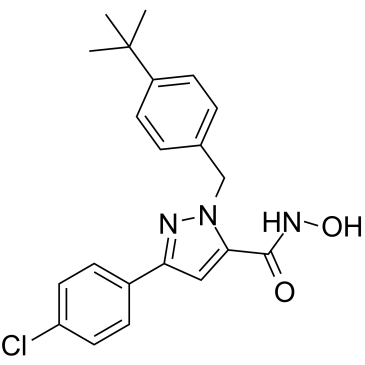
Nrf2-IN-1 es un inhibidor del factor 2 relacionado con el factor nuclear eritroide 2 (Nrf2). Nrf2-IN-1 se desarrolla para la investigaciÓn de la leucemia mieloide aguda (LMA).
Products are for research use only. Not for human use. We do not sell to patients.
Cas No.: 1610022-76-8
Sample solution is provided at 25 µL, 10mM.
_1-3.$$$39978408@51.jpg');)
_1-9.$$$38538795@65.jpg');)
_1-9.$$$39112701@51.jpg');)
_1-7.$$$37316672@70.jpg');)
_366-372.$$$36198801@70.jpg');)
.$$$38565142@65.jpg');)
_1867-1883.$$$33248023@67.jpg');)
_eads6055.$$$39977546@45.jpg');)
_eadm9805.$$$40080571@45.jpg');)
_eadj3020.$$$39666821@45.jpg');)
_1-20.$$$39757301@28.jpg');)
_1-24.$$$38898113@28.jpg');)
_273-287.$$$36806353@46.jpg');)
_1-16.$$$37156877@44.jpg');)
_1-19.$$$37460805@44.jpg');)
_1291-1307.$$$34518654@46.jpg');)
Nrf2-IN-1 is an inhibitor of nuclear factor-erythroid 2-related factor 2 (Nrf2), which is developed for the research of acute myeloid leukemia (AML) [1]. Nrf2-IN-1 inhibited the expression of Nrf2/HO-1/NQO1 pathway-related proteins as well as that of the ferroptosis resistance-related proteins GPX4, SLC7A11, and FTH1[2]. Nrf2-IN-1 has been widely used to regulate oxidative stress in models of myocardial ischemia-reperfusion injury[3].
In vitro, Nrf2-IN-1 treatment for 48 hours significantly inhibited the viability of THP-1 cells, HL-60 cells, and U937 cells, with IC50 values of 5.33µM, 8.94µM, and 8.98µM, respectively[4]. Treatment of microglial cells with 5µM Nrf2-IN-1 for 48 hours significantly inhibited the interaction between Nrf2 and ACOD1 and reduced the expression of ACOD1[5]. Treatment with 10µM Nrf2-IN-1 for 24 hours significantly reduced the expression levels of ADAM8 and Nrf2 in HT22 cells induced by Erastin, promoted the production of reactive oxygen species (ROS), and increased cell death[6].
In vivo, Nrf2-IN-1 treatment via intraperitoneal injection at a dose of 10µmol/kg/day for 7 days counteracted the neuroprotective effect of shRIN1 in the rat model of chronic constriction injury (CCI), significantly increased the Fe2+ level in spinal cord tissue, accompanied by severe mitochondrial damage[7]. Twelve hours before establishing the cecum ligation perforation (CLP) model, intraperitoneal injection of a single dose of Nrf2-IN-1 (10mg/kg) in mice significantly inhibited the protective effect of Klotho on the kidneys and promoted kidney damage[8].
References:
[1] Han Y, Gao X, Wu N, et al. Long noncoding RNA LINC00239 inhibits ferroptosis in colorectal cancer by binding to Keap1 to stabilize Nrf2[J]. Cell death & disease, 2022, 13(8): 742.
[2] Du L, Zhu X, Jiang Z, et al. Resveratrol inhibits ferroptosis in the lung tissues of heat stroke-induced rats via the Nrf2 pathway[J]. BMC Pharmacology and Toxicology, 2024, 25(1): 88.
[3] Li W, Yu W, Xu W, et al. Death-associated protein kinase 1 regulates oxidative stress in cardiac ischemia reperfusion injury[J]. Cells Tissues Organs, 2021, 210(5-6): 380-390.
[4] Zhang J F, Su L, Ye Q, et al. Discovery of a novel Nrf2 inhibitor that induces apoptosis of human acute myeloid leukemia cells[J]. Oncotarget, 2016, 8(5): 7625.
[5] Qian Z, Xia M, Zhao T, et al. ACOD1, rather than itaconate, facilitates p62‐mediated activation of Nrf2 in microglia post spinal cord contusion[J]. Clinical and Translational Medicine, 2024, 14(4): e1661.
[6] Qian Z, Zhang Q, Li P, et al. A disintegrin and metalloproteinase-8 protects against erastin-induced neuronal ferroptosis via activating nrf2/ho-1/fth1 signaling pathway[J]. Molecular Neurobiology, 2024, 61(6): 3490-3502.
[7] Lin X, Li X, Hong S, et al. RIN1 regulates ferroptosis and nociceptive perception via the Nrf2/HO-1 pathway in chronic constriction injury[J]. Cellular Signalling, 2025, 132: 111784.
[8] Zhou P, Zhao C, Chen Y, et al. Klotho activation of Nrf2 inhibits the ferroptosis signaling pathway to ameliorate sepsis-associated acute kidney injury[J]. Translational andrology and urology, 2023, 12(12): 1871.
| Cell experiment [1]: | |
Cell lines | THP-1 cells |
Preparation Method | THP-1 cells were cultured in RPMI 1640 medium supplemented with 100U/ml penicillin and 100mg/ml streptomycin in 5% CO2 at 37°C. Cells were placed in a 96 well-plate at a concentration of 1×10⁵ cells per well and were treated with different concentrations of Nrf2-IN-1 (0, 1, 5, 10, and 20µM) for 48h, and then the cell viability was analyzed. |
Reaction Conditions | 0, 1, 5, 10, and 20µM; 48h |
Applications | Nrf2-IN-1 treatment significantly reduced the cell viability of THP-1 cells in a dose-dependent manner. |
| Animal experiment [2]: | |
Animal models | Male adult Sprague-Dawley rats |
Preparation Method | Healthy male adult Sprague-Dawley rats (280-320g) were housed in a specialized animal care facility, in a room with constant temperature (25°C), humidity control, and a 12/12h light/dark cycle with free access to food and water. Aseptic technique was used during the surgical procedure for CCI modeling. Rats were anesthetized with 3% isoflurane in the induction chamber and then maintained with 1-2% isoflurane during surgery. The anesthetized rats were continuously monitored. The hind legs were elevated, shaved, and the surgical site was disinfected with iodophor solution. A 1-1.5cm incision was made approximately 0.5cm below the right posterior superior iliac spine. The muscles were gently separated, and the sciatic nerve was exposed and isolated. Three or four gentle ligations were placed around the nerve trunk using 4-0 chromic catgut ligatures, spaced approximately 1mm apart, ensuring the ligations were tight enough to induce a mild fluttering response in the calf muscle. The muscle layer was closed with a 4-0 suture, and the skin was sutured with a 2-0 suture. The wounds were then disinfected with iodine solution. Rats were closely monitored during recovery from anesthesia and placed in a separate cage with a flat paper pad to ensure safety and prevent asphyxiation of unconscious rats. Rats were intrathecally injected with adeno-associated virus 9 (AAV9) vectors containing shRNA targeting RIN1 (titer 1×10⁸ PFU/ml; 5μl/rat) on the 3rd postoperative day, with a scrambled shRNA used as a control, followed by intraperitoneal injections of Nrf2-IN-1 (10μmol/kg; dissolved in DMSO) for seven consecutive days. The mechanical paw withdrawal threshold (PWT) was recorded in a balanced sequence for both injured and uninjured hind paws. |
Dosage form | 10μmol/kg/day for 7 days; i.p. |
Applications | Nrf2-IN-1 treatment significantly reversed the anti-nociceptive effect of shRIN1 in CCI rats, as the mechanical stimulation threshold and the latency to thermal hyperalgesia of mice were significantly increased. |
References: | |
| Cas No. | 1610022-76-8 | SDF | |
| Canonical SMILES | O=C(NO)C1=CC(C2=CC=C(Cl)C=C2)=NN1CC3=CC=C(C(C)(C)C)C=C3 | ||
| Formula | C21H22ClN3O2 | M.Wt | 383.87 |
| Solubility | DMSO: 260 mg/mL (677.31 mM) | Storage | Store at -20°C |
| General tips | Please select the appropriate solvent to prepare the stock solution according to the
solubility of the product in different solvents; once the solution is prepared, please store it in
separate packages to avoid product failure caused by repeated freezing and thawing.Storage method
and period of the stock solution: When stored at -80°C, please use it within 6 months; when stored
at -20°C, please use it within 1 month. To increase solubility, heat the tube to 37°C and then oscillate in an ultrasonic bath for some time. |
||
| Shipping Condition | Evaluation sample solution: shipped with blue ice. All other sizes available: with RT, or with Blue Ice upon request. | ||
| Prepare stock solution | |||

|
1 mg | 5 mg | 10 mg |
| 1 mM | 2.605 mL | 13.0252 mL | 26.0505 mL |
| 5 mM | 521 μL | 2.605 mL | 5.2101 mL |
| 10 mM | 260.5 μL | 1.3025 mL | 2.605 mL |
Step 1: Enter information below (Recommended: An additional animal making an allowance for loss during the experiment)
 g
μL
g
μL
Step 2: Enter the in vivo formulation (This is only the calculator, not formulation. Please contact us first if there is no in vivo formulation at the solubility Section.)
Calculation results:
Working concentration: mg/ml;
Method for preparing DMSO master liquid: mg drug pre-dissolved in μL DMSO ( Master liquid concentration mg/mL, Please contact us first if the concentration exceeds the DMSO solubility of the batch of drug. )
Method for preparing in vivo formulation: Take μL DMSO master liquid, next addμL PEG300, mix and clarify, next addμL Tween 80, mix and clarify, next add μL saline, mix and clarify.
Method for preparing in vivo formulation: Take μL DMSO master liquid, next add μL Corn oil, mix and clarify.
Note: 1. Please make sure the liquid is clear before adding the next solvent.
2. Be sure to add the solvent(s) in order. You must ensure that the solution obtained, in the previous addition, is a clear solution before proceeding to add the next solvent. Physical methods such as vortex, ultrasound or hot water bath can be used to aid dissolving.
3. All of the above co-solvents are available for purchase on the GlpBio website.
Quality Control & SDS
- View current batch:
- Purity: >98.00% Appearance: A solid
- COA (Certificate of Analysis)
- SDS (Safety Data Sheet)
- Datasheet
Average Rating: 5 (Based on Reviews and 16 reference(s) in Google Scholar.)