

SW033291 |
Catalog No.GC14441
 One-Click Copy Product Info
|

SW033291 est un inhibiteur moléculaire de faible taille de la 15-hydroxyprostaglandine déshydrogénase (15-PDGH), une enzyme qui catalyse l'oxydation et l'inactivation de PGE2.
Products are for research use only. Not for human use. We do not sell to patients.
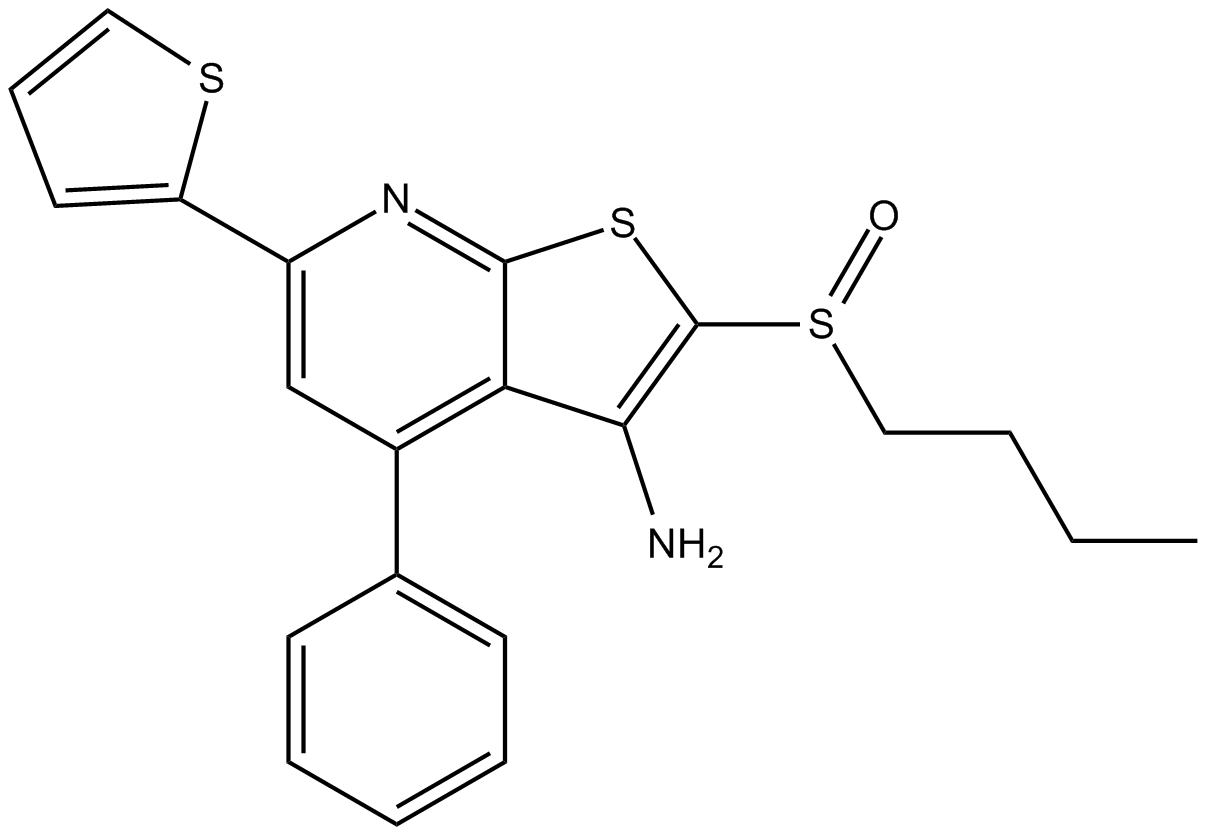
Cas No.: 459147-39-8
Sample solution is provided at 25 µL, 10mM.
_1-3.$$$39978408@51.jpg');)
_1-9.$$$38538795@65.jpg');)
_1-9.$$$39112701@51.jpg');)
_1-7.$$$37316672@70.jpg');)
_366-372.$$$36198801@70.jpg');)
.$$$38565142@65.jpg');)
_1867-1883.$$$33248023@67.jpg');)
_eads6055.$$$39977546@45.jpg');)
_eadm9805.$$$40080571@45.jpg');)
_eadj3020.$$$39666821@45.jpg');)
_1-20.$$$39757301@28.jpg');)
_1-24.$$$38898113@28.jpg');)
_273-287.$$$36806353@46.jpg');)
_1-16.$$$37156877@44.jpg');)
_1-19.$$$37460805@44.jpg');)
_1291-1307.$$$34518654@46.jpg');)
SW033291 est un inhibiteur moléculaire de faible taille de la 15-hydroxyprostaglandine déshydrogénase (15-PDGH), une enzyme qui catalyse l'oxydation et l'inactivation de PGE2[1]. SW033291 permet de promouvoir la régénération tissulaire et de prévenir les lésions rénales et hépatiques au moyen d'augmenter la régulation du niveau de PGE2 [2-3]. SW033291 est communément utilisé pour promouvoir la régénération et la réparation tissulaires[4].
Dans les cellules souches dérivées du muscle (MDSCs), SW033291 (20, 50, 100, 500, 1000nM; 24h) augmente la production de PGE2 par MDSCs, tant dans GM et DM, et MDSCs tolèrent bien SW033291 à diverses concentrations et présentent un fort potentiel de prolifération [5]. Dans les cellules souches mésenchymateuses de moelle osseuse (BMSCs), GelMA ICC combiné avec SW033291 (1μM; 5j) est capable de réguler la polarisation des macrophages M2 dans le système de co-culture avec BMSCs [6].
Dans un modèle murin d'ischémie-reperfusion hépatique, SW033291 (5mg/kg; ip; 72h) aaugmente le niveau de PGE2 dans le tissu hépatique et améliore les lésions hépatiques consécutives à l'ischémie-reperfusion hépatique[3]. Dans un modèle murin de T2DM, SW033291 (5mg/kg; ip; 10 semaines) améliore l'intolérance au glucose et la résistance à l'insuline altérées [8].
References:
[1]. Cheng H, Huang H, Guo Z, et al. Role of prostaglandin E2 in tissue repair and regeneration. Theranostics. 2021 Aug 13; 11(18): 8836.
[2]. Miao S, Lv C, Liu Y, et al. Pharmacologic blockade of 15-PGDH protects against acute renal injury induced by LPS in mice. Frontiers in physiology. 2020 Mar 13; 11: 138.
[3]. Xie M, He R, Wang H, et al. Effects of small molecule inhibitor SW033291 on hepatic ischemia-reperfusion injury in mice. Biochemical and biophysical research communications. 2022 Jul 30; 615: 70-74.
[4]. Zhang Y, Desai A, Yang SY, et al. Inhibition of the prostaglandin-degrading enzyme 15-PGDH potentiates tissue regeneration. Science. 2015 Jun 12; 348(6240): aaa2340.
[5]. Dong Y, Li Y, Zhang C, et al. Effects of SW033291 on the myogenesis of muscle-derived stem cells and muscle regeneration. Stem cell research & therapy. 2020 Dec; 11: 1-7.
[6]. Jiang Q, Bai G, Liu X, et al. 3D GelMA ICC scaffolds combined with SW033291 for bone regeneration by modulating macrophage polarization. Pharmaceutics. 2021 Nov 16; 13(11): 1934.
[7]. Liang M, Wang L, Wang W. The 15-hydroxyprostaglandin dehydrogenase inhibitor SW033291 ameliorates abnormal hepatic glucose metabolism through PGE2–EP4 receptor–AKT signaling in a type 2 diabetes mellitus mouse model. Cellular Signalling. 2023 Aug 1; 108: 110707.
[8]. Wang W, Liang M, Wang L, et al. 15-Hydroxyprostaglandin dehydrogenase inhibitor SW033291 ameliorates hepatic abnormal lipid metabolism, ER stress, and inflammation through PGE2/EP4 in T2DM mice. Bioorganic chemistry. 2023 Aug 1; 137: 106646.
| Expériences cellulaires [1]: | |
Lignées cellulaires | Cellules souches dérivées du muscle (MDSCs) |
Méthode de préparation | Du tissu musculaire a été prélevé à partir des membres postérieurs de rats féminins de Sprague Dawley (SD) âgés de 8 semaines. Après avoir haché le tissu, il a été traité avec des solutions de collagénase à 0,1%, de dispase et de trypsine, puis, a été incubé à 37°C pendant 24 heures. Ensuite, les cellules dissociées ont été traitées selon la méthode de semis séquentiel pré-ensemencement décrite, en utilisant des plaques de culture revêtues de collagène, et ont été cultivées dans une atmosphère humide à 37°C et 5% CO2; MDSCs à la sixième passe ont été utilisés dans les expériences. Les expériences MDSCs ont été incubées avec SW033291 à des concentrations allant de 20 à 1000nM, ensuite, ont été évaluées par coloration à β-galactosidase (SAβ-Gal), coloration LIVE/DEAD et essai Alamer bleu. |
Conditions de réaction | 20, 50, 100, 500, 1000nM; 24h |
Domaines d'application | SW033291 a augmenté la production de PGE2 par MDSCs, que ce soit dans le milieu de croissance (GM) ou le milieu de différenciation (DM), avec la meilleure réponse atteignant une augmentation d'environ 2,8 fois. D'ailleur, MDSCs ont bien toléré SW033291 à diverses concentrations et présentaient un fort potentiel de prolifération. |
| Expériences animales [2]: | |
Modèles animaux | Modèle murin de diabète mellitus de type 2 (T2DM) |
Méthode de préparation | Des rats mâles C57BL/6 J âgés de 7 semaines. Après une période d'acclimatation d'une semaine, les rats ont été aléatoirement divisés en trois groupes, sans différences significatives dans le niveau de glycémie à jeun ni dans les poids corporels entre les groupes. Les rats ont été logés dans les conditions à la température contrôlée (25 ± 2°C) avec un cycle jour/nuit de 12 heures. De l'eau et de la nourriture ont été fournis ad libitm. les rats de groupe de témoin ont été nourris avec un régime normal. Le modèle murin de diabète de type 2 (T2DM) a été établi à l'aide d'un régime hyperlipidique (protéines : 18.1%; graisses : 61.6%; glucides : 20.3%; HF60) combiné à des injections de streptozocine (30mg/kg de poids corporel, dissoute dans un tampon citrate 0,1M, pH 4,2 - 4,5) pendant trois jours consécutifs. SW033291 a été dissous dans un véhicule contenant 10% d'éthanol, 5% de Cremophor EL et 85% d'eau de dextrose - 5. Les rats du groupe SW033291 ont été injectés par voie intra-péritonéale avec SW033291 pendant 10 semaines. Les rats du groupe de témoin et celles du groupe T2DM ont été injectés par voie intra-péritonéale avec solution véhicule. |
Forme de dosage | 5mg/kg; ip; 10 semaines |
Domaines d'application | SW033291 améliore le métabolisme anormal du glucose et des lipides. |
References: | |
| Cas No. | 459147-39-8 | SDF | |
| Chemical Name | 2-(butylsulfinyl)-4-phenyl-6-(thiophen-2-yl)thieno[2,3-b]pyridin-3-amine | ||
| Canonical SMILES | NC1=C(S(CCCC)=O)SC2=NC(C3=CC=CS3)=CC(C4=CC=CC=C4)=C21 | ||
| Formula | C21H20N2OS3 | M.Wt | 412.59 |
| Solubility | ≥ 20.65mg/mL in DMSO | Storage | Store at -20°C |
| General tips | Please select the appropriate solvent to prepare the stock solution according to the
solubility of the product in different solvents; once the solution is prepared, please store it in
separate packages to avoid product failure caused by repeated freezing and thawing.Storage method
and period of the stock solution: When stored at -80°C, please use it within 6 months; when stored
at -20°C, please use it within 1 month. To increase solubility, heat the tube to 37°C and then oscillate in an ultrasonic bath for some time. |
||
| Shipping Condition | Evaluation sample solution: shipped with blue ice. All other sizes available: with RT, or with Blue Ice upon request. | ||
| Prepare stock solution | |||

|
1 mg | 5 mg | 10 mg |
| 1 mM | 2.4237 mL | 12.1186 mL | 24.2371 mL |
| 5 mM | 484.7 μL | 2.4237 mL | 4.8474 mL |
| 10 mM | 242.4 μL | 1.2119 mL | 2.4237 mL |
Step 1: Enter information below (Recommended: An additional animal making an allowance for loss during the experiment)
 g
μL
g
μL
Step 2: Enter the in vivo formulation (This is only the calculator, not formulation. Please contact us first if there is no in vivo formulation at the solubility Section.)
Calculation results:
Working concentration: mg/ml;
Method for preparing DMSO master liquid: mg drug pre-dissolved in μL DMSO ( Master liquid concentration mg/mL, Please contact us first if the concentration exceeds the DMSO solubility of the batch of drug. )
Method for preparing in vivo formulation: Take μL DMSO master liquid, next addμL PEG300, mix and clarify, next addμL Tween 80, mix and clarify, next add μL saline, mix and clarify.
Method for preparing in vivo formulation: Take μL DMSO master liquid, next add μL Corn oil, mix and clarify.
Note: 1. Please make sure the liquid is clear before adding the next solvent.
2. Be sure to add the solvent(s) in order. You must ensure that the solution obtained, in the previous addition, is a clear solution before proceeding to add the next solvent. Physical methods such as vortex, ultrasound or hot water bath can be used to aid dissolving.
3. All of the above co-solvents are available for purchase on the GlpBio website.
Quality Control & SDS
- View current batch:
- Purity: >98.00% Appearance: A solid
- COA (Certificate of Analysis)
- SDS (Safety Data Sheet)
- Datasheet
Average Rating: 5 (Based on Reviews and 17 reference(s) in Google Scholar.)