

G3335 (Synonyms: G3335) |
カタログ番号GC15085
 One-Click Copy Product Info
|

G3335 は、選択的、可逆的、細胞透過性の PPARγ です。 Kd が ~8 μM.
Products are for research use only. Not for human use. We do not sell to patients.
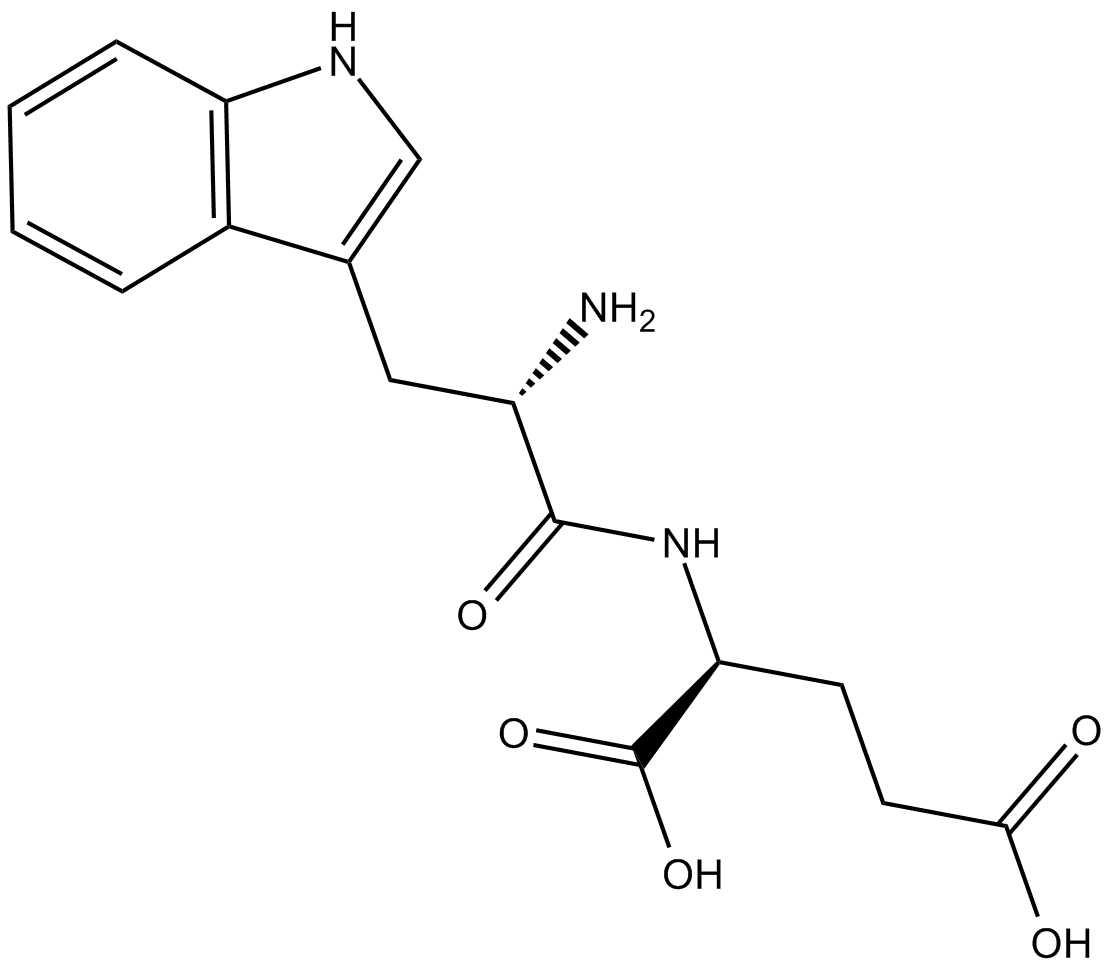
Cas No.: 36099-95-3
Sample solution is provided at 25 µL, 10mM.
_1-3.$$$39978408@51.jpg');)
_1-9.$$$38538795@65.jpg');)
_1-9.$$$39112701@51.jpg');)
_1-7.$$$37316672@70.jpg');)
_366-372.$$$36198801@70.jpg');)
.$$$38565142@65.jpg');)
_1867-1883.$$$33248023@67.jpg');)
_eads6055.$$$39977546@45.jpg');)
_eadm9805.$$$40080571@45.jpg');)
_eadj3020.$$$39666821@45.jpg');)
_1-20.$$$39757301@28.jpg');)
_1-24.$$$38898113@28.jpg');)
_273-287.$$$36806353@46.jpg');)
_1-16.$$$37156877@44.jpg');)
_1-19.$$$37460805@44.jpg');)
_1291-1307.$$$34518654@46.jpg');)
Kd = 8.34 μM
G3335 is a PPARγ antagonist.
The peroxisome proliferator-activated receptor gamma (PPARgamma) is a key therapeutic drug target for several conditions, such as inflammation, diabetes, hypertension, dyslipidemia, and cancer.
In vitro: Biacore 3000 study based on the surface plasmon resonance technique found that G3335 exhibited a highly specific binding affinity against PPARgamma and was able to block rosiglitazone, a potent PPARgamma agonist, in the stimulation of the interaction between the PPARgamma ligand-binding domain (LBD) and RXRalpha-LBD. Moreover, the yeast two-hybrid assays indicated that G3335 had strong antagonistic activity in perturbing rosiglitazone in the promotion of the PPARgamma-LBD-CBP interaction. In addition, G3335 could competitively bind to PPARgamma against 0.1 microM rosiglitazone to repress reporter-gene expression [1].
In vivo: In a previous study, the effect of rosiglitazone was examined on spinal cord injury (SCI) in rats. The animals were randomly divided into vehicle group, rosiglitazone treated group, and G3335 treated group. Locomotor function recovery was evaluated. Results showed that compared with the vehicle groups, the rosiglitazone could significantly ameliorate locomotor recovery, reduce NF-κB expression, and increase the proliferation of endogenous NPCs. In addition, when the PPAR-γ antagonist G3335 was applied, such effects were abolished [2].
Clinical trial: So far, no clinical study has been conducted.
References:
[1] Ye, F. ,Zhang, Z.S.,Luo, H.B., et al. The dipeptide H-Trp-Glu-OH shows highly antagonistic activity against PPARγ: Bioassay with molecular modeling simulation. ChemBioChem 7, 74-82 (2006).
[2] Meng, Q. Q.,Liang, X.J.,Wang, P., et al. Rosiglitazone enhances the proliferation of neural progenitor cells and inhibits inflammation response after spinal cord injury. Neuroscience Letters 503, 191-195 (2011).
| Cas No. | 36099-95-3 | SDF | |
| 同義語 | G3335 | ||
| Chemical Name | L-tryptophyl-L-glutamic acid | ||
| Canonical SMILES | OC(CC[C@@H](C(O)=O)NC([C@@H](N)CC1=CNC2=C1C=CC=C2)=O)=O | ||
| Formula | C16H19N3O5 | M.Wt | 333.3 |
| 溶解度 | ≥ 14.35mg/mL in DMSO | Storage | Store at -20°C |
| General tips | Please select the appropriate solvent to prepare the stock solution according to the
solubility of the product in different solvents; once the solution is prepared, please store it in
separate packages to avoid product failure caused by repeated freezing and thawing.Storage method
and period of the stock solution: When stored at -80°C, please use it within 6 months; when stored
at -20°C, please use it within 1 month. To increase solubility, heat the tube to 37°C and then oscillate in an ultrasonic bath for some time. |
||
| Shipping Condition | Evaluation sample solution: shipped with blue ice. All other sizes available: with RT, or with Blue Ice upon request. | ||
| Prepare stock solution | |||

|
1 mg | 5 mg | 10 mg |
| 1 mM | 3.0003 mL | 15.0015 mL | 30.003 mL |
| 5 mM | 600.1 μL | 3.0003 mL | 6.0006 mL |
| 10 mM | 300 μL | 1.5002 mL | 3.0003 mL |
Step 1: Enter information below (Recommended: An additional animal making an allowance for loss during the experiment)
 g
μL
g
μL
Step 2: Enter the in vivo formulation (This is only the calculator, not formulation. Please contact us first if there is no in vivo formulation at the solubility Section.)
Calculation results:
Working concentration: mg/ml;
Method for preparing DMSO master liquid: mg drug pre-dissolved in μL DMSO ( Master liquid concentration mg/mL, Please contact us first if the concentration exceeds the DMSO solubility of the batch of drug. )
Method for preparing in vivo formulation: Take μL DMSO master liquid, next addμL PEG300, mix and clarify, next addμL Tween 80, mix and clarify, next add μL saline, mix and clarify.
Method for preparing in vivo formulation: Take μL DMSO master liquid, next add μL Corn oil, mix and clarify.
Note: 1. Please make sure the liquid is clear before adding the next solvent.
2. Be sure to add the solvent(s) in order. You must ensure that the solution obtained, in the previous addition, is a clear solution before proceeding to add the next solvent. Physical methods such as vortex, ultrasound or hot water bath can be used to aid dissolving.
3. All of the above co-solvents are available for purchase on the GlpBio website.
Quality Control & SDS
- View current batch:
- Purity: >98.00% Appearance: A solid
- COA (Certificate of Analysis)
- SDS (Safety Data Sheet)
- Datasheet
Average Rating: 5 (Based on Reviews and 23 reference(s) in Google Scholar.)