

C34 (Synonyms: Toll-Like Receptor 4-C34) |
Catalog No.GC11275
 One-Click Copy Product Info
|

C34 est un antagoniste oralement actif et sélectif du récepteur de type Toll4 (TLR4). C34 exerce des effets anti-inflammatoires en inhibant la voie de signalisation TLR4/MyD88/NF-κB, réduisant ainsi la production de cytokines pro-inflammatoires.
Products are for research use only. Not for human use. We do not sell to patients.
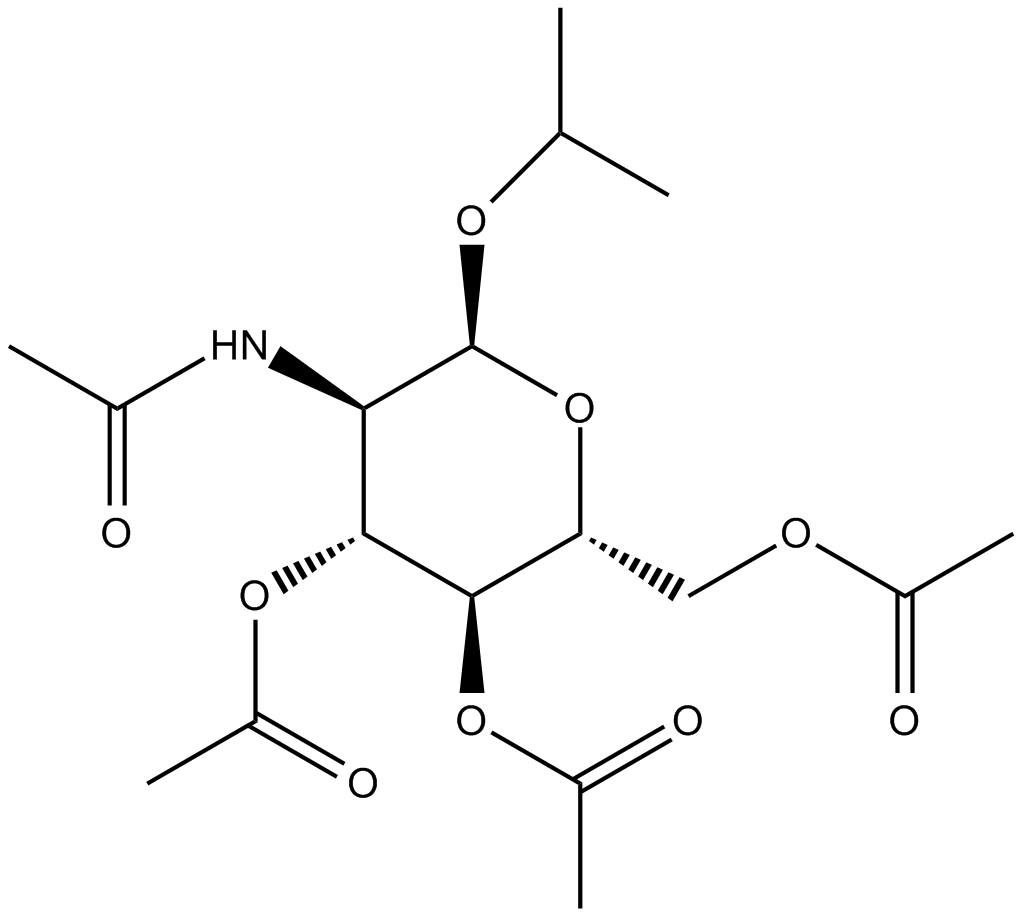
Cas No.: 40592-88-9
Sample solution is provided at 25 µL, 10mM.
C34 est un antagoniste oralement actif et sélectif du récepteur de type Toll4 (TLR4). C34 exerce des effets anti-inflammatoires en inhibant la voie de signalisation TLR4/MyD88/NF-κB, réduisant ainsi la production de cytokines pro-inflammatoires[1-2]. C34 atténue l'inflammation systémique dans divers modèles de maladies, notamment l'endotoxémie, l'entérocolite nécrosante, la colite ulcéreuse et la lésion rénale aiguë. TLR4-IN-C34 est applicable pour la recherche en immunologie, inflammation et troubles associés[3-4].
In vitro, des cellules microgliales BV2 ont été prétraitées avec du C34 (10-100μM) pendant 2 heures, puis stimulées par du LPS (200ng/mL) pendant 24 heures. C34 a significativement inhibé l'activation induite par LPS de la voie de signalisation TLR4/MyD88/NF-κB, diminué la libération des facteurs pro-inflammatoires (TNF-α, IL-1β, IL-6, MCP-1 et NO), et réduit la génération d'ESP et l'activation de l'inflammasome NLRP3[5]. Des cellules gliales entériques de rat ont été prétraitées avec du C34 (50μM) pendant 1 heure, puis exposées aux toxines de Clostridioides difficile TcdA (50ng/mL) ou TcdB (1ng/mL) pendant 18 heures. C34 a significativement supprimé la translocation nucléaire induite par les toxines de TLR4/NF-κB p65 et l'expression protéique du TNF-α, et a diminué l'apoptose[6].
In vivo,dans un modèle de rat Wistar induit par l'isoprénaline (ISO; 100mg/kg), C34 (1mg/kg ou 3mg/kg; administré par voie intra-péritonéale 1 heure avant chacune des deux injections d' ISO ), a significativement réduit les niveaux de créatinine sérique et amélioré l'inflammation, la fibrose et l'apoptose des tissus rénaux [7]. Dans un modèle de rat Wistar d'état de mal épileptique induit par la Pilocarpine (40mg/kg; i.p.), C34 (1μg/rat; injection intracérébroventricular unique) a été administré 1 heure ou 24 heures après l'injection de pilocarpine. L'administration à 1 heure post-induction a significativement réduit la mort neuronale hippocampique et diminué les niveaux du facteur apoptotique caspases-3 et des médiateurs inflammatoires TNF-α et NF-κB, tandis que le traitement à 24 heures a montré un effet thérapeutique nettement diminué[8].
References:
[1] Wipf P, Eyer BR, Yamaguchi Y, et al. Synthesis of anti-inflammatory α-and β-linked acetamidopyranosides as inhibitors of toll-like receptor 4 (TLR4). Tetrahedron Lett. 2015 Jun 3;56(23):3097-3100.
[2] Neal MD, Jia H, Eyer B, et al. Discovery and validation of a new class of small molecule Toll-like receptor 4 (TLR4) inhibitors. PLoS One. 2013 Jun 12;8(6):e65779.
[3] Wei K, Zou Y, Xu H, et al. TLR4-IN-C34 attenuates the progression of osteoarthritis through inhibiting inflammation, angiogenesis and pain. Cell Signal. 2025 Dec;136:112084.
[4] Filippova LV, Fedorova AV, Nozdrachev AD. Mechanism of Activation of Enteric Nociceptive Neurons via Interaction of TLR4 and TRPV1 Receptors. Dokl Biol Sci. 2018 Mar;479(1):44-46.
[5] Zhang SS, Liu M, Liu DN, et al. TLR4-IN-C34 Inhibits Lipopolysaccharide-Stimulated Inflammatory Responses via Downregulating TLR4/MyD88/NF-κB/NLRP3 Signaling Pathway and Reducing ROS Generation in BV2 Cells. Inflammation. 2022 Apr;45(2):838-850.
[6] Barbosa MLL, Costa DVDS, de Pacífico DM, et al. Role of TLR4 in Enteric Glia Response to Clostridioides Difficile Toxins: Insights From In Vivo and In Vitro Studies. J Cell Mol Med. 2025 Nov;29(22):e70943.
[7] Abdelsalam HM, Helal MG, Abu-Elsaad NM. TLR4-IN-C34 protects against acute kidney injury via modulating TLR4/MyD88/NF-κb axis, MAPK, and apoptosis. Iran J Basic Med Sci. 2022 Nov;25(11):1334-1340.
[8] Varmazyar R, Naderi N, Javid H, et al. Neuroprotective Effects of Early TLR4 Blockade with Compound C34 in Temporal Lobe Epilepsy: Alleviation of Neuroinflammation and Apoptosis. Iran J Pharm Res. 2025 Mar 8;24(1):e159165.
| Expériences cellulaires [1]: | |
Lignées cellulaires | Cellules microgliales BV2 (lignée cellulaire microgliale murine) |
Méthode de préparation | Les cellules BV2 ont été cultivées dans du milieu Dulbecco's modified Eagle's medium (DMEM) supplementé avec 10% de sérum foetal de bovin (FBS) désactivité à la chaleur, à 37°C et sous une atmosphère de 5% de CO₂. Les cellules ont éé prétraitées avec du C34 (10, 30 et 100μM) pendant 2 heures avant d'être exposées au LPS (200ng/mL) pendant 24 heures. |
Conditions de réaction | Prétraitement: 10–100μM pendant 2h |
Domaines d'application | C34 a significativement réduit la production de facteurs pro-inflammatoires induite par le LPS(NO, TNF-α, IL-1β, IL-6, MCP-1) et a supprimé l'expression de iNOS et COX-2 aux niveaux de l'ARNm et des protéines. C34 a également inhibé la voie de signalisation TLR4/MyD88/NF-κB en diminuant l'expression de TLR4 et MyD88, en réduisant la phosphorylation de NF-κB et en bloquant sa translocation nucléaire. De plus, TLR4-IN-C34 a atténué l'activation de l'inflammasome NLRP3 (caspase-1, IL-1β, IL-18)et a diminué la génération intracellulaire d'ESP. |
| Expériences animales [2]: | |
Modèles animaux | Rats Wistar |
Méthode de préparation | Les rats ont reçu du chlorure de lithium (127mg/kg) 20 heures avant , et de la Méthylscopolamine (2mg/kg) 20 minutes avant l'injection intrapéritonéale de pilocarpine (40mg/kg) pour induire un état de mal épileptique (SE). C34 (1μg/rat) a été administré par voie intracérébroventriculaire soit 1 heure (traitement précoce) soit 24 heures (traitement tardif) après l'injection de Pilocarpine. Les rats ont été sacrifiés 48 heures après l'état de mal épileptique pour l'analyse des tissus hippocampiques. |
Forme de dosage | 1μg/rat; ICV; injection unique. |
Domaines d'application | Le traitement précoce à C34 (1 heure après l'état de mal épileptique) a significativement réduit la mort neuronale dans les régions hippocampiques (CA1, CA2, CA3, CA4, DG), diminué le taux de mortalité, et supprimé l'expression des marqueurs neuro-inflammatoires (NF-κB, TNF-α) et apoptotiques (caspase-3). Le traitement tardif à C34 (24 après l'état de mal épileptique) a montré des effets neuroprotecteurs limité, soulignant l'importance cruciale de l'inhibition précoce du TLR4 pour atténuer les dommages induits par l'état de mal épileptique. |
References: | |
| Cas No. | 40592-88-9 | SDF | |
| Synonymes | Toll-Like Receptor 4-C34 | ||
| Chemical Name | 3,4,6-triacetate-1-methylethyl 2-(acetylamino)-2-deoxy-α-D-glucopyranoside | ||
| Canonical SMILES | CC(C)O[C@H]1O[C@H](COC(C)=O)[C@@H](OC(C)=O)[C@H](OC(C)=O)[C@H]1NC(C)=O | ||
| Formula | C17H27NO9 | M.Wt | 389.4 |
| Solubility | 50mg/mL in ethanol or in DMF, 25mg/mL in DMSO | Storage | Store at -20°C |
| General tips | Please select the appropriate solvent to prepare the stock solution according to the
solubility of the product in different solvents; once the solution is prepared, please store it in
separate packages to avoid product failure caused by repeated freezing and thawing.Storage method
and period of the stock solution: When stored at -80°C, please use it within 6 months; when stored
at -20°C, please use it within 1 month. To increase solubility, heat the tube to 37°C and then oscillate in an ultrasonic bath for some time. |
||
| Shipping Condition | Evaluation sample solution: shipped with blue ice. All other sizes available: with RT, or with Blue Ice upon request. | ||
| Prepare stock solution | |||

|
1 mg | 5 mg | 10 mg |
| 1 mM | 2.5681 mL | 12.8403 mL | 25.6805 mL |
| 5 mM | 513.6 μL | 2.5681 mL | 5.1361 mL |
| 10 mM | 256.8 μL | 1.284 mL | 2.5681 mL |
Step 1: Enter information below (Recommended: An additional animal making an allowance for loss during the experiment)
 g
μL
g
μL
Step 2: Enter the in vivo formulation (This is only the calculator, not formulation. Please contact us first if there is no in vivo formulation at the solubility Section.)
Calculation results:
Working concentration: mg/ml;
Method for preparing DMSO master liquid: mg drug pre-dissolved in μL DMSO ( Master liquid concentration mg/mL, Please contact us first if the concentration exceeds the DMSO solubility of the batch of drug. )
Method for preparing in vivo formulation: Take μL DMSO master liquid, next addμL PEG300, mix and clarify, next addμL Tween 80, mix and clarify, next add μL saline, mix and clarify.
Method for preparing in vivo formulation: Take μL DMSO master liquid, next add μL Corn oil, mix and clarify.
Note: 1. Please make sure the liquid is clear before adding the next solvent.
2. Be sure to add the solvent(s) in order. You must ensure that the solution obtained, in the previous addition, is a clear solution before proceeding to add the next solvent. Physical methods such as vortex, ultrasound or hot water bath can be used to aid dissolving.
3. All of the above co-solvents are available for purchase on the GlpBio website.
Quality Control & SDS
- View current batch:
- Purity: >98.00% Appearance: A solid
- COA (Certificate of Analysis)
- SDS (Safety Data Sheet)
- Datasheet
Average Rating: 5 (Based on Reviews and 39 reference(s) in Google Scholar.)