

CU CPT 4a (Synonyms: TLR3-IN-1) |
カタログ番号GC11461
 One-Click Copy Product Info
|

CU CPT 4aはtoll様の受容体3(TLR3)の有力な阻害剤であり、IC50値は3.44μMである。
Products are for research use only. Not for human use. We do not sell to patients.
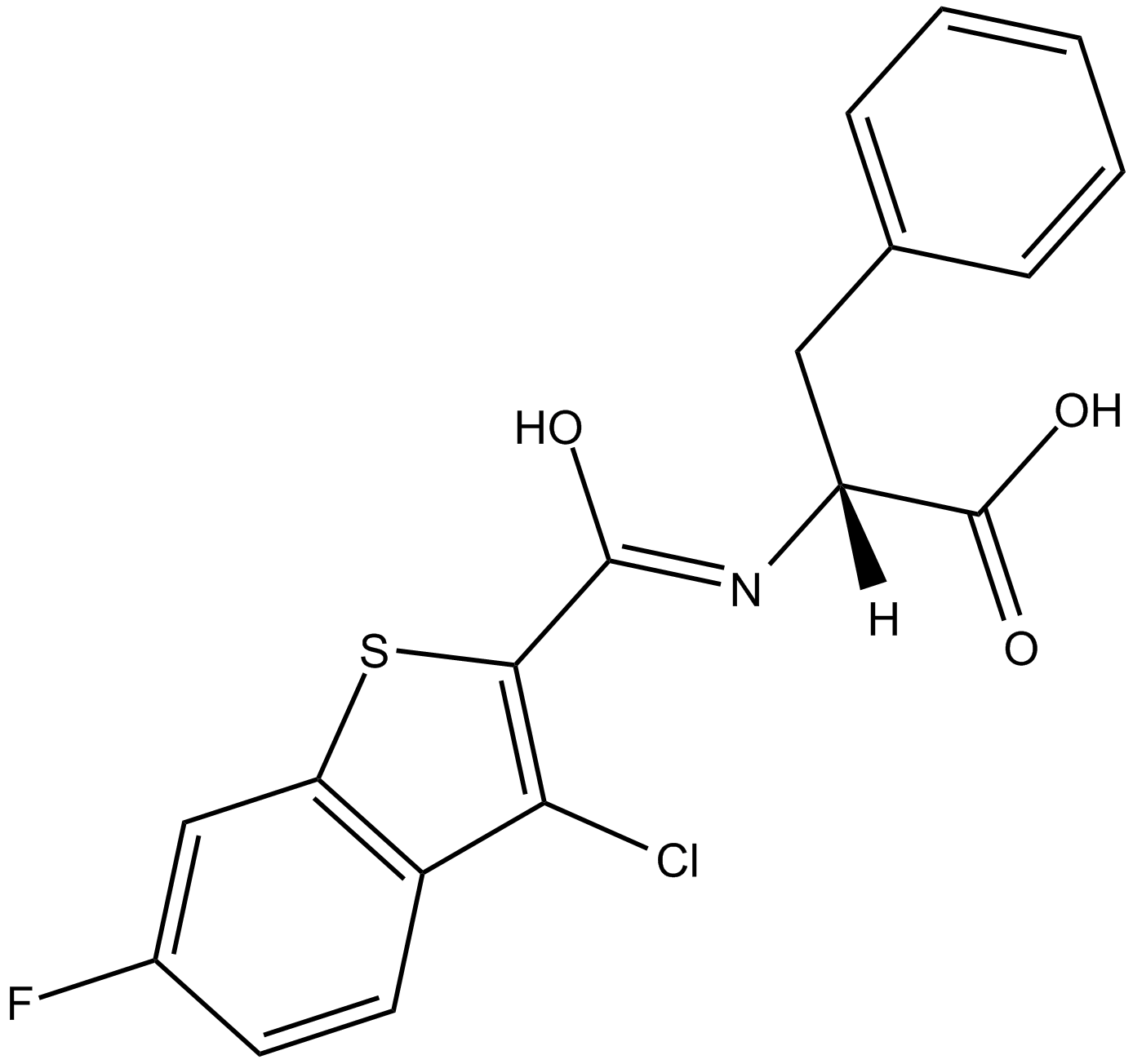
Cas No.: 1279713-77-7
Sample solution is provided at 25 µL, 10mM.
_1-3.$$$39978408@51.jpg');)
_1-9.$$$38538795@65.jpg');)
_1-9.$$$39112701@51.jpg');)
_1-7.$$$37316672@70.jpg');)
_366-372.$$$36198801@70.jpg');)
.$$$38565142@65.jpg');)
_1867-1883.$$$33248023@67.jpg');)
_eads6055.$$$39977546@45.jpg');)
_eadm9805.$$$40080571@45.jpg');)
_eadj3020.$$$39666821@45.jpg');)
_1-20.$$$39757301@28.jpg');)
_1-24.$$$38898113@28.jpg');)
_273-287.$$$36806353@46.jpg');)
_1-16.$$$37156877@44.jpg');)
_1-19.$$$37460805@44.jpg');)
_1291-1307.$$$34518654@46.jpg');)
CU CPT 4aはtoll様の受容体3(TLR3)の有力な阻害剤であり、IC50値は3.44μMである[1]。CU CPT 4aは、TLR3/dsRNA複合体媒介の下流シグナル伝達経路を抑制し、インターフェロンと炎症促進サイトカイン(TNF-α、IL-1βとIL-6)の産生の阻害を起こした[2]。CU CPT 4aは、動物モデルに広く使われ、TLR3媒介の炎症を制御した[3]。
体外で、40μMのCU CPT 4aの1時間の事前処理は、2.5μg/mlのPoly(I:C) (12時間)によるKKU213細胞の浸潤を著しく阻害した[4]。20µMのCU CPT 4aの1時間の処理は、ヒト末梢血単核細胞(PBMC)で、Tributyltin (TBT) (25nM)誘発のIL-1βとIL-6の生産を著しく阻害した[5]。24時間のCU CPT 4a(10µM)の処理は、SARS-CoV-2感染のCaco2細胞で、TBK1/IRF3シグナル伝達に対するヒスタミンの刺激作用を消した[6]。40μMのCU CPT 4aの24時間の処理は、マウスの心筋細胞で、LPS刺激のアポトーシスを軽減せずに、Caspase-3/7の活性化を減らした[7]。
体内で、CU CPT 4aの腹腔内注射(30μg/10μl;5日以内に三回)は、SRABV感染のマウスで、臨床症状と病理学的病変の発達の遅延、強度の低下、ウイルス量の低下を起こし、Negri小体(NB)形成を著しく減らし、生存期間を延長させた[8]。
References:
[1] Wang Y, Zhang S, Li H, et al. Small-molecule modulators of toll-like receptors[J]. Accounts of chemical research, 2020, 53(5): 1046-1055.
[2] Cheng K, Wang X, Yin H. Small-molecule inhibitors of the TLR3/dsRNA complex[J]. Journal of the American Chemical Society, 2011, 133(11): 3764-3767.
[3] Takemura N, Kawasaki T, Kunisawa J, et al. Blockade of TLR3 protects mice from lethal radiation-induced gastrointestinal syndrome[J]. Nature communications, 2014, 5(1): 3492.
[4] Lomphithak T, Choksi S, Mutirangura A, et al. Receptor-interacting protein kinase 1 is a key mediator in TLR3 ligand and Smac mimetic-induced cell death and suppresses TLR3 ligand-promoted invasion in cholangiocarcinoma[J]. Cell Communication and Signaling, 2020, 18(1): 161.
[5] Alcala A, Osborne B, Allen B, et al. Toll-like receptors in the mechanism of tributyltin-induced production of pro-inflammatory cytokines, IL-1β and IL-6[J]. Toxicology, 2022, 472: 153177.
[6] Mukherjee R, Bhattacharya A, Bojkova D, et al. Famotidine inhibits toll-like receptor 3-mediated inflammatory signaling in SARS-CoV-2 infection[J]. Journal of Biological Chemistry, 2021, 297(2).
[7] Neu C, Thiele Y, Horr F, et al. DAMPs released from proinflammatory macrophages induce inflammation in cardiomyocytes via activation of TLR4 and TNFR[J]. International journal of molecular sciences, 2022, 23(24): 15522.
[8] Sardana S, Singh K P, Saminathan M, et al. Effect of inhibition of Toll-like receptor 3 signaling on pathogenesis of rabies virus in mouse model[J]. Acta Tropica, 2022, 234: 106589.
| 細胞実験[1]: | |
細胞株 | ヒト末梢血単核細胞(PBMC) |
準備方法 | PBMC(4×10⁶ 個の細胞/0.67mlの濃度)をCU CPT 4a (20μM)または適切なDMSO対照物で1時間処理し、その後はTBT (25nM)に24時間暴露させた。細胞を沈殿し、上清を採取し、上清におけるIL-1βまたはIL-6の分泌を、酵素結合免疫吸着法(ELISA)で測定した。細胞沈殿物を溶解緩衝液で処理し、氷の上で20分間培養し、5分ごとにボルテックスで攪拌した。20分間のインキュベート期の後、4℃で、溶解液をマイクロ遠心分離機で10,000rpmで10分間遠心分離した。得られた溶解液を採取し、ウエスタンブロッティング法でIL-1βとIL-6の細胞内レベルを評価した。 |
反応条件 | 20μM;1時間 |
アプリケーション | PBMCで、CU CPT 4aの処理は、TBT誘発のIL-1βとIL-6の産生を減らした。 |
| 動物実験 [2]: | |
動物モデル | 若年のSwissアルビノマウス |
準備方法 | 2-3週齢の若年のSwissアルビノマウスを、管理された殺菌環境の条件下で飼育した。マウスを三つのグループに分けた。グループI(SRABV + DMSO, n = 25)のマウスには、0日目に33ゲージの針を使い、 20μlの100 LD50 SRABVを腹腔内注射し、感染後5日以内に、10μlのDMSOを3回腹腔内注射し、治療を模擬した。グループII(SRABV+CU CPT 4a、n = 25)のマウスには、0日目に、20μlの100 LD50 SRABVを腹腔内注射し、10μlのCU CPT 4a (30μg、DMSOに溶解)を感染の5日以内に、三回腹腔内注射した。グループIII (CU CPT 4a+DMSO、n = 21)のマウスには、感染の5日間で、30μlのCU CPT 4a (30μg、DMSOに溶解)を三回注射した。感染の15日後、分析の為に組織を採取した。 |
投与形態 | 30μg/10μl;5日間以内、三回;腹腔内注射 |
アプリケーション | CU CPT 4aの処理は、SRABV感染のマウスで、TLR3の発見を著しく阻害し、臨床症状と病理学的病変の発達の遅延、強度の低下、ウイルス量の低下を起こし、Negri小体(NB)形成を著しく減らし、生存期間を延長させた。 |
References: | |
| Cas No. | 1279713-77-7 | SDF | |
| 同義語 | TLR3-IN-1 | ||
| Chemical Name | (R,Z)-2-(((3-chloro-6-fluorobenzo[b]thiophen-2-yl)(hydroxy)methylene)amino)-3-phenylpropanoic acid | ||
| Canonical SMILES | ClC(C1=C(S2)C=C(F)C=C1)=C2/C(O)=N/[C@](C(O)=O)([H])CC3=CC=CC=C3 | ||
| Formula | C18H13ClFNO3S | M.Wt | 377.82 |
| 溶解度 | <37.78mg/ml in DMSO | Storage | Store at 4°C |
| General tips | Please select the appropriate solvent to prepare the stock solution according to the
solubility of the product in different solvents; once the solution is prepared, please store it in
separate packages to avoid product failure caused by repeated freezing and thawing.Storage method
and period of the stock solution: When stored at -80°C, please use it within 6 months; when stored
at -20°C, please use it within 1 month. To increase solubility, heat the tube to 37°C and then oscillate in an ultrasonic bath for some time. |
||
| Shipping Condition | Evaluation sample solution: shipped with blue ice. All other sizes available: with RT, or with Blue Ice upon request. | ||
| Prepare stock solution | |||

|
1 mg | 5 mg | 10 mg |
| 1 mM | 2.6468 mL | 13.2338 mL | 26.4676 mL |
| 5 mM | 529.4 μL | 2.6468 mL | 5.2935 mL |
| 10 mM | 264.7 μL | 1.3234 mL | 2.6468 mL |
Step 1: Enter information below (Recommended: An additional animal making an allowance for loss during the experiment)
 g
μL
g
μL
Step 2: Enter the in vivo formulation (This is only the calculator, not formulation. Please contact us first if there is no in vivo formulation at the solubility Section.)
Calculation results:
Working concentration: mg/ml;
Method for preparing DMSO master liquid: mg drug pre-dissolved in μL DMSO ( Master liquid concentration mg/mL, Please contact us first if the concentration exceeds the DMSO solubility of the batch of drug. )
Method for preparing in vivo formulation: Take μL DMSO master liquid, next addμL PEG300, mix and clarify, next addμL Tween 80, mix and clarify, next add μL saline, mix and clarify.
Method for preparing in vivo formulation: Take μL DMSO master liquid, next add μL Corn oil, mix and clarify.
Note: 1. Please make sure the liquid is clear before adding the next solvent.
2. Be sure to add the solvent(s) in order. You must ensure that the solution obtained, in the previous addition, is a clear solution before proceeding to add the next solvent. Physical methods such as vortex, ultrasound or hot water bath can be used to aid dissolving.
3. All of the above co-solvents are available for purchase on the GlpBio website.
Quality Control & SDS
- View current batch:
- Purity: >98.00% Appearance: A solid
- COA (Certificate of Analysis)
- SDS (Safety Data Sheet)
- Datasheet
Average Rating: 5 (Based on Reviews and 28 reference(s) in Google Scholar.)