

MS436 |
カタログ番号GC13148
 One-Click Copy Product Info
|

MS436 は新しいクラスのブロモドメイン阻害剤であり、BRD4 BrD1 に対して推定 Ki = 30 ~ 50 nM の強力な親和性を示し、BrD2 に対して 10 倍の選択性を示します。
Products are for research use only. Not for human use. We do not sell to patients.
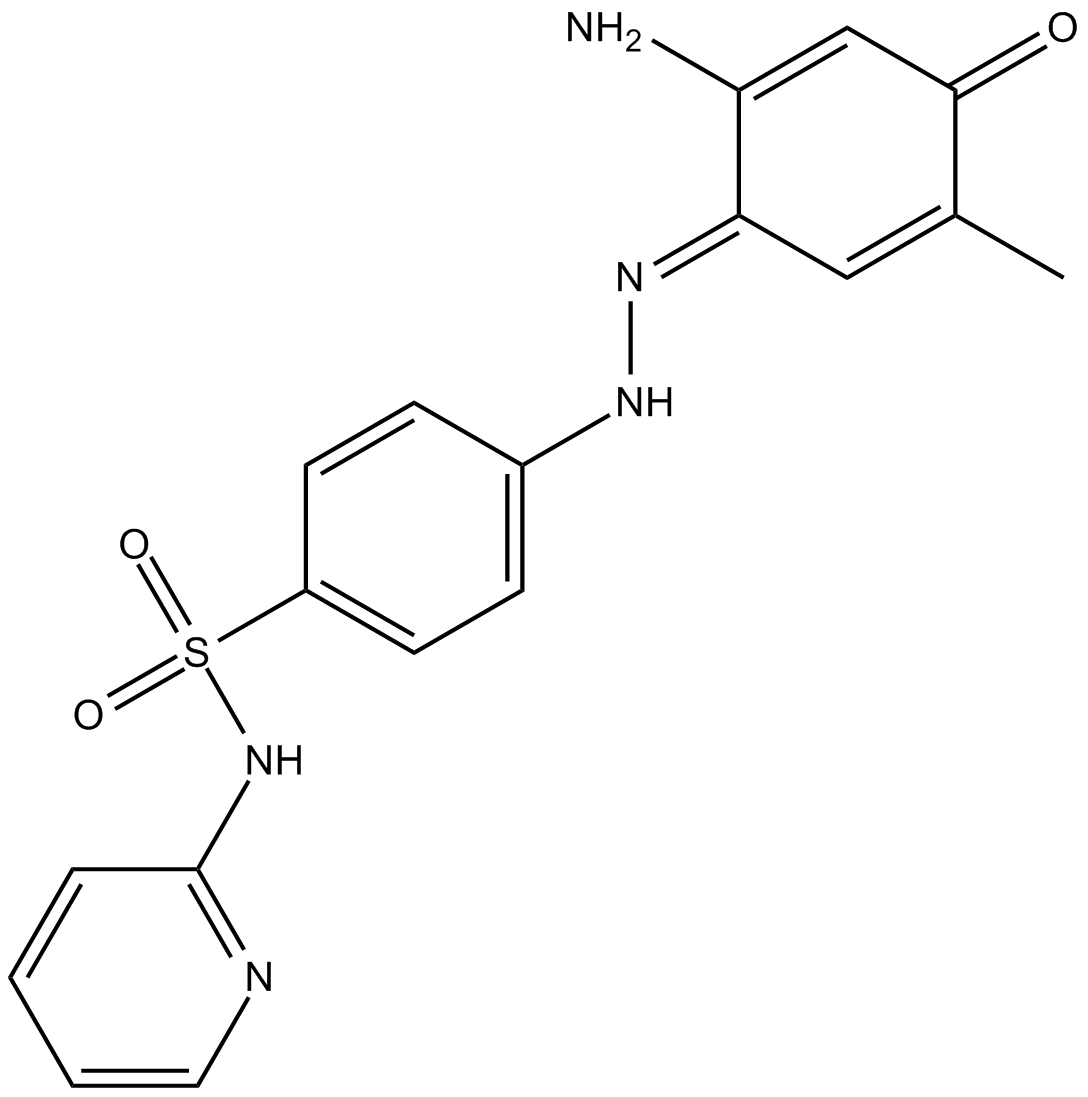
Cas No.: 1395084-25-9
Sample solution is provided at 25 µL, 10mM.
_1-3.$$$39978408@51.jpg');)
_1-9.$$$38538795@65.jpg');)
_1-9.$$$39112701@51.jpg');)
_1-7.$$$37316672@70.jpg');)
_366-372.$$$36198801@70.jpg');)
.$$$38565142@65.jpg');)
_1867-1883.$$$33248023@67.jpg');)
_eads6055.$$$39977546@45.jpg');)
_eadm9805.$$$40080571@45.jpg');)
_eadj3020.$$$39666821@45.jpg');)
_1-20.$$$39757301@28.jpg');)
_1-24.$$$38898113@28.jpg');)
_273-287.$$$36806353@46.jpg');)
_1-16.$$$37156877@44.jpg');)
_1-19.$$$37460805@44.jpg');)
_1291-1307.$$$34518654@46.jpg');)
MS436 is a potent and selective small-molecule inhibitor of BRD4 with Ki values of <0.085μM and 0.34μM, respectively for BrD1 and BrD2 [1].
BRD4 plays a role in gene transcription and is a drug target for cancer and inflammation. It has two bromodomains. MS436 is a diazobenzene compound, it is designed from the SAR studies to have higher selectivity. In vitro fluorescent anisotropy assay shows MS436 has about 10-fold higher affinity of BrD1 over BrD2. MS436 binds to BRD4 through a set of water-mediated interaction and this is the molecular basis for the binding affinity. MS436 also has activity to CBP BrD. In RAW264.7 cells, MS436 can block NF-κB-directed NO production and block the expression of proinflammatory cytokine interleukin (IL)-6 induced by LPS [1].
References:
[1] Zhang G, Plotnikov AN, Rusinova E, Shen T, Morohashi K, Joshua J, Zeng L, Mujtaba S, Ohlmeyer M, Zhou MM. Structure-guided design of potent diazobenzene inhibitors for the BET bromodomains. J Med Chem. 2013 Nov 27;56(22):9251-64.
Kinase experiment: | Binding affinity of the newly synthesized diazobenzene compounds (e.g., MS436) for various bromodoamins is assessed in a fluorescence anisotropy competition assay using a fluorescein isothiocyanate (FITC)-labeled MS417 as an assay probe. Competition experiments are performed with a BrD protein (0.25-1 µM) and the fluorescent probe (80 nM), and increasing concentration of unlabeled competing ligand in a PBS buffer (pH 7.4) in total volume of 80 µL Measurements are obtained after a 1 hour incubation of the fluorescent ligand and the protein at 25°C with Safire 2 microplate reader. In a competition-binding assay, fluorescent ligand concentration is ≤2Kd, and protein concentration is set at which 50-80% of fluorescent ligand is bound. Dissociation constant of a competing ligand is calculated with the correction to Cheng-Prussoff equation introduced by Nicolovska-Coleska and colleagues. Assuming one-site competitive binding model, the equation used to calculate Ki’s from IC50 values[1]. |
Cell experiment: | Murine macrophage RAW264.7 cells are plated at a density of 1×10⁴ cells per well in a 96-well plate and incubated at 37°C for 18 h. The cells are then treated with the diazobenzene bromodomain inhibitors (e.g., MS436) up to 100 µM for 24 hours. At the end of the 24 hr incubation, 10 µL of the MTT solution (4 mg/mL) is added to each well and incubated at 37°C for 4 h. The supernatants are then removed and the cells are solubilized in 100 µL of 100% DMSO. The diazobenzene compounds are first dissolved in DMSO then diluted with culture medium to concentrations that ranged from 0.28 to 50000 nM. The final concentration of DMSO is adjusted to 0.05% (v/v). The extent of the reduction is measured by the absorbance at 570/630 nm using EnVison 2104 Multilabel Reader[1]. |
References: [1]. Zhang G, et al. Structure-Guided Design of Potent Diazobenzene Inhibitors for the BET Bromodomains. J Med Chem. 2013 Nov 27;56(22):9251-64. | |
| Cas No. | 1395084-25-9 | SDF | |
| Chemical Name | 4-[(2Z)-2-(2-amino-5-methyl-4-oxocyclohexa-2,5-dien-1-ylidene)hydrazinyl]-N-pyridin-2-ylbenzenesulfonamide | ||
| Canonical SMILES | CC1=CC(=NNC2=CC=C(C=C2)S(=O)(=O)NC3=CC=CC=N3)C(=CC1=O)N | ||
| Formula | C18H17N5O3S | M.Wt | 383.42 |
| 溶解度 | ≥ 19.15mg/mL in DMSO | Storage | Store at -20°C |
| General tips | Please select the appropriate solvent to prepare the stock solution according to the
solubility of the product in different solvents; once the solution is prepared, please store it in
separate packages to avoid product failure caused by repeated freezing and thawing.Storage method
and period of the stock solution: When stored at -80°C, please use it within 6 months; when stored
at -20°C, please use it within 1 month. To increase solubility, heat the tube to 37°C and then oscillate in an ultrasonic bath for some time. |
||
| Shipping Condition | Evaluation sample solution: shipped with blue ice. All other sizes available: with RT, or with Blue Ice upon request. | ||
| Prepare stock solution | |||

|
1 mg | 5 mg | 10 mg |
| 1 mM | 2.6081 mL | 13.0405 mL | 26.0811 mL |
| 5 mM | 521.6 μL | 2.6081 mL | 5.2162 mL |
| 10 mM | 260.8 μL | 1.3041 mL | 2.6081 mL |
Step 1: Enter information below (Recommended: An additional animal making an allowance for loss during the experiment)
 g
μL
g
μL
Step 2: Enter the in vivo formulation (This is only the calculator, not formulation. Please contact us first if there is no in vivo formulation at the solubility Section.)
Calculation results:
Working concentration: mg/ml;
Method for preparing DMSO master liquid: mg drug pre-dissolved in μL DMSO ( Master liquid concentration mg/mL, Please contact us first if the concentration exceeds the DMSO solubility of the batch of drug. )
Method for preparing in vivo formulation: Take μL DMSO master liquid, next addμL PEG300, mix and clarify, next addμL Tween 80, mix and clarify, next add μL saline, mix and clarify.
Method for preparing in vivo formulation: Take μL DMSO master liquid, next add μL Corn oil, mix and clarify.
Note: 1. Please make sure the liquid is clear before adding the next solvent.
2. Be sure to add the solvent(s) in order. You must ensure that the solution obtained, in the previous addition, is a clear solution before proceeding to add the next solvent. Physical methods such as vortex, ultrasound or hot water bath can be used to aid dissolving.
3. All of the above co-solvents are available for purchase on the GlpBio website.
Quality Control & SDS
- View current batch:
- Purity: >99.00% Appearance: A solid
- COA (Certificate of Analysis)
- SDS (Safety Data Sheet)
- Datasheet
Average Rating: 5 (Based on Reviews and 13 reference(s) in Google Scholar.)