

NS1652 |
Katalog-Nr.GC31133
 One-Click Copy Product Info
|

NS1652 ist ein reversibler AnionenleitfÄhigkeitsinhibitor, der den Chloridkanal blockiert, mit einem IC50 von 1,6 μM in roten BlutkÖrperchen von Mensch und Maus.
Products are for research use only. Not for human use. We do not sell to patients.
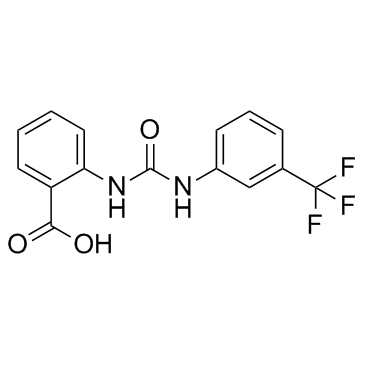
Cas No.: 1566-81-0
Sample solution is provided at 25 µL, 10mM.
_1-3.$$$39978408@51.jpg');)
_1-9.$$$38538795@65.jpg');)
_1-9.$$$39112701@51.jpg');)
_1-7.$$$37316672@70.jpg');)
_366-372.$$$36198801@70.jpg');)
.$$$38565142@65.jpg');)
_1867-1883.$$$33248023@67.jpg');)
_eads6055.$$$39977546@45.jpg');)
_eadm9805.$$$40080571@45.jpg');)
_eadj3020.$$$39666821@45.jpg');)
_1-20.$$$39757301@28.jpg');)
_1-24.$$$38898113@28.jpg');)
_273-287.$$$36806353@46.jpg');)
_1-16.$$$37156877@44.jpg');)
_1-19.$$$37460805@44.jpg');)
_1291-1307.$$$34518654@46.jpg');)
NS1652 is a reversible anion conductance inhibitor, blocks chloride channel, with an IC50 of 1.6 μM in human and mouse red blood cells.
NS1652 potently inhibits the chloride conductance (IC50, 1.6 μM) in human and mouse red blood cells, but only weakly inhibits VRAC (IC50, 125 μM) in HEK293 cells. NS1652 markedly blocks the NO production with an IC50 of 3.1 μM in BV2 cells. NS1652 also down-regulates iNOS expression at 3 μM, and completely abolishes at 10 μM in BV2 cells[1]. NS1652 (0, 1.0, 3.3, 10, and 20 μM) causes increasing hyperpolarization due to inhibition of the chloride conductance in normal erythrocytes. NS1652 lowers the net KCl loss from deoxygenated sickle cells from about 12 mM cells/h to about 4 mM cells/h. NS1652 (20 μM) completely and reversiblely inhibits the red cell Cl-conductance[2].
NS1652 (50 mg/kg, i.v.) blocks murine erythrocyte Cl- conductance by >90% in mice[2].
[1]. Kjaer K, et al. Chloride channel blockers inhibit iNOS expression and NO production in IFNgamma-stimulated microglial BV2 cells. Brain Res. 2009 Jul 24;1281:15-24. [2]. Bennekou P, et al. Volume control in sickle cells is facilitated by the novel anion conductance inhibitor NS1652. Blood. 2000 Mar 1;95(5):1842-8.
Animal experiment: | NS1652 is suspended in a carrying vehicle, cremophore (pig-40 hydrogenated castor oil), at a concentration of 5 mg/mL. At time zero, an amount corresponding to 1% of animal weight (about 250 μL of suspension) is injected into mice though the tail veins (NMRI strain, 5-6 weeks). At several time intervals after the injection, the mice are decapitated and the blood collected is collected and centrifuged for 60 seconds. The plasma is removed by aspiration and the packed cells are stored on ice until use. Immediately before measurement, the packed cells are resuspended in 1 volume of ice-cold experimental medium and centrifuged for 30 seconds. A total of 100 μL of packed cells are then immediately transferred to 3 mL medium, and CCCP and valinomycin added. The blood samples are analyzed in random order with respect to the time of decapitation[2]. |
References: [1]. Kjaer K, et al. Chloride channel blockers inhibit iNOS expression and NO production in IFNgamma-stimulated microglial BV2 cells. Brain Res. 2009 Jul 24;1281:15-24. | |
| Cas No. | 1566-81-0 | SDF | |
| Canonical SMILES | O=C(O)C1=CC=CC=C1NC(NC2=CC=CC(C(F)(F)F)=C2)=O | ||
| Formula | C15H11F3N2O3 | M.Wt | 324.25 |
| Löslichkeit | DMSO: 5 mg/mL (15.42 mM) | Storage | Store at -20°C |
| General tips | Please select the appropriate solvent to prepare the stock solution according to the
solubility of the product in different solvents; once the solution is prepared, please store it in
separate packages to avoid product failure caused by repeated freezing and thawing.Storage method
and period of the stock solution: When stored at -80°C, please use it within 6 months; when stored
at -20°C, please use it within 1 month. To increase solubility, heat the tube to 37°C and then oscillate in an ultrasonic bath for some time. |
||
| Shipping Condition | Evaluation sample solution: shipped with blue ice. All other sizes available: with RT, or with Blue Ice upon request. | ||
| Prepare stock solution | |||

|
1 mg | 5 mg | 10 mg |
| 1 mM | 3.084 mL | 15.4202 mL | 30.8404 mL |
| 5 mM | 616.8 μL | 3.084 mL | 6.1681 mL |
| 10 mM | 308.4 μL | 1.542 mL | 3.084 mL |
Step 1: Enter information below (Recommended: An additional animal making an allowance for loss during the experiment)
 g
μL
g
μL
Step 2: Enter the in vivo formulation (This is only the calculator, not formulation. Please contact us first if there is no in vivo formulation at the solubility Section.)
Calculation results:
Working concentration: mg/ml;
Method for preparing DMSO master liquid: mg drug pre-dissolved in μL DMSO ( Master liquid concentration mg/mL, Please contact us first if the concentration exceeds the DMSO solubility of the batch of drug. )
Method for preparing in vivo formulation: Take μL DMSO master liquid, next addμL PEG300, mix and clarify, next addμL Tween 80, mix and clarify, next add μL saline, mix and clarify.
Method for preparing in vivo formulation: Take μL DMSO master liquid, next add μL Corn oil, mix and clarify.
Note: 1. Please make sure the liquid is clear before adding the next solvent.
2. Be sure to add the solvent(s) in order. You must ensure that the solution obtained, in the previous addition, is a clear solution before proceeding to add the next solvent. Physical methods such as vortex, ultrasound or hot water bath can be used to aid dissolving.
3. All of the above co-solvents are available for purchase on the GlpBio website.
Quality Control & SDS
- View current batch:
- Purity: >99.50% Appearance: A solid
- COA (Certificate of Analysis)
- SDS (Safety Data Sheet)
- Datasheet
Average Rating: 5 (Based on Reviews and 31 reference(s) in Google Scholar.)