

Pitstop 2c |
Katalog-Nr.GC79127
 One-Click Copy Product Info
|

Pitstop 2c is a clathrin terminal domain inhibitor with an IC50 of 1.8 μM.
Products are for research use only. Not for human use. We do not sell to patients.
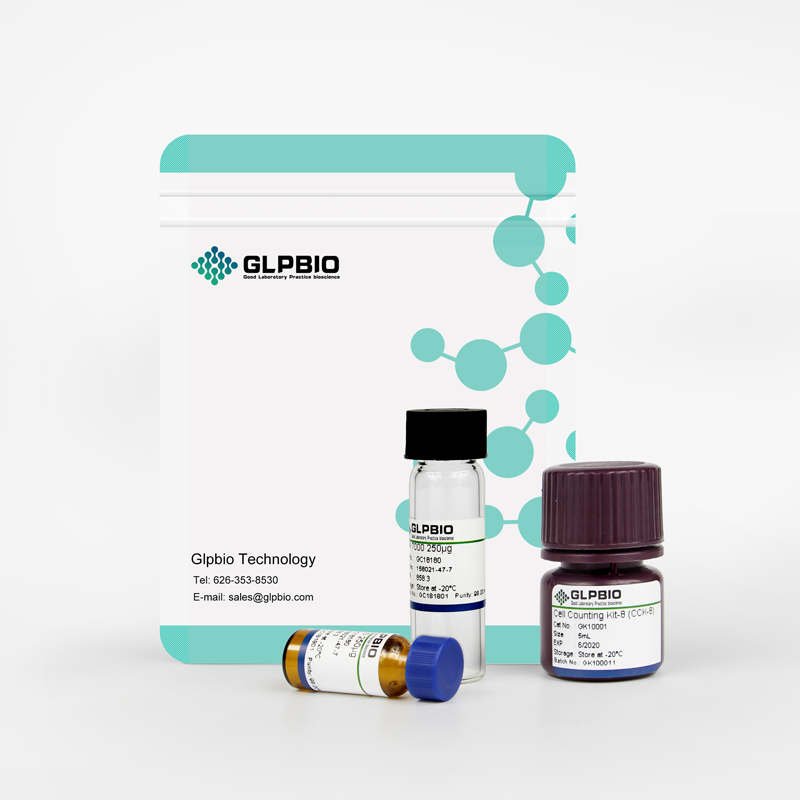
Sample solution is provided at 25 µL, 10mM.
_1-3.$$$39978408@51.jpg');)
_1-9.$$$38538795@65.jpg');)
_1-9.$$$39112701@51.jpg');)
_1-7.$$$37316672@70.jpg');)
_366-372.$$$36198801@70.jpg');)
.$$$38565142@65.jpg');)
_1867-1883.$$$33248023@67.jpg');)
_eads6055.$$$39977546@45.jpg');)
_eadm9805.$$$40080571@45.jpg');)
_eadj3020.$$$39666821@45.jpg');)
_1-20.$$$39757301@28.jpg');)
_1-24.$$$38898113@28.jpg');)
_273-287.$$$36806353@46.jpg');)
_1-16.$$$37156877@44.jpg');)
_1-19.$$$37460805@44.jpg');)
_1291-1307.$$$34518654@46.jpg');)
In Vitro, Pitstop 2c inhibits clathrin terminal domain-amphiphysin binding in vitro with an IC50 of 1.8 μM[1]. Pitstop 2c (25-100 μM; 8-20 h) exhibits low cytotoxicity in HEK293 cells[1]. Pitstop 2c (25-100 μM; 8-20 h) exhibits low cytotoxicity in Cos7 cells[1]. Pitstop 2c (30 μM; 15 min) does not disrupt the nuclear permeability barrier in HeLa cells[1]. Pitstop 2c (30 μM; 20 min) inhibits transferrin CME in HeLa cells with an IC50 of 13 μM, and nearly completely blocks uptake[1]. Pitstop 2c (45 μM) reversibly inhibits transferrin CME in HEK293T cells[1]. Pitstop 2c (45 μM) reversibly inhibits transferrin CME in Cos7 cells[1]. Pitstop 2c (low, non-toxic dose; 15 min pre-treatment, 5 min imaging) perturbs CCP dynamics in Cos7 cells stably expressing eGFP-clathrin light chain α, reducing the fraction of dynamic coated pits[1]. Pitstop 2c (30 μM; 20 min) impairs clathrin dynamics in the perinuclear region of Cos7 cells stably expressing eGFP-clathrin light chain α, reducing maximal fluorescence recovery to 44.4%[1]. Pitstop 2c (45 μM; 15 min) does not impair clathrin-independent fluid-phase endocytosis of dextran in HeLa cells[1]. Pitstop 2c (15 min pre-incubation, 2 min galectin-3 internalization) enhances clathrin-independent endocytosis of galectin-3 and alters its subcellular distribution in HeLa cells[1]. Pitstop 2c (100 μM; 1 h) displaces Epsin 1 from clathrin and increases clathrin association with SNX9 in Cos7 cells stably expressing eGFP-clathrin light chain α[1]. Pitstop 2c (four-fold molar excess relative to clathrin terminal domain) binds to the clathrin box site of the clathrin terminal domain in a distinct U-shaped conformation, forming specific interactions with residues R64 and K96[1]. Pitstop 2c (20 μM; 15 min pre-incubation, 1 h viral infection) inhibits VSV entry into Vero-E6 cells by >60%[1].
References:
[1]. Horatscheck A, et al. Next-generation small molecule inhibitors of clathrin function acutely inhibit endocytosis. Structure (London, England: 1993). 2025 May 01;33(5):878-890.e7.
| Cas No. | SDF | ||
| Formula | C26H18N2O4S2 | M.Wt | 486.56 |
| Löslichkeit | DMSO: 100 mg/mL (205.52 mM; Need ultrasonic) | Storage | Store at 4°C, away from moisture |
| Shipping Condition | Evaluation sample solution: shipped with blue ice. All other sizes available: with RT, or with Blue Ice upon request. | ||
| Prepare stock solution | |||

|
1 mg | 5 mg | 10 mg |
| 1 mM | 2.0552 mL | 10.2762 mL | 20.5524 mL |
| 5 mM | 411 μL | 2.0552 mL | 4.1105 mL |
| 10 mM | 205.5 μL | 1.0276 mL | 2.0552 mL |
Step 1: Enter information below (Recommended: An additional animal making an allowance for loss during the experiment)
 g
μL
g
μL
Step 2: Enter the in vivo formulation (This is only the calculator, not formulation. Please contact us first if there is no in vivo formulation at the solubility Section.)
Calculation results:
Working concentration: mg/ml;
Method for preparing DMSO master liquid: mg drug pre-dissolved in μL DMSO ( Master liquid concentration mg/mL, Please contact us first if the concentration exceeds the DMSO solubility of the batch of drug. )
Method for preparing in vivo formulation: Take μL DMSO master liquid, next addμL PEG300, mix and clarify, next addμL Tween 80, mix and clarify, next add μL saline, mix and clarify.
Method for preparing in vivo formulation: Take μL DMSO master liquid, next add μL Corn oil, mix and clarify.
Note: 1. Please make sure the liquid is clear before adding the next solvent.
2. Be sure to add the solvent(s) in order. You must ensure that the solution obtained, in the previous addition, is a clear solution before proceeding to add the next solvent. Physical methods such as vortex, ultrasound or hot water bath can be used to aid dissolving.
3. All of the above co-solvents are available for purchase on the GlpBio website.
Quality Control & SDS
- View current batch:
- Purity: >98.50% Appearance: A solid
- COA (Certificate of Analysis)
- SDS (Safety Data Sheet)
- Datasheet
Average Rating: 5 (Based on Reviews and 30 reference(s) in Google Scholar.)