

Lentinan (Synonyms: A823605, Bromoduline) |
Katalog-Nr.GC18405
 One-Click Copy Product Info
|

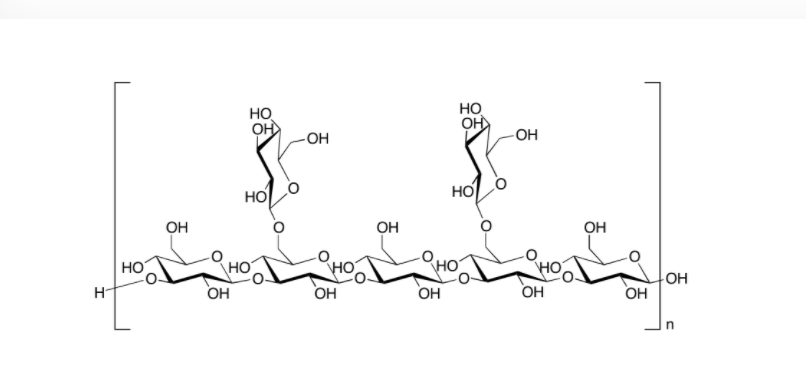
Lentinan, isoliert und gereinigt aus dem gekochten Extrakt des Fruchtkörpers von Lentinus edodes, ist ein pilzliches Polysaccharid-Immunmodulator mit antitumoraler Aktivität.
Products are for research use only. Not for human use. We do not sell to patients.
Cas No.: 37339-90-5
Sample solution is provided at 25 µL, 10mM.
Lentinan, a natural β-glucan extracted from the shiitake mushroom (Lentinula edodes), acts as a non-specific immune enhancer[1]. Lentinan enhances immune responses by activating macrophages, dendritic cells, and natural killer cells, and by promoting the expression of pro-inflammatory cytokines such as TNF-α and IL-6[2]. Lentinan is commonly used in research related to anti-tumor, anti-inflammatory, and neuroprotective effects[3].
In vitro, pretreatment of bovine mammary epithelial cells with Lentinan (100μg/mL; 6h) abolished LPS-induced ROS, restored SOD/T-AOC, up-regulated Nrf2/HO-1, silenced NF-κB/MAPK, suppressed IL-1β/IL-6/TNF-α and blocked apoptosis without cytotoxicity[4]. Treatment of A549 lung cancer cells with Lentinan (100μM; 48h) reduced IL-6 and IL-1β levels, decreased caspase-1 activity, raised ROS, lowered GPx4, depolarized mitochondria and activated caspase-3/DNA damage[5].
In vivo, Lentinan (10mg/kg/day; i.p.; 5 days) reversed house dust mite(HDM)-induced airway eosinophilia, IL-4/5/13 overproduction, mucus hypersecretion and ZO-1 loss in HDM-sensitized C57BL/6 mice[6]. Lentinan (200mg/kg/day; p.o.; 14 days) reversed antibiotic-induced colitis in C57BL/6J mice, restored colonic ZO-1/Occludin expression, reduced TNF-α and IL-6 levels, suppressed NF-κB activation, elevated propionic and butyric acid concentrations, reduced Proteobacteria abundance, and enriched SCFA-producing S24-7, Lactobacillus and Allobaculum[7].
References:
[1] Ahn H, Jeon E, Kim JC, et al. Lentinan from shiitake selectively attenuates AIM2 and non-canonical inflammasome activation while inducing pro-inflammatory cytokine production. Sci Rep. 2017;7(1):1314.
[2] Zhou G, Liu H, Yuan Y, Wang Q, Wang L, Wu J. Lentinan progress in inflammatory diseases and tumor diseases. Eur J Med Res. 2024;29(1):8.
[3] Liu S, Yan Z, Peng Y, et al. Lentinan has a beneficial effect on cognitive deficits induced by chronic Toxoplasma gondii infection in mice. Parasit Vectors. 2023;16(1):454.
[4] Meng M, Huo R, Wang Y, et al. Lentinan inhibits oxidative stress and alleviates LPS-induced inflammation and apoptosis of BMECs by activating the Nrf2 signaling pathway. Int J Biol Macromol. 2022;222(Pt B):2375-2391.
[5] Li M, Du X, Yuan Z, Cheng M, Dong P, Bai Y. Lentinan triggers oxidative stress-mediated anti-inflammatory responses in lung cancer cells. Mol Cell Biochem. 2022;477(2):469-477.
[6] Song Y, Chen Y, Cai H, et al. Lentinan attenuates allergic airway inflammation and epithelial barrier dysfunction in asthma via inhibition of the PI3K/AKT/NF-κB pathway. Phytomedicine. 2024;134:155965.
[7] Ji X, Su L, Zhang P, et al. Lentinan improves intestinal inflammation and gut dysbiosis in antibiotics-induced mice. Sci Rep. 2022;12(1):19609.
| Cell experiment [1]: | |
|
Cell lines |
A549 cells |
|
Preparation Method |
The A549 cells were cultured in DMEM (Dulbecco's Modified Eagle's Medium) medium supplemented with 4mM L-glutamine and 10% fetal bovine serum (FBS), 100Units/ml penicillin and 100μg/ml streptomycin. The cells were incubated at 37°C, 5% CO2, and 95% air. Prior to each experiment 3.0×10⁵ or 2.0×10⁴ cells were seeded in a 6-well plate or 96-well plate, respectively. Cells were treated with 100µM Lentinan for 48h. Then cytotoxicity was assessed using the CCK-8 assay. Cellular Reactive Oxygen Species Detection Assay Kit was used according to manufacturer to quantify the ROS production. GPx4 activity were measured by the NADPH-coupled assay, using hydrogen peroxide and phosphatidylcholine hydroperoxide as the substrate. The caspase-1 activity was recorded using YVAD-AFC substrate at 505nm. |
|
Reaction Conditions |
100μM; 48h |
|
Applications |
Treatment of A549 lung cancer cells with Lentinan reduced caspase-1 activity, raised ROS, and lowered GPx4 level. |
| Animal experiment [2]: | |
|
Animal models |
Female C57BL/6 mice |
|
Preparation Method |
Female C57BL/6 mice, aged between 6 to 8 weeks were anesthetized with isoflurane and intranasally administered 40μl of a 0.25mg/ml house dust mite(HDM) extract by Greer Laboratories on days 1-3 for sensitization. On days 8-12, they were intraperitoneally injected with Lentinan at dosages of 10mg/kg, 1 hour prior to HDM challenge. The control group received intranasal administration of PBS during sensitization and challenge. 48h after the last administration, mice were euthanized under anesthesia with avertin, and their organs were dissected for further Histopathological examination, qRT-PCR and Western blotting analysis. To collect the BALF, the trachea and lungs were flushed three times using 1ml of PBS. After centrifugation (300g, 10min, 4°C), the supernatant of BALF was harvested for further analysis. CellDrop® and flow cytometry were used for cell classifying and counting in BALF sediment. The presence of neutrophils was confirmed by their CD45+Ly6G+ immunophenotype, and eosinophils were identified through their CD45+ absence of Ly6G, CD11c, and presence of SiglecF. |
|
Dosage form |
10mg/kg/day; i.p.;5 days |
|
Applications |
Lentinan reversed HDM-induced airway eosinophilia, IL-4/5/13 overproduction, mucus hypersecretion and ZO-1 loss in HDM-sensitized C57BL/6 mice. |
|
References: |
|
| Cas No. | 37339-90-5 | SDF | |
| Überlieferungen | A823605, Bromoduline | ||
| Formula | (C42H70O35)nH2O | M.Wt | 1134.98 |
| Löslichkeit | 0.1 M NaOH : 33.33 mg/mL (ultrasonic and adjust pH to 9 with NaOH) | Storage | Store at -20°C, protect from light |
| General tips | Please select the appropriate solvent to prepare the stock solution according to the
solubility of the product in different solvents; once the solution is prepared, please store it in
separate packages to avoid product failure caused by repeated freezing and thawing.Storage method
and period of the stock solution: When stored at -80°C, please use it within 6 months; when stored
at -20°C, please use it within 1 month. To increase solubility, heat the tube to 37°C and then oscillate in an ultrasonic bath for some time. |
||
| Shipping Condition | Evaluation sample solution: shipped with blue ice. All other sizes available: with RT, or with Blue Ice upon request. | ||
| Prepare stock solution | |||

|
1 mg | 5 mg | 10 mg |
| 1 mM | 881.1 μL | 4.4054 mL | 8.8107 mL |
| 5 mM | 176.2 μL | 881.1 μL | 1.7621 mL |
| 10 mM | 88.1 μL | 440.5 μL | 881.1 μL |
Step 1: Enter information below (Recommended: An additional animal making an allowance for loss during the experiment)
 g
μL
g
μL
Step 2: Enter the in vivo formulation (This is only the calculator, not formulation. Please contact us first if there is no in vivo formulation at the solubility Section.)
Calculation results:
Working concentration: mg/ml;
Method for preparing DMSO master liquid: mg drug pre-dissolved in μL DMSO ( Master liquid concentration mg/mL, Please contact us first if the concentration exceeds the DMSO solubility of the batch of drug. )
Method for preparing in vivo formulation: Take μL DMSO master liquid, next addμL PEG300, mix and clarify, next addμL Tween 80, mix and clarify, next add μL saline, mix and clarify.
Method for preparing in vivo formulation: Take μL DMSO master liquid, next add μL Corn oil, mix and clarify.
Note: 1. Please make sure the liquid is clear before adding the next solvent.
2. Be sure to add the solvent(s) in order. You must ensure that the solution obtained, in the previous addition, is a clear solution before proceeding to add the next solvent. Physical methods such as vortex, ultrasound or hot water bath can be used to aid dissolving.
3. All of the above co-solvents are available for purchase on the GlpBio website.
Quality Control & SDS
- View current batch:
- Purity: >98.00% Appearance: A solid
- COA (Certificate of Analysis)
- SDS (Safety Data Sheet)
- Datasheet
Average Rating: 5 (Based on Reviews and 27 reference(s) in Google Scholar.)