

PS 48 |
Katalog-Nr.GC13920
 One-Click Copy Product Info
|

PDK1-Aktivator
Products are for research use only. Not for human use. We do not sell to patients.
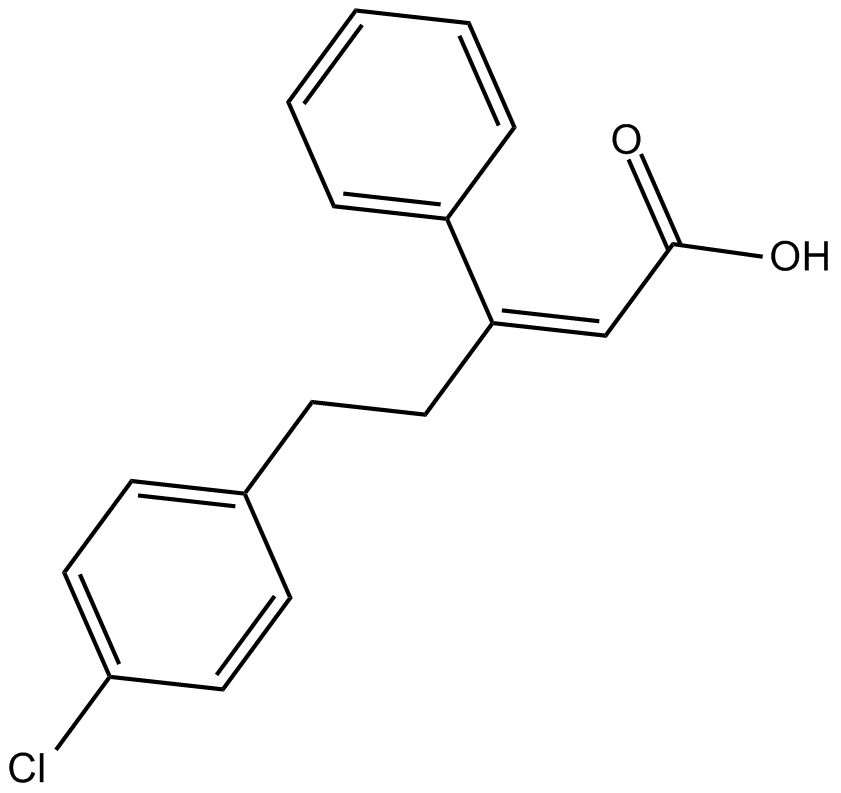
Cas No.: 1180676-32-7
Sample solution is provided at 25 µL, 10mM.
PS 48 is a PDK1 (phosphoinositide-dependent kinase-1) activator with an AC50 of 8μM[1]. PS 48 can bind to the HM/PIF binding pocket of PDK1, targeting the protein kinase catalytic domain without affecting the ATP binding site[2]. PDK1 is mainly responsible for regulating the activity of the pyruvate dehydrogenase complex (PDH) and is also involved in multiple signaling pathways, especially closely related to the PI3K/AKT signaling pathway[3]. Therefore, PS 48 is often used in research related to mitochondrial function and cell proliferation [4]
In vitro, after 42-44 hours of treatment with PS 48 (10μM) in porcine oocytes, the maturation rate of oocytes was significantly increased, the proportion of the metaphase stage of the second meiosis (MII) oocytes was increased, and the expansion of cumulus cells was improved. In addition, PS 48 significantly upregulated the mRNA and protein levels of maturation-related genes (such as CyclinB1, MOS, Akt, mTOR, BMP15, GDF9, etc.), while reducing the protein level of the pro-apoptotic gene BAX and increasing the expression of the anti-apoptotic gene BCL2[5]. Pre-treatment of MC3T3-E1 cells with PS 48 (5μM) can significantly enhance the osteogenic capacity of osteoblasts inhibited by dexamethasone (Dex), and increase the protein levels of p-AKT and p-mTOR by activating the AKT/mTOR signaling pathway [6].
In vivo, PS 48 (50mg/kg) was administered via diet to APP/PS1 transgenic mice from 10 to 14 months of age. PS 48 significantly improved spatial learning and memory in the Morris Water Maze test in transgenic mice[7]. PS 48 (50mg/kg) was administered via diet to APP/PS1 transgenic mice from 12 to 14 months of age. PS 48 significantly reduced the phosphorylation levels of Tau protein, partially reversed hippocampal atrophy, and improved the phosphorylation state of insulin signaling pathway-related proteins[8].
References:
[1] Hindie V, Stroba A, Zhang H, et al. Structure and allosteric effects of low-molecular-weight activators on the protein kinase PDK1. Nat Chem Biol. 2009 Oct;5(10):758-64.
[2] Han F, Xue M, Chang Y, et al. Triptolide Suppresses Glomerular Mesangial Cell Proliferation in Diabetic Nephropathy Is Associated with Inhibition of PDK1/Akt/mTOR Pathway. Int J Biol Sci. 2017 Sep 21;13(10):1266-1275.
[3] Querfurth H, Marshall J, Parang K, et al. A PDK-1 allosteric agonist neutralizes insulin signaling derangements and beta-amyloid toxicity in neuronal cells and in vitro. PLoS One. 2022 Jan 21;17(1):e0261696.
[4] Mordhorst BR, Kerns KC, Schauflinger M, et al. Pharmacologic treatment with CPI-613 and PS48 decreases mitochondrial membrane potential and increases quantity of autolysosomes in porcine fibroblasts. Sci Rep. 2019 Jul 1;9(1):9417.
[5] Jiao Y, Zhu S, Li J, et al. PS48 promotes in vitro maturation and developmental competence of porcine oocytes through activating PI3K/Akt signalling pathway. Reprod Domest Anim. 2020 Dec;55(12):1678-1687.
[6] Xu WN, Zheng HL, Yang RZ, et al. HIF-1α Regulates Glucocorticoid-Induced Osteoporosis Through PDK1/AKT/mTOR Signaling Pathway. Front Endocrinol (Lausanne). 2020 Jan 28;10:922.
[7] Querfurth H, Slitt A, DiCamillo A, et al. A PDK-1 allosteric agonist improves spatial learning and memory in a βAPP/PS-1 transgenic mouse-high fat diet intervention model of Alzheimer's disease. Behav Brain Res. 2023 Feb 13;438:114183.
[8] Querfurth HW, Lemere C, Ciola J, et al. Target Validation Studies of PS48, a PDK-1 Allosteric Agonist, for the Treatment of Alzheimer's Disease Phenotype in APP/PS1 Transgenic Mice. Int J Mol Sci. 2025 Apr 8;26(8):3473.
| Cell experiment [1]: | |
Cell lines | MC3T3-E1 cells (pre-osteoblast cell line) |
Preparation Method | MC3T3-E1 cells were cultured in α-MEM containing 10% fetal bovine serum (FBS) at 37°C with 5% CO₂. Osteogenic differentiation was induced by adding 4mM glycerophosphate, 25μg/mL ascorbic acid to the medium and 5μM PS 48. Dexamethasone at different concentrations (1nM to 1μM) was added for 14 days. |
Reaction Conditions | 5μM; 14 day |
Applications | PS 48 (5μM) significantly promoted the osteogenic ability of MC3T3-E1 cells treated with dexamethasone. PS 48 increased the expression of osteogenic markers Runx2, OCN, and ALP, as well as the protein levels of p-AKT and p-mTOR. |
| Animal experiment [2]: | |
Animal models | Double transgenic APPsw/PSEN1dE9 mice |
Preparation Method | Mice were raised on either standard (SD) or high-fat (HFD) diets and orally administered PS48 (50mg/kg/day) starting at 10 months of age and tested at 14 months of age. |
Dosage form | 50mg/kg/day; oral |
Applications | PS 48 improved spatial learning and memory in the Morris Water Maze (MWM) in both SD and HFD groups compared to vehicle-treated mice. PS 48 also modestly reduced body weights and improved oral glucose tolerance test (OGTT) responses in transgenic mice on HFD. |
References: | |
| Cas No. | 1180676-32-7 | SDF | |
| Chemical Name | (Z)-5-(4-chlorophenyl)-3-phenylpent-2-enoic acid | ||
| Canonical SMILES | ClC1=CC=C(C=C1)CC/C(C2=CC=CC=C2)=C/C(O)=O | ||
| Formula | C17H15ClO2 | M.Wt | 286.75 |
| Löslichkeit | Soluble in DMSO | Storage | Store at -20°C |
| General tips | Please select the appropriate solvent to prepare the stock solution according to the
solubility of the product in different solvents; once the solution is prepared, please store it in
separate packages to avoid product failure caused by repeated freezing and thawing.Storage method
and period of the stock solution: When stored at -80°C, please use it within 6 months; when stored
at -20°C, please use it within 1 month. To increase solubility, heat the tube to 37°C and then oscillate in an ultrasonic bath for some time. |
||
| Shipping Condition | Evaluation sample solution: shipped with blue ice. All other sizes available: with RT, or with Blue Ice upon request. | ||
| Prepare stock solution | |||

|
1 mg | 5 mg | 10 mg |
| 1 mM | 3.4874 mL | 17.4368 mL | 34.8736 mL |
| 5 mM | 697.5 μL | 3.4874 mL | 6.9747 mL |
| 10 mM | 348.7 μL | 1.7437 mL | 3.4874 mL |
Step 1: Enter information below (Recommended: An additional animal making an allowance for loss during the experiment)
 g
μL
g
μL
Step 2: Enter the in vivo formulation (This is only the calculator, not formulation. Please contact us first if there is no in vivo formulation at the solubility Section.)
Calculation results:
Working concentration: mg/ml;
Method for preparing DMSO master liquid: mg drug pre-dissolved in μL DMSO ( Master liquid concentration mg/mL, Please contact us first if the concentration exceeds the DMSO solubility of the batch of drug. )
Method for preparing in vivo formulation: Take μL DMSO master liquid, next addμL PEG300, mix and clarify, next addμL Tween 80, mix and clarify, next add μL saline, mix and clarify.
Method for preparing in vivo formulation: Take μL DMSO master liquid, next add μL Corn oil, mix and clarify.
Note: 1. Please make sure the liquid is clear before adding the next solvent.
2. Be sure to add the solvent(s) in order. You must ensure that the solution obtained, in the previous addition, is a clear solution before proceeding to add the next solvent. Physical methods such as vortex, ultrasound or hot water bath can be used to aid dissolving.
3. All of the above co-solvents are available for purchase on the GlpBio website.
Quality Control & SDS
- View current batch:
- Purity: >98.00% Appearance: A solid
- COA (Certificate of Analysis)
- SDS (Safety Data Sheet)
- Datasheet
Average Rating: 5 (Based on Reviews and 19 reference(s) in Google Scholar.)