

ML 349 |
Katalog-Nr.GC17889
 One-Click Copy Product Info
|

ML 349 ist ein potenter und spezifischer Acylprotein-Thioesterase-2(APT2)/Lysophospholipase-2 (LYPLA2)-Inhibitor mit einem Ki von 120 nM. ML 349 ist auch ein Inhibitor von LYPLA2 mit einem IC50 von 144 nM.
Products are for research use only. Not for human use. We do not sell to patients.
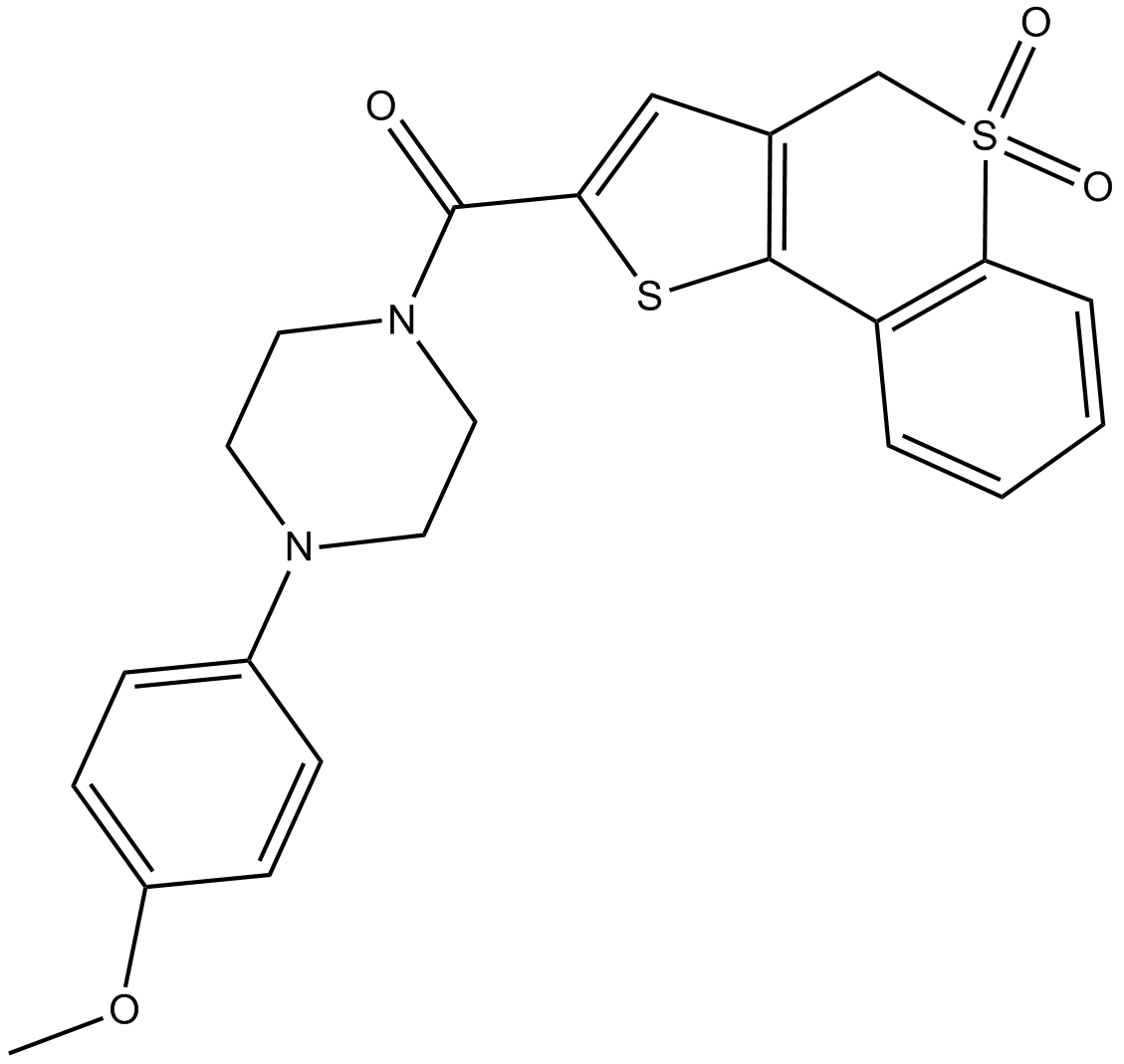
Cas No.: 890819-86-0
Sample solution is provided at 25 µL, 10mM.
_1-3.$$$39978408@51.jpg');)
_1-9.$$$38538795@65.jpg');)
_1-9.$$$39112701@51.jpg');)
_1-7.$$$37316672@70.jpg');)
_366-372.$$$36198801@70.jpg');)
.$$$38565142@65.jpg');)
_1867-1883.$$$33248023@67.jpg');)
_eads6055.$$$39977546@45.jpg');)
_eadm9805.$$$40080571@45.jpg');)
_eadj3020.$$$39666821@45.jpg');)
_1-20.$$$39757301@28.jpg');)
_1-24.$$$38898113@28.jpg');)
_273-287.$$$36806353@46.jpg');)
_1-16.$$$37156877@44.jpg');)
_1-19.$$$37460805@44.jpg');)
_1291-1307.$$$34518654@46.jpg');)
ML 349 is the active-site competitive acyl protein thioesterase 2 (APT2) inhibitor, with Ki= 0.120μM [1]. ML 349 is a selective, reversible inhibitor of Lysophospholipase 2 (LYPLA2), with an IC50 value of 0.144μM [2]. ML 349 has been widely used in cell models to regulate the S-palmitoylation of proteins within the cells[3].
In vitro, ML 349 treatment at 5μM for 16 hours can restore the membrane localization and palmitoylation of multidomain scaffolding protein Scribble (Scrib), and reduce the activation of MEK in MDCK-Snail cells[4]. ML 349 pretreatment (20μM) in NCM460 cells for 24 hours reduced the effects of palmitic acid (PA) on the expression of APT2, p-STAT3, ZO-1, closure protein, BCL-2 and BAX, and upregulated the STAT3 palmitoylation level[5]. Treatment with 8μM ML 349 for 72 hours led to a slight activation of AKT in NRAS mutant-SK-MEL-2 cells, without affecting the cell viability[6].
In vivo, ML 349 treatment via intraperitoneal injection at 50mg/kg/day for 7 days prevented intestinal shortening and alleviated DSS-induced colitis in Zdhhc7-knockout mice[7]. Injecting ML 349 (5mg/kg) into the tail vein of mice for 4 hours enhanced the palmitoylation of mitochondrial antiviral signaling protein (MAVS), increased the phosphorylation of TBK1 and IRF3, inhibited the levels of VSV-GFP and VSV titer, and elevated the mRNA levels of antiviral genes during Sendai virus (SeV) infection [8].
References:
[1] Won S J, Eschweiler J D, Majmudar J D, et al. Affinity-based selectivity profiling of an in-class selective competitive inhibitor of acyl protein thioesterase 2[J]. ACS Medicinal Chemistry Letters, 2017, 8(2): 215-220.
[2] Adibekian A, Martin B R, Chang J W, et al. Characterization of a selective, reversible inhibitor of lysophospholipase 2 (LYPLA2)[J]. Probe Reports from the NIH Molecular Libraries Program [Internet], 2014.
[3] Chen B, Sun Y, Niu J, et al. Protein lipidation in cell signaling and diseases: function, regulation, and therapeutic opportunities[J]. Cell chemical biology, 2018, 25(7): 817-831.
[4] Hernandez J L, Davda D, Kit M C S, et al. APT2 inhibition restores scribble localization and S-palmitoylation in snail-transformed cells[J]. Cell chemical biology, 2017, 24(1): 87-97.
[5] Wei Y, Li J, Li J, et al. Dietary long-chain fatty acids promote colitis by regulating palmitoylation of STAT3 through CD36-mediated endocytosis[J]. Cell Death & Disease, 2024, 15(1): 60.
[6] Vujic I, Sanlorenzo M, Esteve-Puig R, et al. Acyl protein thioesterase 1 and 2 (APT-1, APT-2) inhibitors palmostatin B, ML348 and ML349 have different effects on NRAS mutant melanoma cells[J]. Oncotarget, 2016, 7(6): 7297.
[7] Zhang M, Zhou L, Xu Y, et al. A STAT3 palmitoylation cycle promotes TH17 differentiation and colitis[J]. Nature, 2020, 586(7829): 434-439.
[8] Bu L, Wang H, Zhang S, et al. Targeting APT2 improves MAVS palmitoylation and antiviral innate immunity[J]. Molecular Cell, 2024, 84(18): 3513-3529. e5.
| Cell experiment [1]: | |
Cell lines | NCM460 cells |
Preparation Method | The NCM460 cells were cultured in Dulbecco’s Modified Eagle Medium (DMEM) supplemented with 10% v/v fetal bovine serum (FBS) and 1% v/v penicillin/streptomycin. The culture conditions were 37°C and 5% CO2. The cells were pretreated with ML 349 (20μM) or DMSO for 24 hours, and then stimulated with 1μg/mL lipopolysaccharide (LPS) combined with 200μM PA and 100μM bovine serum albumin (BSA) for 24 hours. The levels of palmitoylated STAT3 were measured. |
Reaction Conditions | 20μM; 24h |
Applications | ML 349 treatment enhanced levels of palmitoylated STAT3 in the presence of LPS-PA within NCM460 cells. |
| Animal experiment [2]: | |
Animal models | Zdhhc7-knockout mice |
Preparation Method | Zdhhc7-knockout mice were raised under specific pathogen-free conditions. The mice (6-8 weeks old) were randomly divided into different groups (8 mice per group, mixed sexes). Colitis was induced by adding 3.0% DSS to the mice's drinking water. The mice were intraperitoneally injected with ML 349 solution (50mg/kg/day) for 7 days. All mice were euthanized and the distance from the cecum to the anus was measured. The colon was fixed in 4% paraformaldehyde for pathological examination. |
Dosage form | 50mg/kg/day for 7 days; i.p. |
Applications | ML 349 treatment prevented intestinal shortening and alleviated DSS-induced colitis in mice. |
References: | |
| Cas No. | 890819-86-0 | SDF | |
| Chemical Name | (5,5-dioxido-4H-thieno[3,2-c]thiochromen-2-yl)(4-(4-methoxyphenyl)piperazin-1-yl)methanone | ||
| Canonical SMILES | COC1=CC=C(N2CCN(C(C3=CC4=C(C(C=CC=C5)=C5S(C4)(=O)=O)S3)=O)CC2)C=C1 | ||
| Formula | C23H22N2O4S2 | M.Wt | 454.56 |
| Löslichkeit | 5mg/mL in DMSO, or in DMF | Storage | Store at -20°C |
| General tips | Please select the appropriate solvent to prepare the stock solution according to the
solubility of the product in different solvents; once the solution is prepared, please store it in
separate packages to avoid product failure caused by repeated freezing and thawing.Storage method
and period of the stock solution: When stored at -80°C, please use it within 6 months; when stored
at -20°C, please use it within 1 month. To increase solubility, heat the tube to 37°C and then oscillate in an ultrasonic bath for some time. |
||
| Shipping Condition | Evaluation sample solution: shipped with blue ice. All other sizes available: with RT, or with Blue Ice upon request. | ||
| Prepare stock solution | |||

|
1 mg | 5 mg | 10 mg |
| 1 mM | 2.1999 mL | 10.9996 mL | 21.9993 mL |
| 5 mM | 440 μL | 2.1999 mL | 4.3999 mL |
| 10 mM | 220 μL | 1.1 mL | 2.1999 mL |
Step 1: Enter information below (Recommended: An additional animal making an allowance for loss during the experiment)
 g
μL
g
μL
Step 2: Enter the in vivo formulation (This is only the calculator, not formulation. Please contact us first if there is no in vivo formulation at the solubility Section.)
Calculation results:
Working concentration: mg/ml;
Method for preparing DMSO master liquid: mg drug pre-dissolved in μL DMSO ( Master liquid concentration mg/mL, Please contact us first if the concentration exceeds the DMSO solubility of the batch of drug. )
Method for preparing in vivo formulation: Take μL DMSO master liquid, next addμL PEG300, mix and clarify, next addμL Tween 80, mix and clarify, next add μL saline, mix and clarify.
Method for preparing in vivo formulation: Take μL DMSO master liquid, next add μL Corn oil, mix and clarify.
Note: 1. Please make sure the liquid is clear before adding the next solvent.
2. Be sure to add the solvent(s) in order. You must ensure that the solution obtained, in the previous addition, is a clear solution before proceeding to add the next solvent. Physical methods such as vortex, ultrasound or hot water bath can be used to aid dissolving.
3. All of the above co-solvents are available for purchase on the GlpBio website.
Quality Control & SDS
- View current batch:
- Purity: >99.00% Appearance: A solid
- COA (Certificate of Analysis)
- SDS (Safety Data Sheet)
- Datasheet
Average Rating: 5 (Based on Reviews and 12 reference(s) in Google Scholar.)