

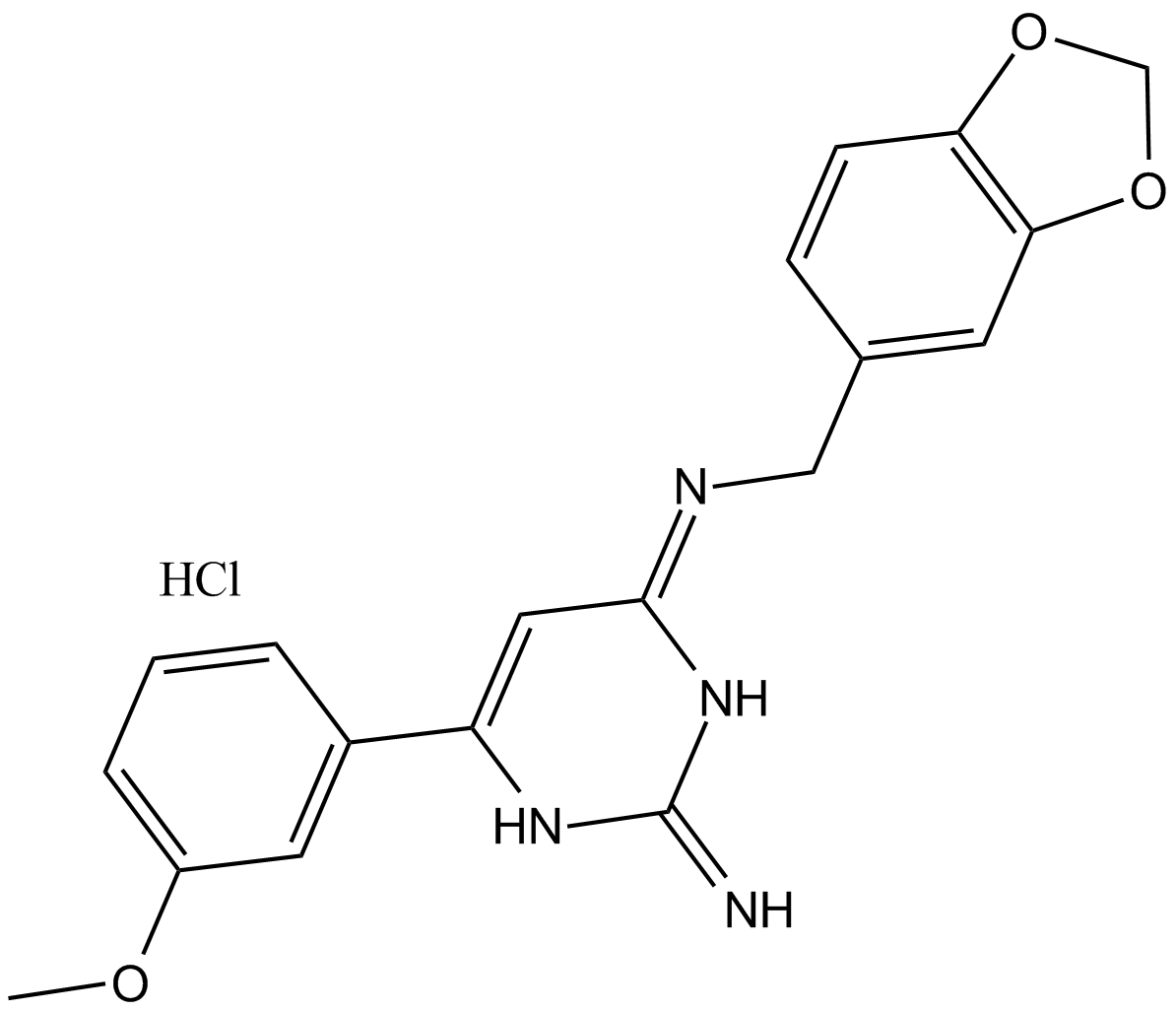
BML-284 (Wnt agonist 1) (Synonyms: BML-284) |
Katalog-Nr.GC17764
 One-Click Copy Product Info
|

Wnt-Agonist 1 ist ein potenter und zellgÄngiger Wnt-Signalaktivator. Wnt-Agonist 1 induziert eine TCF-abhÄngige TranskriptionsaktivitÄt mit einem EC50 von 700 nM.
Products are for research use only. Not for human use. We do not sell to patients.
Cas No.: 853220-52-7
Sample solution is provided at 25 µL, 10mM.
_1-3.$$$39978408@51.jpg');)
_1-9.$$$38538795@65.jpg');)
_1-9.$$$39112701@51.jpg');)
_1-7.$$$37316672@70.jpg');)
_366-372.$$$36198801@70.jpg');)
.$$$38565142@65.jpg');)
_1867-1883.$$$33248023@67.jpg');)
_eads6055.$$$39977546@45.jpg');)
_eadm9805.$$$40080571@45.jpg');)
_eadj3020.$$$39666821@45.jpg');)
_1-20.$$$39757301@28.jpg');)
_1-24.$$$38898113@28.jpg');)
_273-287.$$$36806353@46.jpg');)
_1-16.$$$37156877@44.jpg');)
_1-19.$$$37460805@44.jpg');)
_1291-1307.$$$34518654@46.jpg');)
BML-284 (Wnt agonist 1) is a potent agonist of Wnt signaling, with an EC50 value of 0.7μM for inducing β-catenin- and TCF-dependent transcriptional activity[1]. BML-284 binds to the colchicine-site and forms a low barrier hydrogen bond with E198 of β-tubulin, to mediate αβ-tubulin degradation through the ubiquitin-proteasome pathway[2]. BML-284 has been widely used as a model compound to synthesize a series of photosensitive azo derivatives that undergo reversible cis-trans isomerization upon visible light irradiation, with the cis-isomer capable of activating Wnt signaling [3].
In vitro, BML-284 treatment for 72 hours significantly inhibited the proliferation of HeLa, HCT116, MCF-7 and K562 cells with IC50 values of 0.09µM, 0.52µM, 0.69µM and 0.10µM, respectively[4]. Treatment with 1µM BML-284 for 24 hours promoted invasion and inhibited apoptosis of A549 cells transfected with pcDNA-AOC4P[5]. Pre-incubation of human aortic vascular smooth muscle cells (HA-VSMCs) with 10µM BML-284 for 24 hours activated the Wnt signaling pathway, increased the protein expression of Wnt3a and β-catenin, and reversed the protective effects of si-SOX2 on calcification, osteogenic/contractile protein expression, and autophagy activity[6].
In vivo, BML-284 treatment (5μl; 0.5μg/eye) via injection into the conjunctiva adjacent to the limbus for 48 hours promoted corneal epithelial healing and corneal nerve repair in diabetic mice[7]. BML-284 treatment via daily intravenous injection at a dose of 500µl (2mg/ml) for 14 days antagonized the protective effect of Triptolide (TP) against myocardial fibrosis (MF) by activating the Wnt/β-catenin pathway, and aggravated cardiac dysfunction in rats[8].
References:
[1] Liu J, Wu X, Mitchell B, et al. A small‐molecule agonist of the Wnt signaling pathway[J]. Angewandte Chemie International Edition, 2005, 44(13): 1987-1990.
[2] Yang J, Li Y, Qiu Q, et al. Small molecules promote selective denaturation and degradation of tubulin heterodimers through a low-barrier hydrogen bond[J]. Journal of Medicinal Chemistry, 2022, 65(13): 9159-9173.
[3] Ahmad S, Hashim P K, Imajo M, et al. Photoswitchable agonists for visible-light activation of the Wnt signaling pathway[J]. Organic & Biomolecular Chemistry, 2025, 23(17): 4240-4245.
[4] Zhang C, Yan W, Liu Y, et al. Structure-based design and synthesis of BML284 derivatives: A novel class of colchicine-site noncovalent tubulin degradation agents[J]. European Journal of Medicinal Chemistry, 2024, 268: 116265.
[5] Li F, Rong T, Cao G, et al. AOC4P suppresses viability and invasion and induces apoptosis in NSCLC cells by inhibiting the Wnt/β-catenin pathway[J]. Chemico-Biological Interactions, 2020, 325: 109110.
[6] Xiang H, Hong J, Zhang Y, et al. Inhibition of SOX2 mitigates vascular calcification mediated by autophagy through Wnt signaling pathway[J]. Egyptian Journal of Medical Human Genetics, 2025, 26(1): 189.
[7] Yang S, Zhang Y, Zhang Z, et al. Insulin promotes corneal nerve repair and wound healing in type 1 diabetic mice by enhancing Wnt/β-catenin signaling[J]. The American Journal of Pathology, 2020, 190(11): 2237-2250.
[8] Zhang Y, Lu F. Molecular mechanism of triptolide in myocardial fibrosis through the Wnt/β-catenin signaling pathway[J]. Scandinavian Cardiovascular Journal, 2024, 58(1): 2295785.
| Cell experiment [1]: | |
Cell lines | HeLa cells |
Preparation Method | HeLa cells were seeded in 96-well plates at a density of 5000 cells/well and kept in an incubator with 5% CO2 at 37°C overnight. Subsequently, the cells were treated with the BML-284 at the indicated concentrations (0.001, 0.01, 0.1, 1, and 10µM) for 72h. Paclitaxel was used as the positive control. MTT powder was dissolved in physiological saline to obtain a 5mg/ml solution; then, 20μl MTT solution was added to each well and incubated at 37°C for 2h. The absorbance of each well was determined at 570nm. |
Reaction Conditions | 0.001, 0.01, 0.1, 1, and 10µM; 72h |
Applications | BML-284 treatment inhibited the cell viability of HeLa cells in a dose-dependent manner. |
| Animal experiment [2]: | |
Animal models | Male Sprague-Dawley rats |
Preparation Method | Seventy-two male Sprague-Dawley rats (8 weeks of age, 220±20g) were housed individually in cages maintained at 23±1°C with a 12-h light/dark cycle and ad libitum access to food and water. After 1 week of acclimatization, isoproterenol (ISO) was dissolved in normal saline and injected subcutaneously into the rats at a dose of 5mg/kg/day for 14 consecutive days to establish a rat model of myocardial fibrosis (MF). Rats were randomly divided into four groups: normal control group (NC group), ISO group, TP+ISO group, and BML-284+TP+ISO group. Rats in the ISO, TP+ISO, and BML-284+TP+ISO groups were injected subcutaneously with ISO (5mg/kg/day), and rats in the NC group were injected subcutaneously with the same volume of normal saline. Rats in TP+ISO group were injected subcutaneously with TP at a concentration of 150μg/kg. In the BML-284+TP+ISO group of rats, a daily intravenous injection of 500µl of BML-284 (2mg/ml) was administered, along with subcutaneous injections of TP (μg/kg) and ISO (5mg/kg) over a period of 14 days. Rat hearts were removed for analysis. |
Dosage form | 500µl (2mg/ml); once a day for 14 days; i.v. |
Applications | BML-284 antagonized the protective effect of TP against MF by activating the Wnt/β-catenin pathway and aggravated cardiac dysfunction in rats. |
References: | |
| Cas No. | 853220-52-7 | SDF | |
| Überlieferungen | BML-284 | ||
| Chemical Name | (Z)-1-(benzo[d][1,3]dioxol-5-yl)-N-(2-imino-6-(3-methoxyphenyl)-2,3-dihydropyrimidin-4(1H)-ylidene)methanamine hydrochloride | ||
| Canonical SMILES | COC1=CC=CC(C(NC2=N)=C/C(N2)=N/CC3=CC4=C(OCO4)C=C3)=C1.Cl | ||
| Formula | C19H19ClN4O3 | M.Wt | 386.83 |
| Löslichkeit | ≥ 38.7mg/mL in DMSO | Storage | Store at -20°C |
| General tips | Please select the appropriate solvent to prepare the stock solution according to the
solubility of the product in different solvents; once the solution is prepared, please store it in
separate packages to avoid product failure caused by repeated freezing and thawing.Storage method
and period of the stock solution: When stored at -80°C, please use it within 6 months; when stored
at -20°C, please use it within 1 month. To increase solubility, heat the tube to 37°C and then oscillate in an ultrasonic bath for some time. |
||
| Shipping Condition | Evaluation sample solution: shipped with blue ice. All other sizes available: with RT, or with Blue Ice upon request. | ||
| Prepare stock solution | |||

|
1 mg | 5 mg | 10 mg |
| 1 mM | 2.5851 mL | 12.9256 mL | 25.8511 mL |
| 5 mM | 517 μL | 2.5851 mL | 5.1702 mL |
| 10 mM | 258.5 μL | 1.2926 mL | 2.5851 mL |
Step 1: Enter information below (Recommended: An additional animal making an allowance for loss during the experiment)
 g
μL
g
μL
Step 2: Enter the in vivo formulation (This is only the calculator, not formulation. Please contact us first if there is no in vivo formulation at the solubility Section.)
Calculation results:
Working concentration: mg/ml;
Method for preparing DMSO master liquid: mg drug pre-dissolved in μL DMSO ( Master liquid concentration mg/mL, Please contact us first if the concentration exceeds the DMSO solubility of the batch of drug. )
Method for preparing in vivo formulation: Take μL DMSO master liquid, next addμL PEG300, mix and clarify, next addμL Tween 80, mix and clarify, next add μL saline, mix and clarify.
Method for preparing in vivo formulation: Take μL DMSO master liquid, next add μL Corn oil, mix and clarify.
Note: 1. Please make sure the liquid is clear before adding the next solvent.
2. Be sure to add the solvent(s) in order. You must ensure that the solution obtained, in the previous addition, is a clear solution before proceeding to add the next solvent. Physical methods such as vortex, ultrasound or hot water bath can be used to aid dissolving.
3. All of the above co-solvents are available for purchase on the GlpBio website.
Quality Control & SDS
- View current batch:
- Purity: >99.50% Appearance: A solid
- COA (Certificate of Analysis)
- SDS (Safety Data Sheet)
- Datasheet
Average Rating: 5 (Based on Reviews and 16 reference(s) in Google Scholar.)