

Hypotaurine |
Katalog-Nr.GC14943
 One-Click Copy Product Info
|

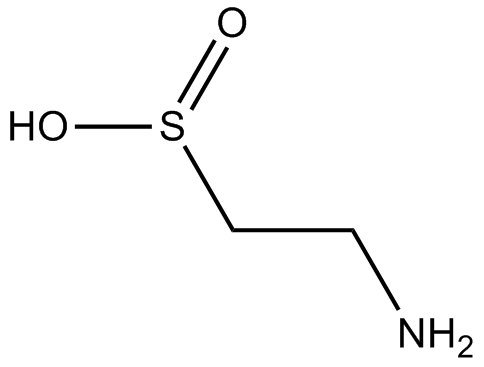
Hypotaurin (2-AminoethansulfinsÄure), ein Zwischenprodukt der Taurinbiosynthese aus Cystein in Astrozyten, ist eine endogene inhibitorische AminosÄure des Glycinrezeptors.
Products are for research use only. Not for human use. We do not sell to patients.
Cas No.: 300-84-5
Sample solution is provided at 25 µL, 10mM.
_1-3.$$$39978408@51.jpg');)
_1-9.$$$38538795@65.jpg');)
_1-9.$$$39112701@51.jpg');)
_1-7.$$$37316672@70.jpg');)
_366-372.$$$36198801@70.jpg');)
.$$$38565142@65.jpg');)
_1867-1883.$$$33248023@67.jpg');)
_eads6055.$$$39977546@45.jpg');)
_eadm9805.$$$40080571@45.jpg');)
_eadj3020.$$$39666821@45.jpg');)
_1-20.$$$39757301@28.jpg');)
_1-24.$$$38898113@28.jpg');)
_273-287.$$$36806353@46.jpg');)
_1-16.$$$37156877@44.jpg');)
_1-19.$$$37460805@44.jpg');)
_1291-1307.$$$34518654@46.jpg');)
Hypotaurine is a precursor for the biosynthesis of taurine and is an endogenous inhibitory amino acid of the glycine receptor [1]. Hypotaurine inhibits the GABA transporters 1 (GAT1), 2 (GAT2), 3 (GAT3), and 4 (GAT4) in mice (IC50 values are 170, 240, 4.9, and 8.1μM respectively) and GAT1, 2, and 3 in rats (IC50 values are 1010, 52, and 73μM respectively) for the uptake of GABA [2]. As an antioxidant, Hypotaurine can effectively eliminate free radicals and reactive oxygen species [3].
In vitro, Hypotaurine (1mM; 24h) significantly reduced the concentration of hydroxyl radicals in rat placental trophoblast cells (TR-TBT 18d-1) treated with H2O2, and had a protective effect against H2O2-induced oxidative damage [4]. Under high chloride conditions, Hypotaurine (30-3000μM; 100s) increased the inward current or upward deflection of membrane potential in glial cells (SG) neurons in the immature mouse tail trigeminal nucleus (Vc) in a concentration-dependent manner, with EC50 values of 663.8 and 337.6μM respectively [5].
In vivo, in rats subjected to tail swinging, paw pressing, and formalin test, Hypotaurine (100, 200, 400, and 600μg/10μL; intrathecal injection) prolonged the tail flick latency in a dose-dependent manner, alleviated mechanical hyperalgesia and thermal hyperalgesia [6]. Hypotaurine (2.4mM/kg/2mL; intraperitoneal injection) pretreatment significantly attenuated the increase in ALT, AST, and LDH activities in rat plasma induced by acetaminophen (APAP), as well as the decrease in GR, GST, and GCS activities and the consumption of GSSG in the liver [7].
References:
[1] Green TR, Fellman JH, Eicher AL, Pratt KL. Antioxidant role and subcellular location of hypotaurine and taurine in human neutrophils. Biochim Biophys Acta. 1991;1073(1):91-97.
[2] Kragler, A., Höfner, G., and Wanner, K.T. Novel parent structures for inhibitors of the murine GABA transporters mGAT3 and mGAT4. Eur. J. Pharmacol. 519(1-2), 43-47 (2005).
[3] Aruoma O I, Halliwell B, Hoey B M, et al. The antioxidant action of taurine, hypotaurine and their metabolic precursors[J]. Biochemical Journal, 1988, 256(1): 251-255.
[4] Nishimura T, Duereh M, Sugita Y, et al. Protective effect of hypotaurine against oxidative stress-induced cytotoxicity in rat placental trophoblasts. Placenta. 2015;36(6):693-698.
[5] Oh SM, Bhattarai JP, Han SK, Park SJ. Effects of hypotaurine on substantia gelatinosa neurons of the trigeminal subnucleus caudalis in immature mice. Amino Acids. 2016;48(12):2843-2853.
[6] Hara K, Nakamura M, Haranishi Y, Terada T, Kataoka K, Sata T. Antinociceptive effect of intrathecal administration of hypotaurine in rat models of inflammatory and neuropathic pain. Amino Acids. 2012;43(1):397-404.
[7] Acharya M, Lau-Cam CA. Comparison of the protective actions of N-acetylcysteine, hypotaurine and taurine against acetaminophen-induced hepatotoxicity in the rat. J Biomed Sci. 2010;17 Suppl 1(Suppl 1):S35. Published 2010 Aug 24.
| Cell experiment [1]: | |
Cell lines | TR-TBT 18d-1 cells |
Preparation Method | TR-TBT 18d-1 cells were cultured at 37°C for 2 days and then test compound for a further 24h, if needed. The culture medium was replaced with fresh medium not containing the test compound, and the cells were exposed to H2O2 at the specified concentration and time. Cell viability was measured in terms of NAD(P)H-dependent oxidoreductase activity (MTT assay) using a CellTiter 96 Non-Radioactive Cell Proliferation Assay. TR-TBT 18d-1 cells were treated with 1mM Hypotaurine solution for 24h at 37°C, and antioxidant capacities towards hydroxyl and peroxyl radicals in the cell lysates were also evaluated using the HORAC assay and ORAC assay, respectively, in accordance with the manufacturers' instructions. |
Reaction Conditions | 1mM; 24h |
Applications | Hypotaurine significantly reduced the concentration of hydroxyl radicals in rat placental trophoblast cells (TR-TBT 18d-1) treated with H2O2, exerting a protective effect against H2O2-induced oxidative damage. |
| Animal experiment [2]: | |
Animal models | Sprague–Dawley rats |
Preparation Method | For the intrathecal administration of drugs, lumbar catheters were implanted in all rats. Under anesthesia using pentobarbital sodium (60mg/kg, intraperitoneal), a stretched PE-10 polyethylene catheter (8.5cm) was inserted into the intrathecal space and advanced caudally to the rostral edge of the lumbar enlargement through an incision in the atlanto-occipital membrane. A recovery period of seven days was provided before intrathecal administration of Hypotaurine and behavioral assessment. Proper location of the catheter was confirmed by hind limb paralysis after the injection of 10μL of 2% lidocaine 2 days before the assessment. For assays, 10μL of the drugs or saline was administered intrathecally, followed by 10μL of saline to flush the catheter. The effects of Hypotaurine (100, 200, 400, and 600μg) on thermal nociception were assessed repeatedly for 120min post-injection. A radiant heat source was focused on the middle part of the rat’s tail. The time interval from the onset of the stimulus until the tail flick response was measured using a tail flick unit. |
Dosage form | 100, 200, 400, and 600μg/10μL; intrathecal injection |
Applications | Hypotaurine prolonged the latency of tail twitching in a dose-dependent manner, alleviating mechanical hyperalgesia and thermal hyperalgesia. |
References: | |
| Cas No. | 300-84-5 | SDF | |
| Chemical Name | 2-aminoethanesulfinic acid | ||
| Canonical SMILES | OS(CCN)=O | ||
| Formula | C2H7NO2S | M.Wt | 109.14 |
| Löslichkeit | PBS (pH 7.2): 10mg/mL | Storage | Desiccate at RT |
| General tips | Please select the appropriate solvent to prepare the stock solution according to the
solubility of the product in different solvents; once the solution is prepared, please store it in
separate packages to avoid product failure caused by repeated freezing and thawing.Storage method
and period of the stock solution: When stored at -80°C, please use it within 6 months; when stored
at -20°C, please use it within 1 month. To increase solubility, heat the tube to 37°C and then oscillate in an ultrasonic bath for some time. |
||
| Shipping Condition | Evaluation sample solution: shipped with blue ice. All other sizes available: with RT, or with Blue Ice upon request. | ||
| Prepare stock solution | |||

|
1 mg | 5 mg | 10 mg |
| 1 mM | 9.1625 mL | 45.8127 mL | 91.6254 mL |
| 5 mM | 1.8325 mL | 9.1625 mL | 18.3251 mL |
| 10 mM | 916.3 μL | 4.5813 mL | 9.1625 mL |
Step 1: Enter information below (Recommended: An additional animal making an allowance for loss during the experiment)
 g
μL
g
μL
Step 2: Enter the in vivo formulation (This is only the calculator, not formulation. Please contact us first if there is no in vivo formulation at the solubility Section.)
Calculation results:
Working concentration: mg/ml;
Method for preparing DMSO master liquid: mg drug pre-dissolved in μL DMSO ( Master liquid concentration mg/mL, Please contact us first if the concentration exceeds the DMSO solubility of the batch of drug. )
Method for preparing in vivo formulation: Take μL DMSO master liquid, next addμL PEG300, mix and clarify, next addμL Tween 80, mix and clarify, next add μL saline, mix and clarify.
Method for preparing in vivo formulation: Take μL DMSO master liquid, next add μL Corn oil, mix and clarify.
Note: 1. Please make sure the liquid is clear before adding the next solvent.
2. Be sure to add the solvent(s) in order. You must ensure that the solution obtained, in the previous addition, is a clear solution before proceeding to add the next solvent. Physical methods such as vortex, ultrasound or hot water bath can be used to aid dissolving.
3. All of the above co-solvents are available for purchase on the GlpBio website.
Quality Control & SDS
- View current batch:
- Purity: >98.00% Appearance: A solid
- COA (Certificate of Analysis)
- SDS (Safety Data Sheet)
- Datasheet
Average Rating: 5 (Based on Reviews and 4 reference(s) in Google Scholar.)