

MTI-31 (Synonyms: LXI-15029) |
Katalog-Nr.GC64304
 One-Click Copy Product Info
|

MTI-31 ist ein potenter, oral aktiver und hochselektiver Inhibitor von mTORC1 und mTORC2.
Products are for research use only. Not for human use. We do not sell to patients.
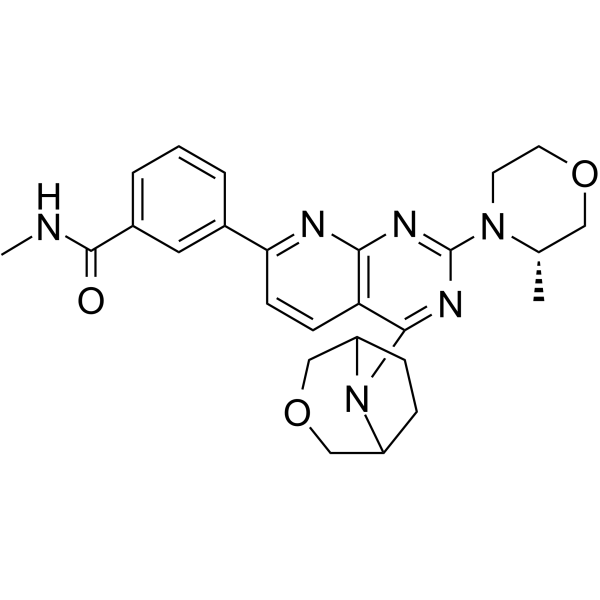
Cas No.: 1567915-38-1
Sample solution is provided at 25 µL, 10mM.
_1-3.$$$39978408@51.jpg');)
_1-9.$$$38538795@65.jpg');)
_1-9.$$$39112701@51.jpg');)
_1-7.$$$37316672@70.jpg');)
_366-372.$$$36198801@70.jpg');)
.$$$38565142@65.jpg');)
_1867-1883.$$$33248023@67.jpg');)
_eads6055.$$$39977546@45.jpg');)
_eadm9805.$$$40080571@45.jpg');)
_eadj3020.$$$39666821@45.jpg');)
_1-20.$$$39757301@28.jpg');)
_1-24.$$$38898113@28.jpg');)
_273-287.$$$36806353@46.jpg');)
_1-16.$$$37156877@44.jpg');)
_1-19.$$$37460805@44.jpg');)
_1291-1307.$$$34518654@46.jpg');)
MTI-31 is a potent and highly selective inhibitor of mTORC1 and mTORC2 (Kd: 0.20±0.04 nmol/L), with IC50 value of 39±1nmol/L[1]. MTI-31 has a potent mTOR binding affinity with >5000-fold selectivity over the related PI3K family isoforms[1]. MTI-31 demonstrates broad-spectrum antiviral activity against SARS-CoV-2 variants of concern and other coronaviruses in primary human airway epithelial cultures[2]. MTI-31 has been used in anti-tumor and anti-viral studies[1-2].
In vitro, MTI-31 can effectively inhibit cell proliferation (IC50 <1μmol/L) in various non-small cell lung cancer cell models including HCC827, PC9, H1975, H1993 and A549 cell lines[3]. MTI-31 treatment (≤0.12μmol/L) of the three representative tumor cell lines with dysregulated mTOR pathways (786-O renal cancer, U87MG glioma, and MDA-MB-453 breast cancer cells) resulted in dose-dependent inhibition of mTORC1 substrates P-S6K1 (T389), P-S6 (S235/6), P-4EBP1 (T70) as well as the mTORC2 substrate P-AKT (S473) which achieved 50% inhibition after 6 hours[1]. The combined treatment of MTI-31(0.1µmol/L) and RAD001(0.1µmol/L) for 6h significantly inhibited the proliferation and invasion of 786-O cells, up-regulated the expression of LC3 and activated the autophagy pathway[4].
In vivo, oral administration of 15mg/kg MTI-31 and 7.5mg/kg MRTX849 for 7 days significantly inhibited tumor growth and reduced tumor angiogenesis and collagen deposition in the KRAS mutant lung orthotopic xenograft mouse model[5]. In a mouse model of KRAS lung cancer, daily oral treatment with 10, 20, and 40mg/kg MTI-31 produced dose-dependent tumor suppression and strongly suppressed mTOR biomarker expression during 35 days[3].
References:
[1]Qian J, Chen Y, Meng T, et al. Molecular regulation of apoptotic machinery and lipid metabolism by mTORC1/mTORC2 dual inhibitors in preclinical models of HER2+/PIK3CAmut breast cancer[J]. Oncotarget, 2016, 7(41): 67071.
[2]van der Horst D, Carter-Timofte M E, Danneels A, et al. Large-scale deep learning identifies the antiviral potential of PKI-179 and MTI-31 against coronaviruses[J]. Antiviral Research, 2024, 231: 106012.
[3]Zhang Q, Zhang Y, Chen Y, et al. A novel mTORC1/2 inhibitor (MTI-31) inhibits tumor growth, epithelial–mesenchymal transition, metastases, and improves antitumor immunity in preclinical models of lung cancer[J]. Clinical Cancer Research, 2019, 25(12): 3630-3642.
[4] Zhang W, Yang C, Zou L, et al. Combining MTI-31 with RAD001 inhibits tumor growth and invasion of kidney cancer by activating autophagy[J]. Journal of Applied Genetics, 2024, 65(1): 103-112.
[5] Zhang Y, Liu L, Pei J, et al. Tissue factor overexpression promotes resistance to KRAS-G12C inhibition in non-small cell lung cancer[J]. Oncogene, 2024, 43(9): 668-681.
| Kinase experiment [1]: | |
Preparation Method | mTOR binding constant (Kd) of MTI-31 and binding assays for a panel of 98 protein kinases with MTI-31 at a fixed 1000nmol/L were performed by KINOMEscan™ Profiling Service for 6h. mTOR substrate phosphorylation assay was performed using recombinant mTOR enzyme, 50nmol/L unphosphorylated 4EBP1 and 100μmol/L ATP, detected using the LANCE® TR-FRET platform. IC50 values were generated using Graphpad PRISM 5 software. |
Reaction Conditions | 1000nmol/L; 6h |
Applications | MTI-31 binds strongly and specifically to mTOR and weakly to the remaining kinases tested. |
| Cell experiment [2]: | |
Cell lines | HCC827 cells |
Preparation Method | Standard cell culture methods and reagents were used to culture HCC827 cells. The cell cultures underwent regular testing to ensure they remained free of mycoplasma contamination. Use G418 selection to create a stable population of Luciferase-tagged H1975 cells. Package different pGIPZ/pTRIPZ-shRNA viruses in the 293T cells prior to infecting cancer cells. The gene-depletion process with pTRIPZ was activated by adding 1μg/mL doxycycline (Dox) for a period of 5 to 7 days. Cells were plated at 5% to 10% confluence in a 96-well plate and treated with MTI-31 (0.01, 0.1 and 1.0μmol/L) for three days before cell proliferation was assessed using MTS reagent. Evaluate pGIPZ-ShRNA-expressing cells' viability and growth through quantifying GFP-positive cells resistant to puromycin. |
Reaction Conditions | 0.01, 0.1 and 1.0μmol/L; 0, 24, 48 and 72 hours |
Applications | MTI-31 significantly inhibited the proliferation of all HCC827 cell lines with an IC50 value of 0.247 ± 0.03μmol/L. |
| Animal experiment [3]: | |
Animal models | Female Balb/c nude mice |
Preparation Method | Create the KRAS mutant lung orthotopic transplantation tumor model by injecting 1 × 10⁶ luciferase labeled HCC44 cells suspended in 50μL PBS into the left lung of female Balb/c nude mice. The mice received an intraperitoneal injection of D-luciferin at a concentration of 150mg/kg for tumor staging which was followed by bioluminescence imaging 6 minutes after injection. The tumors underwent randomization into treatment groups based on fluorescence intensity after seven days post cell injection. MTI-31 was used as a single therapy or part of combination treatment at a dose of 15mg/kg administered orally. The progression of lung tumors was tracked through signals captured by bioluminescence imaging. Create H1792 xenografts by injecting 5 × 10⁶ H1792 cells subcutaneously into the right flank of nude mice. Assign mice to different treatment groups (n=7) after tumor growth reached roughly 150mm3. Tumor volume was calculated as the formula: length × width2 × 0.5. The whole experimental period lasted 35 days. |
Dosage form | 15 mg/kg/day for 35 days; p.o. |
Applications | MTI-31 treatment significantly reduced tumor growth, resulting in a decrease in the number of Ki67+ proliferating cells and an increase in the number of apoptotic cells. |
References: | |
| Cas No. | 1567915-38-1 | SDF | |
| Überlieferungen | LXI-15029 | ||
| Formula | C26H30N6O3 | M.Wt | 474.55 |
| Löslichkeit | DMSO : 8.33 mg/mL (17.55 mM; ultrasonic and warming and heat to 60°C) | Storage | Store at -20°C |
| General tips | Please select the appropriate solvent to prepare the stock solution according to the
solubility of the product in different solvents; once the solution is prepared, please store it in
separate packages to avoid product failure caused by repeated freezing and thawing.Storage method
and period of the stock solution: When stored at -80°C, please use it within 6 months; when stored
at -20°C, please use it within 1 month. To increase solubility, heat the tube to 37°C and then oscillate in an ultrasonic bath for some time. |
||
| Shipping Condition | Evaluation sample solution: shipped with blue ice. All other sizes available: with RT, or with Blue Ice upon request. | ||
| Prepare stock solution | |||

|
1 mg | 5 mg | 10 mg |
| 1 mM | 2.1073 mL | 10.5363 mL | 21.0726 mL |
| 5 mM | 421.5 μL | 2.1073 mL | 4.2145 mL |
| 10 mM | 210.7 μL | 1.0536 mL | 2.1073 mL |
Step 1: Enter information below (Recommended: An additional animal making an allowance for loss during the experiment)
 g
μL
g
μL
Step 2: Enter the in vivo formulation (This is only the calculator, not formulation. Please contact us first if there is no in vivo formulation at the solubility Section.)
Calculation results:
Working concentration: mg/ml;
Method for preparing DMSO master liquid: mg drug pre-dissolved in μL DMSO ( Master liquid concentration mg/mL, Please contact us first if the concentration exceeds the DMSO solubility of the batch of drug. )
Method for preparing in vivo formulation: Take μL DMSO master liquid, next addμL PEG300, mix and clarify, next addμL Tween 80, mix and clarify, next add μL saline, mix and clarify.
Method for preparing in vivo formulation: Take μL DMSO master liquid, next add μL Corn oil, mix and clarify.
Note: 1. Please make sure the liquid is clear before adding the next solvent.
2. Be sure to add the solvent(s) in order. You must ensure that the solution obtained, in the previous addition, is a clear solution before proceeding to add the next solvent. Physical methods such as vortex, ultrasound or hot water bath can be used to aid dissolving.
3. All of the above co-solvents are available for purchase on the GlpBio website.
Quality Control & SDS
- View current batch:
- Purity: >98.00% Appearance: A solid
- COA (Certificate of Analysis)
- SDS (Safety Data Sheet)
- Datasheet
Average Rating: 5 (Based on Reviews and 1 reference(s) in Google Scholar.)