

4-CMTB |
Catalog No.GC17149
 One-Click Copy Product Info
|

4-CMTB is a selective free fatty acid receptor 2 (FFA2/GPR43) agonist and a positive allosteric modulator.
Products are for research use only. Not for human use. We do not sell to patients.
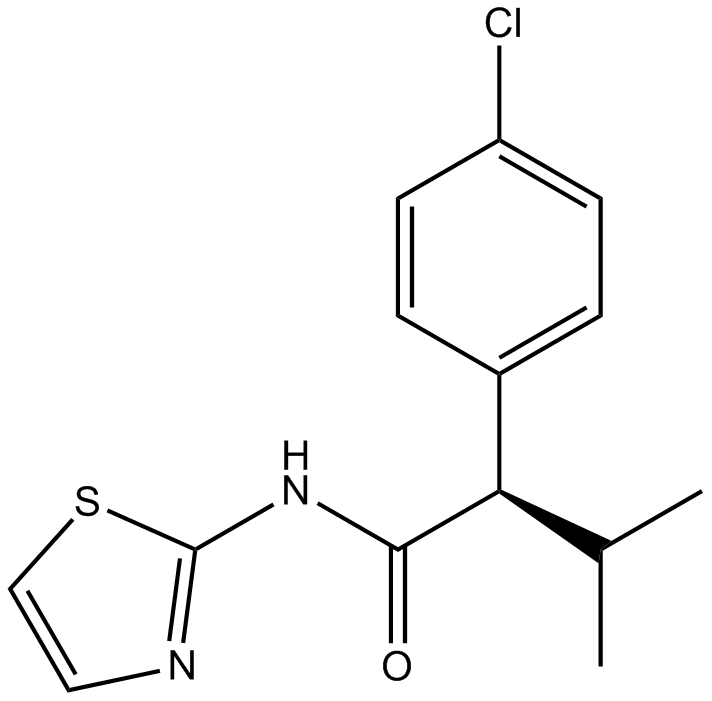
Cas No.: 300851-67-6
Sample solution is provided at 25 µL, 10mM.
_1-3.$$$39978408@51.jpg');)
_1-9.$$$38538795@65.jpg');)
_1-9.$$$39112701@51.jpg');)
_1-7.$$$37316672@70.jpg');)
_366-372.$$$36198801@70.jpg');)
.$$$38565142@65.jpg');)
_1867-1883.$$$33248023@67.jpg');)
_eads6055.$$$39977546@45.jpg');)
_eadm9805.$$$40080571@45.jpg');)
_eadj3020.$$$39666821@45.jpg');)
_1-20.$$$39757301@28.jpg');)
_1-24.$$$38898113@28.jpg');)
_273-287.$$$36806353@46.jpg');)
_1-16.$$$37156877@44.jpg');)
_1-19.$$$37460805@44.jpg');)
_1291-1307.$$$34518654@46.jpg');)
4-CMTB is a selective free fatty acid receptor 2 (FFA2/GPR43) agonist and a positive allosteric modulator[1]. FFA2, also known as GPR43, is a G protein-coupled receptor activated by short-chain fatty acids that plays key roles in metabolism, immune regulation, and inflammatory responses[2]. 4-CMTB is usually used to study the mechanism of action of FFA2 receptors in inflammatory diseases, including asthma, colorectal cancer, intestinal ischemia-reperfusion injury, as well as metabolic diseases such as type 2 diabetes, obesity and insulin resistance[3][4].
In vitro, 4-CMTB (25μM; 48h) reduced cell viability, decreased cell migration and invasion, increased FFAR2/FFAR4 gene expression, yet decreased their protein levels in SW-480 cells[5].
In vivo, 4-CMTB (20mg/kg; i.p.; 30min before OVA challenge) inhibited OVA-induced immune cell accumulation in BALF and reduced mucin production in ovalbumin-induced allergic asthma BALB/c mice[6]. 4-CMTB (10mg/kg; i.p.; administered 30min before DNCB challenge) reversed DNCB-induced atopic dermatitis in BALB/c mice, suppressed ear epidermal hypertrophy, and reduced mast cell infiltration, serum IgE elevation and IL-4/IL-13 expression[7].
References:
[1] Smith NJ, Ward RJ, Stoddart LA, et al. Extracellular loop 2 of the free fatty acid receptor 2 mediates allosterism of a phenylacetamide ago-allosteric modulator. Mol Pharmacol. 2011;80(1):163-173.
[2] Bindels LB, Dewulf EM, Delzenne NM. GPR43/FFA2: physiopathological relevance and therapeutic prospects. Trends Pharmacol Sci. 2013;34(4):226-232.
[3] Brown AJ, Tsoulou C, Ward E, et al. Pharmacological properties of acid N-thiazolylamide FFA2 agonists. Pharmacol Res Perspect. 2015;3(3):e00141.
[4] Lorza-Gil E, Kaiser G, Rexen Ulven E, et al. FFA2-, but not FFA3-agonists inhibit GSIS of human pseudoislets: a comparative study with mouse islets and rat INS-1E cells. Sci Rep. 2020;10(1):16497.
[5] Binienda A, Owczarek K, Sałaga M, Fichna J. Synthetic free fatty acid receptor (FFAR) 2 agonist 4-CMTB and FFAR4 agonist GSK13764 inhibit colon cancer cell growth and migration and regulate FFARs expression in in vitro and in vivo models of colorectal cancer. Pharmacol Rep. 2024;76(6):1403-1414.
[6] Lee JH, Im DS. 4-CMTB Ameliorates Ovalbumin-Induced Allergic Asthma through FFA2 Activation in Mice. Biomol Ther (Seoul). 2021;29(4):427-433.
[7] Kang J, Im DS. FFA2 Activation Ameliorates 2,4-Dinitrochlorobenzene-Induced Atopic Dermatitis in Mice. Biomol Ther (Seoul). 2020;28(3):267-271.
| Cell experiment [1]: | |
Cell lines | Human colorectal adenocarcinoma cell line SW-480 |
Preparation Method | Human colorectal adenocarcinoma cell line, SW-480 (CCL-228) were cultured in RPMI media supplemented with 10% fetal bovine serum (FBS), 2mM L-glutamine, 50U/mL penicillin, and 50µg/mL streptomycin. The cells were cultured in a humidified atmosphere of 5% CO2 at 37℃. All experiments were carried out between passages 5 to 15. Seeding quantities were such that the confluence of the control wells did not exceed 80% at the end of the experiment. Cells were seeded on a 96-well plate at the density of 6,000cells/well and incubated for 24h. Then, cells were incubated with 4-CMTB (25µM) for 48h. MTT assay was used to measure the cytotoxicity. Matrigel BM matrix assay was used for measuring the capacity of cancer cells to motility. And cells were collected for qPCR and western blot analyses. |
Reaction Conditions | 25μM; 48h |
Applications | 4-CMTB reduced cell viability, decreased cell migration and invasion, increased FFAR2/FFAR4 gene expression, yet decreased their protein levels in SW-480 cells. |
| Animal experiment [2]: | |
Animal models | Female five-week-old BALB/c mice |
Preparation Method | Female five-week-old BALB/c mice were housed in the laboratory animal facility provided ad libitum water and food. Mice (22g) were randomly divided into four groups (n=5): phosphate-buffered saline (PBS)-injected control group, ovalbumin (OVA)-injected asthma group, OVA-injected and 10mg/kg 4-CMTB-treated group, and OVA-injected and 20mg/kg 4-CMTB-treated group. Asthma was induced by intraperitoneal injection of OVA and aluminum hydroxide on D0 and D14. Mice were challenged by exposing to nebulized OVA for D28, D29, and D30. 4-CMTB was dissolved in DMSO as a stock solution of 100mM. The stock was diluted in corn oil (50μL) just before the experiment. 4-CMTB was treated via intraperitoneal injection 30min before OVA challenge. We collected bronchoalveolar lavage fluid (BALF) from the lungs on D32, and cell population of BALF cells was analyzed after staining. Tissue sections of lungs from mice of each group were prepared for histological examination. |
Dosage form | 10 or 20mg/kg; i.p.; 30min before OVA challenge |
Applications | 4-CMTB inhibited OVA-induced immune cell accumulation and reduced mucin production in ovalbumin-induced allergic asthma BALB/c mice. |
References: | |
| Cas No. | 300851-67-6 | SDF | |
| Chemical Name | (R)-2-(4-chlorophenyl)-3-methyl-N-(thiazol-2-yl)butanamide | ||
| Canonical SMILES | ClC1=CC=C(C=C1)[C@H](C(NC2=NC=CS2)=O)C(C)C | ||
| Formula | C14H15ClN2OS | M.Wt | 294.8 |
| Solubility | <29.48mg/ml in DMSO; <5.9mg/ml in ethanol | Storage | Store at -20°C, protect from light |
| General tips | Please select the appropriate solvent to prepare the stock solution according to the
solubility of the product in different solvents; once the solution is prepared, please store it in
separate packages to avoid product failure caused by repeated freezing and thawing.Storage method
and period of the stock solution: When stored at -80°C, please use it within 6 months; when stored
at -20°C, please use it within 1 month. To increase solubility, heat the tube to 37°C and then oscillate in an ultrasonic bath for some time. |
||
| Shipping Condition | Evaluation sample solution: shipped with blue ice. All other sizes available: with RT, or with Blue Ice upon request. | ||
| Prepare stock solution | |||

|
1 mg | 5 mg | 10 mg |
| 1 mM | 3.3921 mL | 16.9607 mL | 33.9213 mL |
| 5 mM | 678.4 μL | 3.3921 mL | 6.7843 mL |
| 10 mM | 339.2 μL | 1.6961 mL | 3.3921 mL |
Step 1: Enter information below (Recommended: An additional animal making an allowance for loss during the experiment)
 g
μL
g
μL
Step 2: Enter the in vivo formulation (This is only the calculator, not formulation. Please contact us first if there is no in vivo formulation at the solubility Section.)
Calculation results:
Working concentration: mg/ml;
Method for preparing DMSO master liquid: mg drug pre-dissolved in μL DMSO ( Master liquid concentration mg/mL, Please contact us first if the concentration exceeds the DMSO solubility of the batch of drug. )
Method for preparing in vivo formulation: Take μL DMSO master liquid, next addμL PEG300, mix and clarify, next addμL Tween 80, mix and clarify, next add μL saline, mix and clarify.
Method for preparing in vivo formulation: Take μL DMSO master liquid, next add μL Corn oil, mix and clarify.
Note: 1. Please make sure the liquid is clear before adding the next solvent.
2. Be sure to add the solvent(s) in order. You must ensure that the solution obtained, in the previous addition, is a clear solution before proceeding to add the next solvent. Physical methods such as vortex, ultrasound or hot water bath can be used to aid dissolving.
3. All of the above co-solvents are available for purchase on the GlpBio website.
Quality Control & SDS
- View current batch:
- Purity: >99.00% Appearance: A solid
- COA (Certificate of Analysis)
- SDS (Safety Data Sheet)
- Datasheet
Average Rating: 5 (Based on Reviews and 21 reference(s) in Google Scholar.)