

AM095 |
Katalog-Nr.GC15220
 One-Click Copy Product Info
|

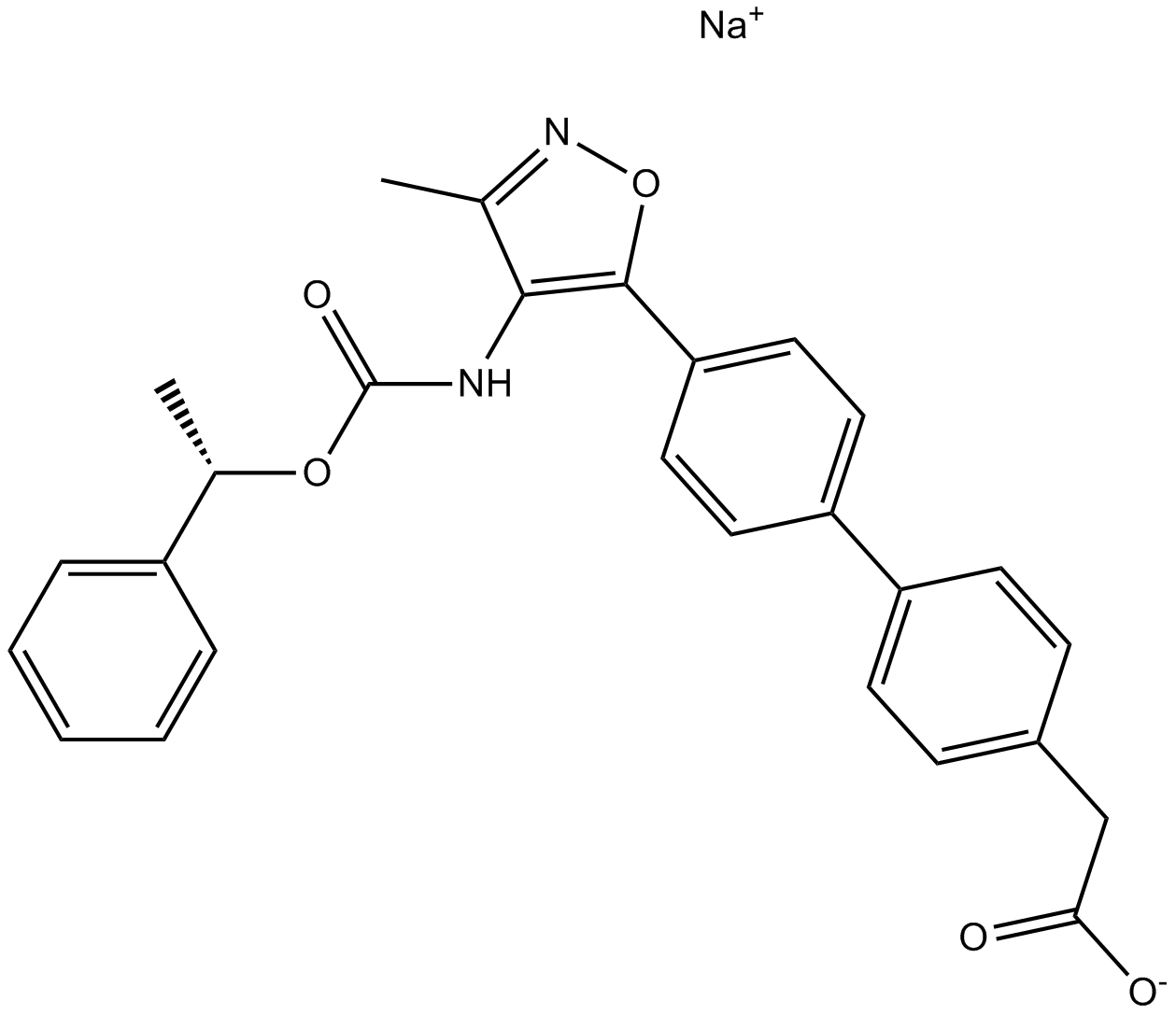
AM095 is a selective, orally bioavailable LPA1 antagonist with an IC50 value of 0.73μM for mouse LPA1.
Products are for research use only. Not for human use. We do not sell to patients.
Cas No.: 1345614-59-6
Sample solution is provided at 25 µL, 10mM.
_1-3.$$$39978408@51.jpg');)
_1-9.$$$38538795@65.jpg');)
_1-9.$$$39112701@51.jpg');)
_1-7.$$$37316672@70.jpg');)
_366-372.$$$36198801@70.jpg');)
.$$$38565142@65.jpg');)
_1867-1883.$$$33248023@67.jpg');)
_eads6055.$$$39977546@45.jpg');)
_eadm9805.$$$40080571@45.jpg');)
_eadj3020.$$$39666821@45.jpg');)
_1-20.$$$39757301@28.jpg');)
_1-24.$$$38898113@28.jpg');)
_273-287.$$$36806353@46.jpg');)
_1-16.$$$37156877@44.jpg');)
_1-19.$$$37460805@44.jpg');)
_1291-1307.$$$34518654@46.jpg');)
AM095 is a selective, orally bioavailable LPA1 antagonist with an IC50 value of 0.73μM for mouse LPA1[1]. AM095 can reduce the mRNA expression level of pro-inflammatory cytokines and inhibit the activation of NF-κB by antagonizing LPA1 activity[2]. AM095 has been widely used to inhibit the development of idiopathic pulmonary fibrosis and systemic fibrosis in different animal models[3].
In vitro, AM095 treatment (10μM) for 48h significantly inhibited Lysophosphatidic acid (LPA)-induced decrease in E-cadherin expression and reduced the expression levels of fibrosis factors (α-SMA and fibronectin)[4]. Pretreatment with 0.5µM AM095 for 3 hours significantly reversed Porphyromonas gingivalis-derived lipopolysaccharide (Pg-LPS)-induced decline in the viability of periodontal ligament stem cells (PDLSCs) and reduced the expression of IL-1β and TNF-α[5]. Pretreatment of MDA-MB-231 cells with 0.5µM AM095 for 5min significantly inhibited the proliferation of MDA-MB-231 cells induced by 30µM lysophosphatidylethanolamine (LPE) (24h)[6].
In vivo, AM095 treatment via oral administration at a dose of 30mg/kg/day for 8 weeks alleviated hyperglycemia and dyslipidemia and improved renal function in streptozotocin (STZ)-induced diabetic mice[7]. Gavage of AM095 at a dose of 10mg/kg once daily for 18 days reduced disease severity and increased the number of redifferentiated Schwann cells in a rat model of induced experimental autoimmune neuritis[8].
References:
[1] Swaney J S, Chapman C, Correa L D, et al. Pharmacokinetic and pharmacodynamic characterization of an oral lysophosphatidic acid type 1 receptor-selective antagonist[J]. The Journal of pharmacology and experimental therapeutics, 2011, 336(3): 693-700.
[2] Gaire B P, Sapkota A, Song M R, et al. Lysophosphatidic acid receptor 1 (LPA1) plays critical roles in microglial activation and brain damage after transient focal cerebral ischemia[J]. Journal of Neuroinflammation, 2019, 16(1): 170.
[3] Im D S. First-in-class antifibrotic therapy targeting type 1 lysophosphatidic acid receptor[J]. Archives of pharmacal research, 2012, 35(6): 945-948.
[4] Lee G H, Cheon J, Kim D, et al. Lysophosphatidic Acid Promotes Epithelial–Mesenchymal Transition in Kidney Epithelial Cells via the LPAR1/MAPK-AKT/KLF5 Signaling Pathway in Diabetic Nephropathy[J]. International Journal of Molecular Sciences, 2022, 23(18): 10497.
[5] Kim D H, Seo E J, Tigyi G J, et al. The role of lysophosphatidic acid receptor 1 in inflammatory response induced by lipopolysaccharide from Porphyromonas gingivalis in human periodontal ligament stem cells[J]. Intern J Oral Biol, 2020, 45: 42-50.
[6] Park S J, Lee K P, Im D S. Action and signaling of lysophosphatidylethanolamine in MDA-MB-231 breast cancer cells[J]. Biomolecules & Therapeutics, 2014, 22(2): 129.
[7] Lee J H, Sarker M K, Choi H, et al. Lysophosphatidic acid receptor 1 inhibitor, AM095, attenuates diabetic nephropathy in mice by downregulation of TLR4/NF-κB signaling and NADPH oxidase[J]. Biochimica et Biophysica Acta (BBA)-Molecular Basis of Disease, 2019, 1865(6): 1332-1340.
[8] Szepanowski F, Winkelhausen M, Steubing R D, et al. LPA1 signaling drives Schwann cell dedifferentiation in experimental autoimmune neuritis[J]. Journal of Neuroinflammation, 2021, 18(1): 293.
| Cell experiment [1]: | |
Cell lines | HK-2 cells |
Preparation Method | HK-2 cells were cultured in RPMI-1640 medium containing 5% fetal bovine serum and 1% penicillin-streptomycin in a humidified environment at 37℃, 5% CO2, and 95% air. HK-2 cells (1×10⁵ cells in a 60-mm dish) were seeded and cultured for 24 hours. The medium was then replaced with serum-free medium (SFM) containing 0.1% fatty acid-free bovine serum albumin (BSA), and the culture was continued for 17 to 18 hours. HK-2 cells were treated with 20µM LPA in the presence or absence of 10µM AM095 for 48 hours and then analyzed for changes in the expression levels of EMT markers and fibrosis factors. |
Reaction Conditions | 10µM; 48h |
Applications | AM095 treatment significantly inhibited LPA-induced decrease in E-cadherin expression and reduced the expression levels of fibrosis factors (α-SMA and fibronectin). |
| Animal experiment [2]: | |
Animal models | Male C57BL/6J mice |
Preparation Method | Eight-week-old male C57BL/6J mice were intraperitoneally injected with STZ at a dose of 50mg/kg for 5 consecutive days after a 4-h early morning fast. Diabetes was diagnosed when blood glucose levels were>350mg/dl. Subsequently, STZ-diabetic mice with similar body weight were randomly divided into three groups: STZ-vehicle group, STZ-AM095 treatment group, and STZ-losartan treatment group. Age-matched non-diabetic C57BL/6J male mice were used as the vector control group. AM095 was orally administered daily in the early morning at a dose of 30 mg/kg/day, losartan 10 mg/kg treatment group, for 8 weeks. Blood glucose, blood lipid, and renal function of mice were analyzed. |
Dosage form | 30mg/kg/day for 8 weeks; p.o. |
Applications | AM095 treatment alleviated hyperglycemia and dyslipidemia and improved renal function in STZ-induced diabetic mice. |
References: | |
| Cas No. | 1345614-59-6 | SDF | |
| Chemical Name | sodium;2-[4-[4-[3-methyl-4-[[(1R)-1-phenylethoxy]carbonylamino]-1,2-oxazol-5-yl]phenyl]phenyl]acetate | ||
| Canonical SMILES | CC1=NOC(=C1NC(=O)OC(C)C2=CC=CC=C2)C3=CC=C(C=C3)C4=CC=C(C=C4)CC(=O)[O-].[Na+] | ||
| Formula | C27H23N2NaO5 | M.Wt | 478.47 |
| Löslichkeit | ≥ 23.9 mg/mL in DMSO, ≥ 16.77 mg/mL in EtOH with ultrasonic | Storage | Store at -20°C |
| General tips | Please select the appropriate solvent to prepare the stock solution according to the
solubility of the product in different solvents; once the solution is prepared, please store it in
separate packages to avoid product failure caused by repeated freezing and thawing.Storage method
and period of the stock solution: When stored at -80°C, please use it within 6 months; when stored
at -20°C, please use it within 1 month. To increase solubility, heat the tube to 37°C and then oscillate in an ultrasonic bath for some time. |
||
| Shipping Condition | Evaluation sample solution: shipped with blue ice. All other sizes available: with RT, or with Blue Ice upon request. | ||
| Prepare stock solution | |||

|
1 mg | 5 mg | 10 mg |
| 1 mM | 2.09 mL | 10.45 mL | 20.9 mL |
| 5 mM | 418 μL | 2.09 mL | 4.18 mL |
| 10 mM | 209 μL | 1.045 mL | 2.09 mL |
Step 1: Enter information below (Recommended: An additional animal making an allowance for loss during the experiment)
 g
μL
g
μL
Step 2: Enter the in vivo formulation (This is only the calculator, not formulation. Please contact us first if there is no in vivo formulation at the solubility Section.)
Calculation results:
Working concentration: mg/ml;
Method for preparing DMSO master liquid: mg drug pre-dissolved in μL DMSO ( Master liquid concentration mg/mL, Please contact us first if the concentration exceeds the DMSO solubility of the batch of drug. )
Method for preparing in vivo formulation: Take μL DMSO master liquid, next addμL PEG300, mix and clarify, next addμL Tween 80, mix and clarify, next add μL saline, mix and clarify.
Method for preparing in vivo formulation: Take μL DMSO master liquid, next add μL Corn oil, mix and clarify.
Note: 1. Please make sure the liquid is clear before adding the next solvent.
2. Be sure to add the solvent(s) in order. You must ensure that the solution obtained, in the previous addition, is a clear solution before proceeding to add the next solvent. Physical methods such as vortex, ultrasound or hot water bath can be used to aid dissolving.
3. All of the above co-solvents are available for purchase on the GlpBio website.
Quality Control & SDS
- View current batch:
- Purity: >99.50% Appearance: A solid
- COA (Certificate of Analysis)
- SDS (Safety Data Sheet)
- Datasheet
Average Rating: 5 (Based on Reviews and 30 reference(s) in Google Scholar.)