

Molnupiravir (Synonyms: EIDD-2801, β-D-N4-Hydroxycytidine-5′-isopropyl ester, MK-4482) |
Catalog No.GC62162
 One-Click Copy Product Info
|

Molnupiravir is the 5′-isobutyrate prodrug of the antiviral ribonucleoside analogue β-D-N4-hydroxycytidine (NHC).
Products are for research use only. Not for human use. We do not sell to patients.
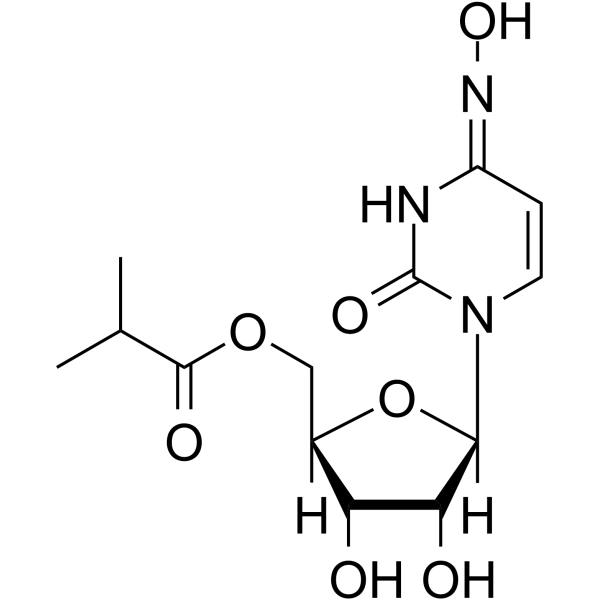
Cas No.: 2492423-29-5; 2349386-89-4
Sample solution is provided at 25 µL, 10mM.
_1-3.$$$39978408@51.jpg');)
_1-9.$$$38538795@65.jpg');)
_1-9.$$$39112701@51.jpg');)
_1-7.$$$37316672@70.jpg');)
_366-372.$$$36198801@70.jpg');)
.$$$38565142@65.jpg');)
_1867-1883.$$$33248023@67.jpg');)
_eads6055.$$$39977546@45.jpg');)
_eadm9805.$$$40080571@45.jpg');)
_eadj3020.$$$39666821@45.jpg');)
_1-20.$$$39757301@28.jpg');)
_1-24.$$$38898113@28.jpg');)
_273-287.$$$36806353@46.jpg');)
_1-16.$$$37156877@44.jpg');)
_1-19.$$$37460805@44.jpg');)
_1291-1307.$$$34518654@46.jpg');)
Molnupiravir is the 5′-isobutyrate prodrug of the antiviral ribonucleoside analogue β-D-N4-hydroxycytidine (NHC) [1]. Molnupiravir rapidly appears in plasma and is converted to the triphosphate form in cells, which is incorporated into viral RNA in place of cytosine or uracil by RNA-dependent RNA polymerase (RdRp), causing a break of viral replication[2]. Molnupiravir has been used as an oral antiviral drug to inhibit various RNA virus infections in different cell models and animal models[3].
In vitro, Molnupiravir treatment for 48 hours significantly inhibited the replication of WT SARS-CoV-2 and Omicron SARS-CoV-2 in Calu-3 cells, with IC50 values of 1.965μM and 0.7556μM, respectively[4]. 62.5 μM of Molnupiravir treatment for 72 hours inhibited viral release and replication in fcwf-4 cells infected with Alphacoronavirus suis[5]. Treatment of Vero cells with 96μM of Molnupiravir for 1 hour significantly reduced the viral genome copy number and viral titer of porcine epidemic diarrhea virus, and maintained the normal morphology of the cells[6].
In vivo, Molnupiravir treatment via intragastrical administration (500mg/kg) once 2 hours before MERS-CoV infection, as well as at 12 hours, 24 hours, and 48 hours after infection, can improve lung function, reduce virus titer, and alleviate weight loss in hDPP4 288/330 gene-modified mice [7]. Oral administration of Molnupiravir (100mg/kg) twice daily to female ferrets within 3.5 days after infection with H1N1 influenza virus significantly reduced viral load, alleviated fever, airway epithelial tissue pathological changes, and inflammation[8].
References:
[1] Kumar D, Trivedi N. Disease-drug and drug-drug interaction in COVID-19: Risk and assessment[J]. Biomedicine & Pharmacotherapy, 2021, 139: 111642.
[2] Bekheit M S, Panda S S, Girgis A S. Potential RNA-dependent RNA polymerase (RdRp) inhibitors as prospective drug candidates for SARS-CoV-2[J]. European Journal of Medicinal Chemistry, 2023, 252: 115292.
[3] Malek R J, Bill C A, Vines C M. Clinical drug therapies and biologicals currently used or in clinical trial to treat COVID-19[J]. Biomedicine & Pharmacotherapy, 2021, 144: 112276.
[4] Li P, Wang Y, Lavrijsen M, et al. SARS-CoV-2 Omicron variant is highly sensitive to molnupiravir, nirmatrelvir, and the combination[J]. Cell research, 2022, 32(3): 322-324.
[5] Doki T, Shinohara K, To K, et al. Molnupiravir Inhibits Replication of Multiple Alphacoronavirus suis Strains in Feline Cells[J]. Pathogens, 2025, 14(8): 787.
[6] Huang Z X, Zhou S T, Yang Z B, et al. Molnupiravir inhibits porcine epidemic diarrhea virus infection in vitro[J]. Viruses, 2023, 15(6): 1317.
[7] Sheahan T P, Sims A C, Zhou S, et al. An orally bioavailable broad-spectrum antiviral inhibits SARS-CoV-2 in human airway epithelial cell cultures and multiple coronaviruses in mice[J]. Science translational medicine, 2020, 12(541): eabb5883.
[8] Toots M, Yoon J J, Cox R M, et al. Characterization of orally efficacious influenza drug with high resistance barrier in ferrets and human airway epithelia[J]. Science translational medicine, 2019, 11(515): eaax5866.
| Cell experiment [1]: | |
Cell lines | Vero cells |
Preparation Method | Vero cells were cultured in Dulbecco Modified Eagle Medium (DMEM), containing 10% fetal bovine serum, in a 37°C CO₂ incubator. Vero cells were seeded in 12-well cell culture plates (2×10⁵ cells per well), and Porcine epidemic diarrhea virus (PEDV) [infection multiplicity (MOI)=0.1] and different concentrations of Molnupiravir (0, 1.5, 3.0, 6.0, 12.0, 24.0, 48.0, 96.0, and 192.0µM) were added. The plates were incubated at 4°C for 1 hour. The blank control group used DMSO. Then, the culture medium was discarded, and the plates were washed three times with pre-cooled phosphate-buffered saline (PBS). The viral infection level was quantified by RT-qPCR. |
Reaction Conditions | 0, 1.5, 3.0, 6.0, 12.0, 24.0, 48.0, 96.0, and 192.0µM; 1h |
Applications | Molnupiravir reduced the viral genome copy number and viral titer of PEDV in Vero cells in a dose-dependent manner. |
| Animal experiment [2]: | |
Animal models | Female ferrets |
Preparation Method | Female ferrets (6 to 8 months old) were housed in an ABSL-2 (animal biosafety level 2) facility. After a one-week rest, the ferrets were weighed and randomly grouped. Ferrets were anesthetized and intranasally infected with 1×10⁵ pfu [A/California/07/2009 (H1N1)] (infection volume=200μl). Within 3.5 days after infection (pI), Molnupiravir (100mg/kg) was administered orally twice daily, and the control group received the same volume of solvent (1% methylcellulose aqueous solution). Implantable telemetry sensors were used to continuously monitor body temperature (readings taken every 2 to 15 minutes). Nasal rinse fluid (collected every 12 hours) and nasal concha (upper respiratory tract) samples were collected to detect viral load. |
Dosage form | 100mg/kg; twice day for 3.5 days; p.o. |
Applications | Molnupiravir administration alleviated fever and reduced virus load in influenza virus-infected ferrets. |
References: | |
| Cas No. | 2492423-29-5; 2349386-89-4 | SDF | |
| Synonyms | EIDD-2801, β-D-N4-Hydroxycytidine-5′-isopropyl ester, MK-4482 | ||
| Formula | C13H19N3O7 | M.Wt | 329.31 |
| Solubility | DMSO : 100 mg/mL (303.67 mM; Need ultrasonic) | Storage | Store at -20°C |
| General tips | Please select the appropriate solvent to prepare the stock solution according to the
solubility of the product in different solvents; once the solution is prepared, please store it in
separate packages to avoid product failure caused by repeated freezing and thawing.Storage method
and period of the stock solution: When stored at -80°C, please use it within 6 months; when stored
at -20°C, please use it within 1 month. To increase solubility, heat the tube to 37°C and then oscillate in an ultrasonic bath for some time. |
||
| Shipping Condition | Evaluation sample solution: shipped with blue ice. All other sizes available: with RT, or with Blue Ice upon request. | ||
| Prepare stock solution | |||

|
1 mg | 5 mg | 10 mg |
| 1 mM | 3.0367 mL | 15.1833 mL | 30.3665 mL |
| 5 mM | 607.3 μL | 3.0367 mL | 6.0733 mL |
| 10 mM | 303.7 μL | 1.5183 mL | 3.0367 mL |
Step 1: Enter information below (Recommended: An additional animal making an allowance for loss during the experiment)
 g
μL
g
μL
Step 2: Enter the in vivo formulation (This is only the calculator, not formulation. Please contact us first if there is no in vivo formulation at the solubility Section.)
Calculation results:
Working concentration: mg/ml;
Method for preparing DMSO master liquid: mg drug pre-dissolved in μL DMSO ( Master liquid concentration mg/mL, Please contact us first if the concentration exceeds the DMSO solubility of the batch of drug. )
Method for preparing in vivo formulation: Take μL DMSO master liquid, next addμL PEG300, mix and clarify, next addμL Tween 80, mix and clarify, next add μL saline, mix and clarify.
Method for preparing in vivo formulation: Take μL DMSO master liquid, next add μL Corn oil, mix and clarify.
Note: 1. Please make sure the liquid is clear before adding the next solvent.
2. Be sure to add the solvent(s) in order. You must ensure that the solution obtained, in the previous addition, is a clear solution before proceeding to add the next solvent. Physical methods such as vortex, ultrasound or hot water bath can be used to aid dissolving.
3. All of the above co-solvents are available for purchase on the GlpBio website.
Quality Control & SDS
- View current batch:
- Purity: >99.50% Appearance: A solid
- COA (Certificate of Analysis)
- SDS (Safety Data Sheet)
- Datasheet
Average Rating: 5 (Based on Reviews and 30 reference(s) in Google Scholar.)