STING
STING (Stimulator of Interferon Genes) is a transmembrane protein localized to the endoplasmic reticulum that undergoes a conformational change in response to direct binding of cyclic dinucleotides (CDNs), resulting in a downstream signaling cascade involving TBK1 activation, IRF-3 phosphorylation, and production of IFN-β and other cytokines.
STING is a pattern recognition receptor of cyclic dinucleotides as well as an innate immune adaptor protein that enables signaling from cytoplasmic receptors to the transcription factor interferon regulatory factor 3. Initiation of these pathways leads to the expression of type I interferons and proteins associated with antiviral and antitumor immunity. Small molecules capable of triggering STING-dependent cellular processes are effective at blocking virus replication, enhancing vaccine efficacy, and facilitating immune response to cancer cells.
Targets for STING
Products for STING
- Cat.No. Product Name Information
-
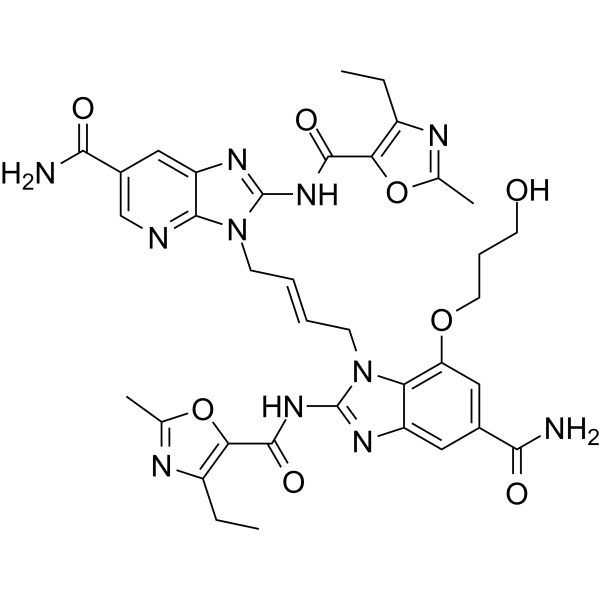
GC69959
STING agonist-20
STING agonist-20 (compound 95) is an effective STING agonist used in the synthesis of XMT-2056. It can be used as a vaccine adjuvant for cancer, inflammation, and research on immune diseases.
-
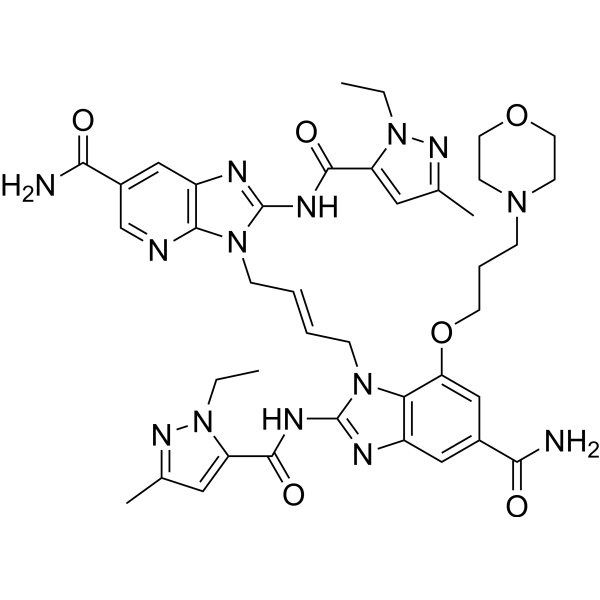
GC69961
STING agonist-22
STING agonist-22 (CF501) is an effective non-nucleotide STING agonist.
-
GC73407
STING agonist-26
STING agonist-26 (CF508) is a non-nucleotide small-molecule STING agonist.

-
GC37692
STING agonist-3
CS-0029879, Diamidobenzimidazole STING Agonist, diABZI-3, EX-A3217, HY-103665, STING Agonist-3
STING agonist-3, extracted from patent WO2017175147A1 (example 10), is a selective and non-nucleotide small-moleculeSTINGagonist with a pEC50 and pIC50 of 7.5 and 9.5, respectively. STING agonist-3 has durable anti-tumor effect and tremendous potential to improve treatment of cancer.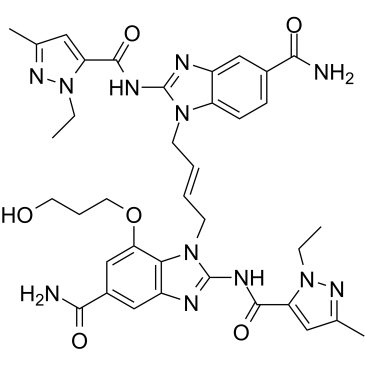
-
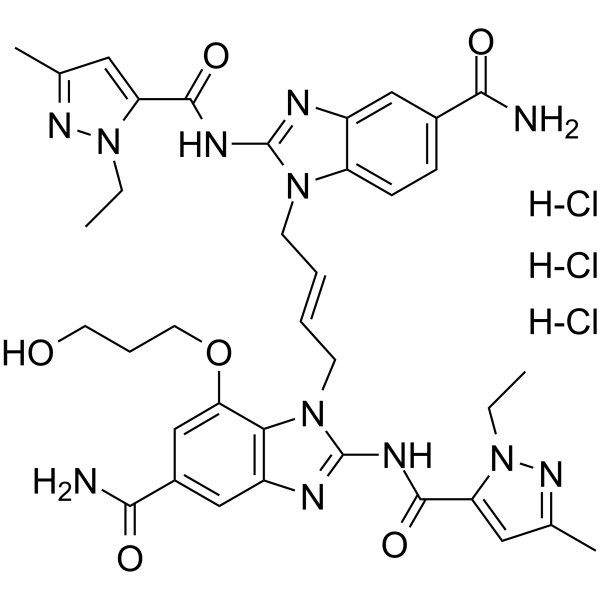
GC69962
STING agonist-3 trihydrochloride
STING agonist-3 trihydrochloride is derived from patent WO2017175147A1 (Example 10) and is a selective and non-nucleotide small molecule STING agonist with pEC50 and pIC50 values of 7.5 and 9.5, respectively. It has long-lasting anti-tumor effects and holds great potential in improving cancer research.
-
GC37693
STING agonist-4
CS-0087594, Diamidobenzimidazole STING Agonist-2, diABZI-4, HY-123943, STING Agonist-4, STING Agonist diABZI Compound 2
A STING agonist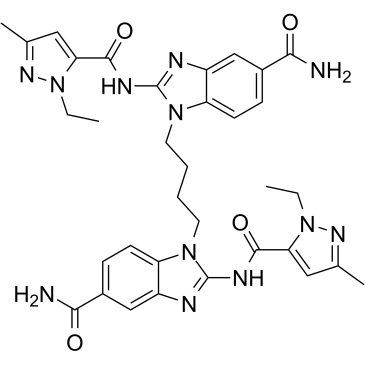
-
GC66008
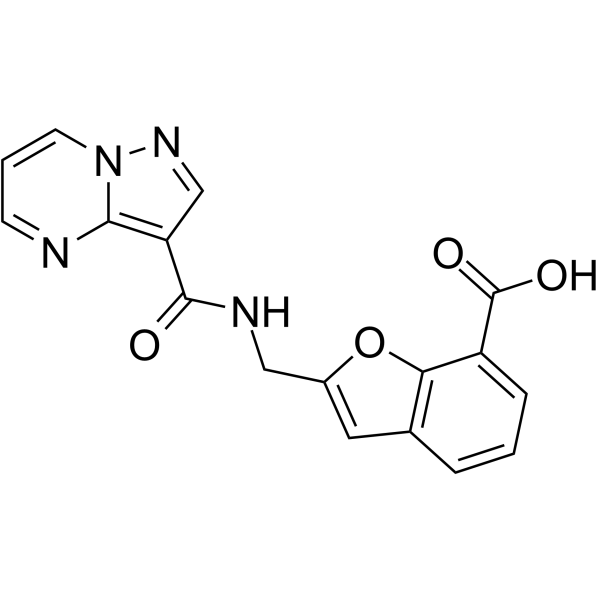
STING agonist-7
STING agonist-7 is a non-nucleotide STING agonist. STING agonist-7 binds selectively to mouse STING but not human STING. STING agonist-7 penetrates cell membrane poorly.
-
GC69963
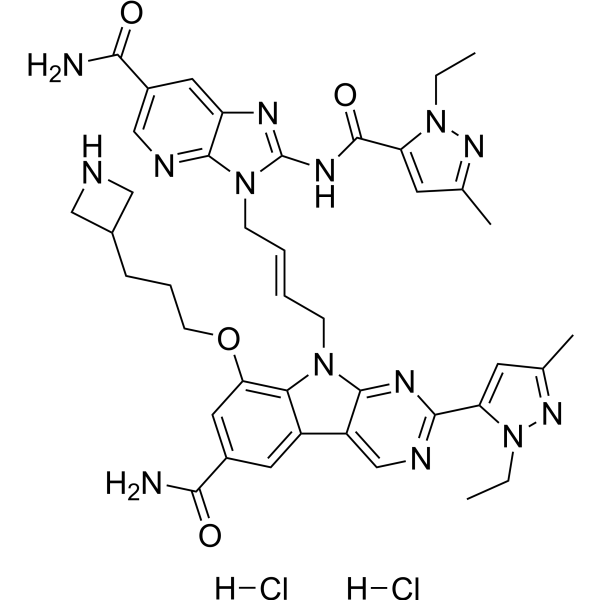
STING agonist-8 dihydrochloride
STING agonist-8 dihydrochloride (5-AB) is an effective STING activator with an EC50 of 27 nM in THP1-Dual KI-hSTING-R232 cells.
-
GC34322
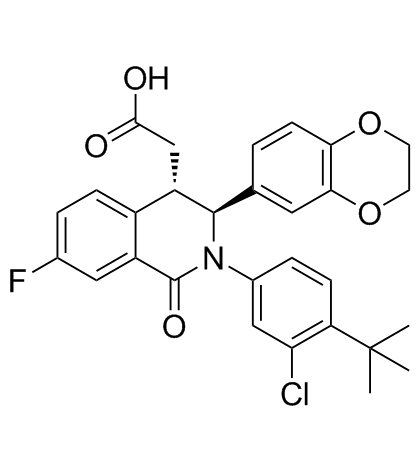
STING ligand-1
STING ligand-1 is a lead STING ligand with an IC50 of 68 nM for HAQ STING.
-
GC78685
STING-IN-15
STING-IN-15 is a potent STING inhibitor with an IC50 value of 116nM.

-
GC71186
STING-IN-4
STING-IN-4 (Compound 1) is a STING inhibitor that inhibits STING expression and hence reducing activation of STING and nuclear factor-κB (NF-κB) signaling.

-
GC71189
STING-IN-5
STING-IN-5 is a potent STING inhibitor, inhibiting LPS-induced NO synthesis in macrophages with an IC50 value of 1.15 μM.

-
GC73186
STING-IN-6
STING-IN-6 (compound 50) is a potent STING inhibitor with a pIC50 of 8.9.

-
GC73647
STING-IN-7
STING-IN-7 (compound 21) is a potent STING inhibitor with an IC50 of 11.5 nM.

-
GC46227
STING18
A competitive STING ligand

-
GC79068
Telomeric G4s ligand 2
Telomeric G4s ligand 2 is an orally active, selective ligand of telomeric G-quadruplex (G4), with an IC50 of 0.4 μM.
-
GC79431
UM-259 hydrochloride
UM-259 hydrochloride is a STING inhibitor with activity against both murine and human STING (including the STING R232 mutant).

-
GC52084
YSK05
YSK05 is a pH-sensitive cationic lipid. YSK05 improves the intracellular trafficking of non-viral vectors. YSK05-MEND shows significantly good gene silencing activity and hemolytic activity. YSK05 overcomes the suppression of endosomal escape by PEGylation. YSK05 effectively enhances siRNA delivery both in vitro and in vivo.