

Vercirnon (Synonyms: CCX282-B, GSK1605786) |
Catalog No.GC18661
 One-Click Copy Product Info
|

Vercirnon is a novel, orally active selective antagonist of the CCR9 chemokine receptor, with IC₅₀ values of 5.4nM and 3.4nM for inhibiting CCR9‑mediated calcium mobilization and chemotaxis in Molt‑4 cells, respectively .
Products are for research use only. Not for human use. We do not sell to patients.
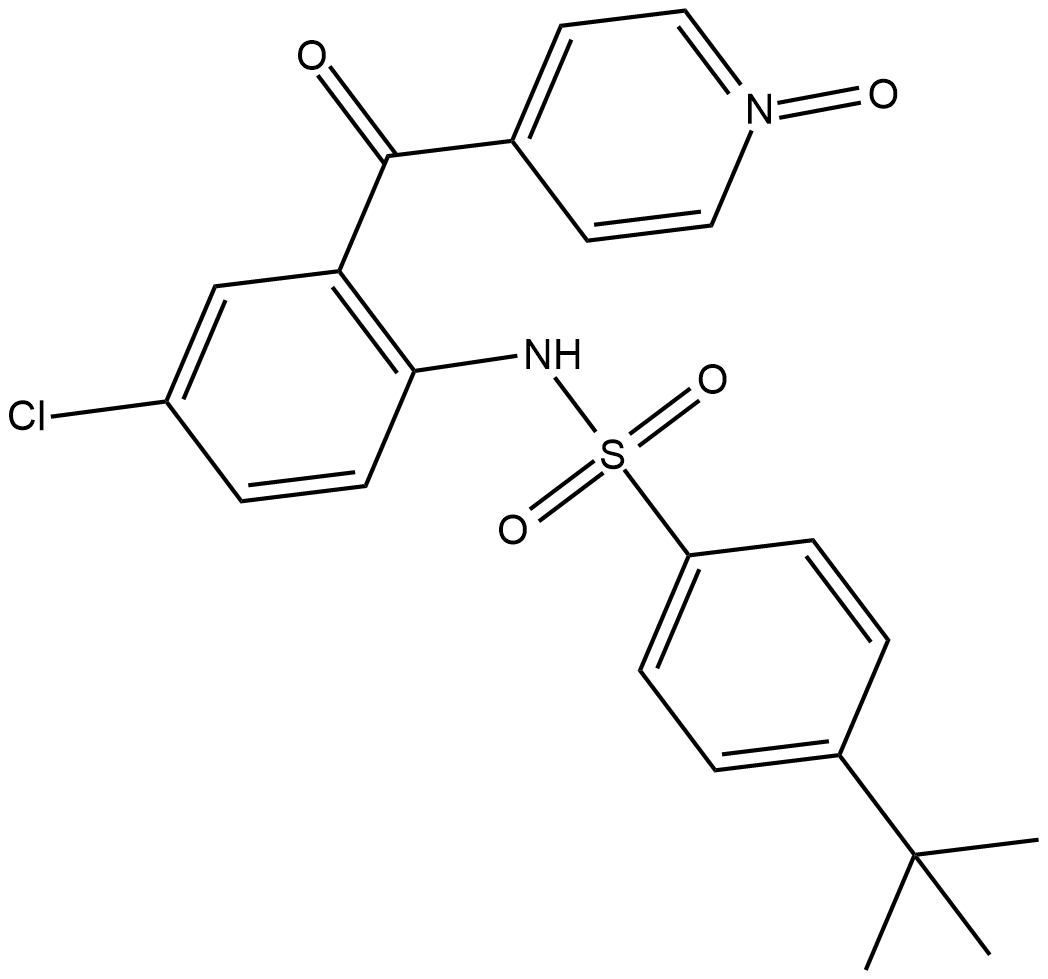
Cas No.: 698394-73-9
Sample solution is provided at 25 µL, 10mM.
_1-3.$$$39978408@51.jpg');)
_1-9.$$$38538795@65.jpg');)
_1-9.$$$39112701@51.jpg');)
_1-7.$$$37316672@70.jpg');)
_366-372.$$$36198801@70.jpg');)
.$$$38565142@65.jpg');)
_1867-1883.$$$33248023@67.jpg');)
_eads6055.$$$39977546@45.jpg');)
_eadm9805.$$$40080571@45.jpg');)
_eadj3020.$$$39666821@45.jpg');)
_1-20.$$$39757301@28.jpg');)
_1-24.$$$38898113@28.jpg');)
_273-287.$$$36806353@46.jpg');)
_1-16.$$$37156877@44.jpg');)
_1-19.$$$37460805@44.jpg');)
_1291-1307.$$$34518654@46.jpg');)
Vercirnon is a novel, orally active selective antagonist of the CCR9 chemokine receptor, with IC₅₀ values of 5.4nM and 3.4nM for inhibiting CCR9‑mediated calcium mobilization and chemotaxis in Molt‑4 cells, respectively [1-2]. By specifically blocking the binding of the ligand CCL25 to the CCR9 receptor expressed on T cells, Vercirnon inhibits the migration and recruitment of T cells to the intestinal mucosa, thereby alleviating inflammation in inflammatory bowel disease[3-4].
In vitro, treatment of SACC‑LM cells with Vercirnon (10nM) for 48 hours, Vercirnon significantly suppressed cell proliferation, migration, and invasion, while promoting apoptosis [5]. In isolated CD1 mouse islets, co‑treatment with Vercirnon (10nM) and CCL25 (50nM) for 1 hour, Vercirnon significantly enhanced glucose‑stimulated insulin secretion and increased cAMP accumulation[6].
In vivo, Vercirnon (10mg/kg or 50mg/kg) administered subcutaneously twice daily for 10 weeks in a Crohn’s disease mouse model, Vercirnon significantly improved intestinal inflammation resembling Crohn’s disease[7]. Vercirnon (50mg/kg) given subcutaneously twice daily for 20 weeks in mdr1a⁻/⁻ mice markedly ameliorated ulcerative colitis‑associated weight loss and colonic inflammation[8].
References:
[1] Vallet-Pichard A, Pol S. Grazoprevir/elbasvir combination therapy for HCV infection. Therap Adv Gastroenterol. 2017 Jan;10(1):155-167.
[2] Arseneau KO, Cominelli F. Vercirnon for the treatment of Crohn's disease. Expert Opin Investig Drugs. 2013 Jul;22(7):907-13.
[3] Haberer LJ, McSherry I, Cargill A, et al. Effects of vercirnon on the activity of CYP3A4, CYP2C19 and CYP2C8 enzymes and BCRP and OATP1B1 transporters using probe substrates. Eur J Clin Pharmacol. 2014 Jan;70(1):37-45.
[4] Zhang J, Romero J, Chan A, et al. Biarylsulfonamide CCR9 inhibitors for inflammatory bowel disease. Bioorg Med Chem Lett. 2015 Sep 1;25(17):3661-4.
[5] Chai S, Wen Z, Zhang R, et al. CCL25/CCR9 interaction promotes the malignant behavior of salivary adenoid cystic carcinoma via the PI3K/AKT signaling pathway. PeerJ. 2022 Aug 19;10:e13844.
[6] Atanes P, Lee V, Huang GC, et al. The role of the CCL25-CCR9 axis in beta-cell function: potential for therapeutic intervention in type 2 diabetes. Metabolism. 2020 Dec;113:154394.
[7] Walters MJ, Wang Y, Lai N, et al. Characterization of CCX282-B, an orally bioavailable antagonist of the CCR9 chemokine receptor, for treatment of inflammatory bowel disease. J Pharmacol Exp Ther. 2010 Oct;335(1):61-9.
[8] Bekker P, Ebsworth K, Walters MJ, et al. CCR9 Antagonists in the Treatment of Ulcerative Colitis. Mediators Inflamm. 2015;2015:628340.
| Cell experiment [1]: | |
Cell lines | SACC-LM cells (human salivary adenoid cystic carcinoma cell line) and SACC-83 cells |
Preparation Method | SACC cells were maintained in Dulbecco's modified Eagle's medium/nutrient mixture F-12 (DMEM/F12) supplemented with 10% fetal bovine serum (FBS) and 1% penicillin-streptomycin at 37°C in a humidified atmosphere with 5% CO₂. For experiments, cells were treated with the CCR9 inhibitor Vercirnon at a concentration of 10nM, often following pre-treatment or co-treatment with 200ng/ml CCL25 for 24 or 48 hours. |
Reaction Conditions | 10nM; 24h or 48h |
Applications | Vercirnon significantly inhibited the CCL25/CCR9-induced activation of the PI3K/AKT signaling pathway, as evidenced by reduced phosphorylation levels of AKT (Ser473). |
| Animal experiment [2]: | |
Animal models | TNFΔARE/+ mice (a genetic model of Crohn's disease) |
Preparation Method | Female TNFΔARE/+ mice were administered Vercirnon (10mg/kg and 50mg/kg) or a vehicle control via subcutaneous injection twice per day, starting when the animals were 2 weeks old and continuing for 10 weeks. At the end of the study (when mice were 12 weeks old), animals were sacrificed, and intestinal tissues were dissected and processed for histological analysis. |
Dosage form | 10mg/kg and 50mg/kg; s.c.; Twice daily administration for 10 weeks. |
Applications | Treatment with Vercirnon resulted in a significant amelioration of intestinal inflammation. In the vehicle control group, 60% of mice developed severe/very severe inflammation. In contrast, Vercirnon treatment provided complete protection against severe inflammation. At the 50mg/kg dose of mice were histologically normal. This demonstrates that Vercirnon effectively blocks the development of pathology in a model of TNF-driven Crohn's disease. |
References: | |
| Cas No. | 698394-73-9 | SDF | |
| Synonyms | CCX282-B, GSK1605786 | ||
| Chemical Name | N-[4-chloro-2-[(1-oxido-4-pyridinyl)carbonyl]phenyl]-4-(1,1-dimethylethyl)-benzenesulfonamide | ||
| Canonical SMILES | O=C(C(C=C1)=CC=[N]1=O)C(C=C(Cl)C=C2)=C2N[S](=O)(C3=CC=C(C(C)(C)C)C=C3)=O | ||
| Formula | C22H21ClN2O4S | M.Wt | 444.9 |
| Solubility | DMSO: 25 mg/ml | Storage | Store at -20°C |
| General tips | Please select the appropriate solvent to prepare the stock solution according to the
solubility of the product in different solvents; once the solution is prepared, please store it in
separate packages to avoid product failure caused by repeated freezing and thawing.Storage method
and period of the stock solution: When stored at -80°C, please use it within 6 months; when stored
at -20°C, please use it within 1 month. To increase solubility, heat the tube to 37°C and then oscillate in an ultrasonic bath for some time. |
||
| Shipping Condition | Evaluation sample solution: shipped with blue ice. All other sizes available: with RT, or with Blue Ice upon request. | ||
| Prepare stock solution | |||

|
1 mg | 5 mg | 10 mg |
| 1 mM | 2.2477 mL | 11.2385 mL | 22.477 mL |
| 5 mM | 449.5 μL | 2.2477 mL | 4.4954 mL |
| 10 mM | 224.8 μL | 1.1238 mL | 2.2477 mL |
Step 1: Enter information below (Recommended: An additional animal making an allowance for loss during the experiment)
 g
μL
g
μL
Step 2: Enter the in vivo formulation (This is only the calculator, not formulation. Please contact us first if there is no in vivo formulation at the solubility Section.)
Calculation results:
Working concentration: mg/ml;
Method for preparing DMSO master liquid: mg drug pre-dissolved in μL DMSO ( Master liquid concentration mg/mL, Please contact us first if the concentration exceeds the DMSO solubility of the batch of drug. )
Method for preparing in vivo formulation: Take μL DMSO master liquid, next addμL PEG300, mix and clarify, next addμL Tween 80, mix and clarify, next add μL saline, mix and clarify.
Method for preparing in vivo formulation: Take μL DMSO master liquid, next add μL Corn oil, mix and clarify.
Note: 1. Please make sure the liquid is clear before adding the next solvent.
2. Be sure to add the solvent(s) in order. You must ensure that the solution obtained, in the previous addition, is a clear solution before proceeding to add the next solvent. Physical methods such as vortex, ultrasound or hot water bath can be used to aid dissolving.
3. All of the above co-solvents are available for purchase on the GlpBio website.
Quality Control & SDS
- View current batch:
- Purity: >98.00% Appearance: A solid
- COA (Certificate of Analysis)
- SDS (Safety Data Sheet)
- Datasheet
Average Rating: 5 (Based on Reviews and 30 reference(s) in Google Scholar.)