

AZD7545 |
Catalog No.GC13669
 One-Click Copy Product Info
|

AZD7545 is a competitive pyruvate dehydrogenase kinase 2 (PDHK2) inhibitor (IC₅₀=6.4nM) that also inhibits PDHK1 activity (IC₅₀=36.8nM).
Products are for research use only. Not for human use. We do not sell to patients.
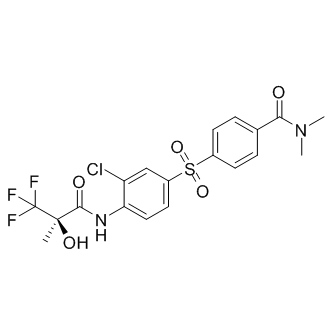
Cas No.: 252017-04-2
Sample solution is provided at 25 µL, 10mM.
AZD7545 is a competitive pyruvate dehydrogenase kinase 2 (PDHK2) inhibitor (IC₅₀=6.4nM) that also inhibits PDHK1 activity (IC₅₀=36.8nM)[1]. AZD7545 inhibits PDHK activity by disrupting the interaction between PDHK2 and the inner lipoyl domain of the dihydrolipoamide acetyltransferase component of the pyruvate dehydrogenase complex (PDC), thereby increasing the proportion of active PDH[2]. AZD7545 can be used to study the regulation of glucose metabolism[3]. AZD7545 also inhibits the growth of drug-resistant melanoma cells[4].
In vitro, treatment of A549 non-small cell lung cancer cells with AZD7545 (10–20μM) for 4–24 hours effectively inhibited the phosphorylation of pyruvate dehydrogenase (PDH) and enhanced its activity[5]. Treatment of H1299 non-small cell lung cancer cells with AZD7545 (500μM) alone for 24 hours inhibited PDK1 activity and enhanced PDH activity but did not significantly induce cancer cell apoptosis; however, when combined with the PKM2 activator ML265 (500μmol/L), AZD7545 synergistically inhibited cell proliferation and induced apoptosis, while significantly reducing glucose consumption and lactate production, promoting oxidative phosphorylation metabolic remodeling[6].
In vivo, administration of AZD7545 (0.5g/L) via drinking water for 5 weeks to 7-week-old ovariectomized (OVX) female C57BL/6J mice significantly suppressed OVX-induced bone loss and reduced the activation of the NFATc1 signaling pathway in osteoclasts[7]. A single oral dose of AZD7545 (10–30mg/kg) administered to Wistar rats and obese Zucker (fa/fa) rats significantly activated pyruvate dehydrogenase (PDH) in the liver and skeletal muscle and improved blood glucose control in obese Zucker rats[8].
References:
[1] Morrell JA, Orme J, Butlin RJ, et al. AZD7545 is a selective inhibitor of pyruvate dehydrogenase kinase 2. Biochem Soc Trans. 2003 Dec;31(Pt 6):1168-70.
[2] Kato M, Li J, Chuang JL, et al. Distinct structural mechanisms for inhibition of pyruvate dehydrogenase kinase isoforms by AZD7545, dichloroacetate, and radicicol. Structure. 2007 Aug;15(8):992-1004.
[3] Tuganova A, Klyuyeva A, Popov KM. Recognition of the inner lipoyl-bearing domain of dihydrolipoyl transacetylase and of the blood glucose-lowering compound AZD7545 by pyruvate dehydrogenase kinase 2. Biochemistry. 2007 Jul 24;46(29):8592-602.
[4] Cesi G, Walbrecq G, Zimmer A, et al. ROS production induced by BRAF inhibitor treatment rewires metabolic processes affecting cell growth of melanoma cells. Mol Cancer. 2017 Jun 8;16(1):102.
[5] Jin L, Cho M, Kim BS, et al. Drug evaluation based on phosphomimetic PDHA1 reveals the complexity of activity-related cell death in A549 non-small cell lung cancer cells. BMB Rep. 2021 Nov;54(11):563-568.
[6] Lin H, Han H, Yang M, et al. PKM2/PDK1 dual-targeted shikonin derivatives restore the sensitivity of EGFR-mutated NSCLC cells to gefitinib by remodeling glucose metabolism. Eur J Med Chem. 2023 Mar 5;249:115166.
[7] Lee JM, Kim MJ, Lee SJ, et al. PDK2 Deficiency Prevents Ovariectomy-Induced Bone Loss in Mice by Regulating the RANKL-NFATc1 Pathway During Osteoclastogenesis. J Bone Miner Res. 2021 Mar;36(3):553-566.
[8] Mayers RM, Butlin RJ, Kilgour E, et al. AZD7545, a novel inhibitor of pyruvate dehydrogenase kinase 2 (PDHK2), activates pyruvate dehydrogenase in vivo and improves blood glucose control in obese (fa/fa) Zucker rats. Biochem Soc Trans. 2003 Dec;31(Pt 6):1165-7.
| Cell experiment [1]: | |
Cell lines | A549 cells (human non-small cell lung cancer cell line) |
Preparation Method | A549 cells were maintained in RPMI 1640 medium supplemented with 10% heat-inactivated fetal bovine serum (FBS) and 1% penicillin/streptomycin at 37°C, 5% CO₂. 10-20μM AZD7545 was added for 2-24h. |
Reaction Conditions | 5-20mM; 2-24h |
Applications | AZD7545 effectively enhanced PDH activity in A549 cells by reducing phosphorylations at S293 and S300 residues of PDHA1. AZD7545 treatment increased oxygen consumption rate (OCR) and decreased extracellular acidification rate (ECAR) in cells, indicating a shift from glycolysis to oxidative phosphorylation. |
| Animal experiment [2]: | |
Animal models | Wistar rats and obese Zucker (fa/fa) rats |
Preparation Method | Male Wistar rats (200-240g) were orally administered a single dose of AZD7545 (10-30mg/kg) suspended in 0.5% (w/w) methocel/0.1% polysorbate 80 at 08:00h. Obese Zucker rats were treated orally with AZD7545 twice daily for 7 days. Animals were sacrificed 2 hours after single dose administration for tissue collection. |
Dosage form | 10-30mg/kg; oral gavage |
Applications | A single dose of AZD7545 significantly increased the proportion of active (dephosphorylated) PDH in liver and in skeletal muscle in Wistar rats. In obese Zucker rats. AZD7545 treatment also increased muscle PDH activity from 61.0% to 97.0% active and liver PDH in obese Zucker rats. |
References: | |
| Cas No. | 252017-04-2 | SDF | |
| Chemical Name | 4-[3-chloro-4-[[(2R)-3,3,3-trifluoro-2-hydroxy-2-methylpropanoyl]amino]phenyl]sulfonyl-N,N-dimethylbenzamide | ||
| Canonical SMILES | CC(C(=O)NC1=C(C=C(C=C1)S(=O)(=O)C2=CC=C(C=C2)C(=O)N(C)C)Cl)(C(F)(F)F)O | ||
| Formula | C19H18ClF3N2O5S | M.Wt | 478.87 |
| Solubility | ≥ 21.85mg/mL in DMSO | Storage | Store at -20°C |
| General tips | Please select the appropriate solvent to prepare the stock solution according to the
solubility of the product in different solvents; once the solution is prepared, please store it in
separate packages to avoid product failure caused by repeated freezing and thawing.Storage method
and period of the stock solution: When stored at -80°C, please use it within 6 months; when stored
at -20°C, please use it within 1 month. To increase solubility, heat the tube to 37°C and then oscillate in an ultrasonic bath for some time. |
||
| Shipping Condition | Evaluation sample solution: shipped with blue ice. All other sizes available: with RT, or with Blue Ice upon request. | ||
| Prepare stock solution | |||

|
1 mg | 5 mg | 10 mg |
| 1 mM | 2.0882 mL | 10.4412 mL | 20.8825 mL |
| 5 mM | 417.6 μL | 2.0882 mL | 4.1765 mL |
| 10 mM | 208.8 μL | 1.0441 mL | 2.0882 mL |
Step 1: Enter information below (Recommended: An additional animal making an allowance for loss during the experiment)
 g
μL
g
μL
Step 2: Enter the in vivo formulation (This is only the calculator, not formulation. Please contact us first if there is no in vivo formulation at the solubility Section.)
Calculation results:
Working concentration: mg/ml;
Method for preparing DMSO master liquid: mg drug pre-dissolved in μL DMSO ( Master liquid concentration mg/mL, Please contact us first if the concentration exceeds the DMSO solubility of the batch of drug. )
Method for preparing in vivo formulation: Take μL DMSO master liquid, next addμL PEG300, mix and clarify, next addμL Tween 80, mix and clarify, next add μL saline, mix and clarify.
Method for preparing in vivo formulation: Take μL DMSO master liquid, next add μL Corn oil, mix and clarify.
Note: 1. Please make sure the liquid is clear before adding the next solvent.
2. Be sure to add the solvent(s) in order. You must ensure that the solution obtained, in the previous addition, is a clear solution before proceeding to add the next solvent. Physical methods such as vortex, ultrasound or hot water bath can be used to aid dissolving.
3. All of the above co-solvents are available for purchase on the GlpBio website.
Quality Control & SDS
- View current batch:
- Purity: >99.50% Appearance: A solid
- COA (Certificate of Analysis)
- SDS (Safety Data Sheet)
- Datasheet
Average Rating: 5 (Based on Reviews and 24 reference(s) in Google Scholar.)