

Cinnamaldehyde |
Catalog No.GN10340
 One-Click Copy Product Info
|

Cinnamaldehyde (CA) is a bioactive compound isolated from the stem bark of cinnamon, which has antiproliferative and pro-apoptotic effects on various cancer cell lines in vitro.
Products are for research use only. Not for human use. We do not sell to patients.
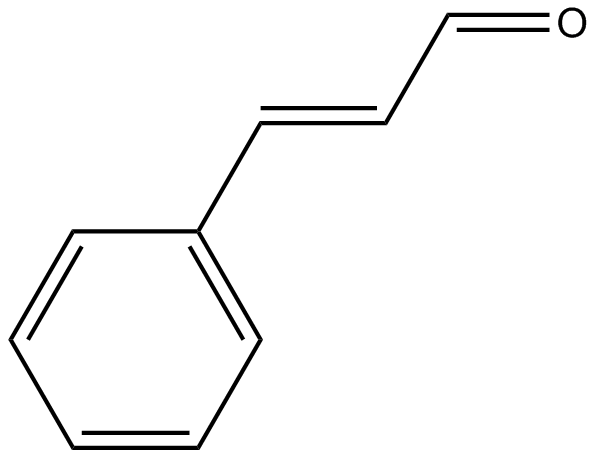
Cas No.: 104-55-2
Sample solution is provided at 25 µL, 10mM.
_1-3.$$$39978408@51.jpg');)
_1-9.$$$38538795@65.jpg');)
_1-9.$$$39112701@51.jpg');)
_1-7.$$$37316672@70.jpg');)
_366-372.$$$36198801@70.jpg');)
.$$$38565142@65.jpg');)
_1867-1883.$$$33248023@67.jpg');)
_eads6055.$$$39977546@45.jpg');)
_eadm9805.$$$40080571@45.jpg');)
_eadj3020.$$$39666821@45.jpg');)
_1-20.$$$39757301@28.jpg');)
_1-24.$$$38898113@28.jpg');)
_273-287.$$$36806353@46.jpg');)
_1-16.$$$37156877@44.jpg');)
_1-19.$$$37460805@44.jpg');)
_1291-1307.$$$34518654@46.jpg');)
Cinnamaldehyde (CA) is a bioactive compound isolated from the stem bark of cinnamon, which has antiproliferative and pro-apoptotic effects on various cancer cell lines in vitro[1]. Cinnamaldehyde has many pharmacological effects, including anti-inflammatory, anti-diabetic, anti-obesity, antibacterial and neuroprotective functions[2-3].
Cinnamaldehyde can inhibit the proliferation and invasion of colorectal cancer cells and promote apoptosis. At 24 h, the IC50 values of Cinnamaldehyde in inhibiting the growth of HCT116, LoVo, and SW480 cells were 30.7, 30.6 and 35.69 µg/ml, respectively. Cinnamaldehyde (0, 20, 40 and 80 μg/ml) up-regulated the expression of E-cadherin and downregulated the expression of matrix metalloproteinase 2(MMP-2) and MMP-9[1]. Cinnamaldehyde attenuates renal cellular senescence by antagonizing the inhibitory effects of D-galactose on cell viability and P13K/Akt signaling pathway and reversing D-galactose-induced cellular autophagy and senescence[2]. Low concentrations of cinnamaldehyde (1 µg/ml) resulted in a slight increase in NF-κB activation, whereas higher concentrations (5 and 10 µg/ml) led to a dose-dependent decrease in lipopolysaccharide(LPS)-stimulated NF-κB activation[3].
Cinnamaldehyde can alleviate D-galactose-induced renal damage in rats and reverse the inhibitory effect of D-galactose-induced PI3K/Akt signaling pathway[2]. Cinnamaldehyde (80 mg/kg) significantly inhibited tumor growth in the HCT-116 ectopic CRC model, and the Ki67 level in the tumor tissue of mice in the Cinnamaldehyde-treated group was significantly reduced, and the apoptotic cells were significantly increased[4].
References:
[1] Li J, Teng Y, Liu S, et al. Cinnamaldehyde affects the biological behavior of human colorectal cancer cells and induces apoptosis via inhibition of the PI3K/Akt signaling pathway[J]. Oncology reports, 2016, 35(3): 1501-1510.
[2] Xiao Q. Cinnamaldehyde attenuates kidney senescence and injury through PI3K/Akt pathway-mediated autophagy via downregulating miR-155[J]. Renal failure, 2022, 44(1): 601-614.
[3] Roth-Walter F, Moskovskich A, Gomez-Casado C, et al. Immune suppressive effect of cinnamaldehyde due to inhibition of proliferation and induction of apoptosis in immune cells: implications in cancer[J]. PloS one, 2014, 9(10): e108402.
[4] Zhang W, Lei W, Shen F, et al. Cinnamaldehyde induces apoptosis and enhances anti‐colorectal cancer activity via covalent binding to HSPD1[J]. Phytotherapy Research, 2023.
| Cell experiment [1]: | |
Cell lines | LoVo, SW480 and HCT116 cells |
Preparation Method | HCT116, LoVo and SW480 cells were treated with 0, 10, 20, 30, 40, 60 and 80 µg/ml Cinnamaldehyde for 12, 24, and 48 h. Cell growth inhibition was measured using the MTT assay. |
Reaction Conditions | 0, 10, 20, 30, 40, 60 and 80 µg/ml, 12, 24 and 48 h |
Applications | Cinnamaldehyde can inhibit the proliferation of colorectal cancer cells. The IC50 values of Cinnamaldehyde inhibition of HCT116, LoVo and SW480 cell growth at 24 h were 30.7, 30.6 and 35.69 µg/ml, respectively. |
| Animal experiment [2]: | |
Animal models | HCT-116 ectopic CRC model |
Preparation Method | HCT-116 cells (1 × 10⁷) were injected into nude mice. After the tumors were allowed to grow for 10 days, the mice were treated with Cinnamaldehyde (40 or 80 mg/kg/day). Saline was used as a negative control and 5-FU (20 mg/kg) as a positive control, every other day. |
Dosage form | 40 or 80 mg/kg/day, 2 weeks |
Applications | Cinnamaldehyde can inhibit tumor growth in vivo, and Ki67-positive cells are significantly reduced. |
References: [1]. Li J, Teng Y, Liu S, et al. Cinnamaldehyde affects the biological behavior of human colorectal cancer cells and induces apoptosis via inhibition of the PI3K/Akt signaling pathway[J]. Oncology reports, 2016, 35(3): 1501-1510. [2]. Zhang W, Lei W, Shen F, et al. Cinnamaldehyde induces apoptosis and enhances anti‐colorectal cancer activity via covalent binding to HSPD1[J]. Phytotherapy Research, 2023. | |
| Cas No. | 104-55-2 | SDF | |
| Chemical Name | (E)-3-phenylprop-2-enal | ||
| Canonical SMILES | C1=CC=C(C=C1)C=CC=O | ||
| Formula | C9H8O | M.Wt | 132.06 |
| Solubility | ≥ 13.2mg/mL in DMSO | Storage | Store at RT |
| General tips | Please select the appropriate solvent to prepare the stock solution according to the
solubility of the product in different solvents; once the solution is prepared, please store it in
separate packages to avoid product failure caused by repeated freezing and thawing.Storage method
and period of the stock solution: When stored at -80°C, please use it within 6 months; when stored
at -20°C, please use it within 1 month. To increase solubility, heat the tube to 37°C and then oscillate in an ultrasonic bath for some time. |
||
| Shipping Condition | Evaluation sample solution: shipped with blue ice. All other sizes available: with RT, or with Blue Ice upon request. | ||
| Prepare stock solution | |||

|
1 mg | 5 mg | 10 mg |
| 1 mM | 7.5723 mL | 37.8616 mL | 75.7232 mL |
| 5 mM | 1.5145 mL | 7.5723 mL | 15.1446 mL |
| 10 mM | 757.2 μL | 3.7862 mL | 7.5723 mL |
Step 1: Enter information below (Recommended: An additional animal making an allowance for loss during the experiment)
 g
μL
g
μL
Step 2: Enter the in vivo formulation (This is only the calculator, not formulation. Please contact us first if there is no in vivo formulation at the solubility Section.)
Calculation results:
Working concentration: mg/ml;
Method for preparing DMSO master liquid: mg drug pre-dissolved in μL DMSO ( Master liquid concentration mg/mL, Please contact us first if the concentration exceeds the DMSO solubility of the batch of drug. )
Method for preparing in vivo formulation: Take μL DMSO master liquid, next addμL PEG300, mix and clarify, next addμL Tween 80, mix and clarify, next add μL saline, mix and clarify.
Method for preparing in vivo formulation: Take μL DMSO master liquid, next add μL Corn oil, mix and clarify.
Note: 1. Please make sure the liquid is clear before adding the next solvent.
2. Be sure to add the solvent(s) in order. You must ensure that the solution obtained, in the previous addition, is a clear solution before proceeding to add the next solvent. Physical methods such as vortex, ultrasound or hot water bath can be used to aid dissolving.
3. All of the above co-solvents are available for purchase on the GlpBio website.
Quality Control & SDS
- View current batch:
- Purity: >98.00% Appearance: A liquid
- COA (Certificate of Analysis)
- SDS (Safety Data Sheet)
- Datasheet
Average Rating: 5 (Based on Reviews and 30 reference(s) in Google Scholar.)