

EED226 |
Katalog-Nr.GC19130
 One-Click Copy Product Info
|

EED226 ist ein Polycomb Repressive Complex 2 (PRC2)-Inhibitor, der bei der embryonalen Ektodermentwicklung (EED) an die K27me3-Tasche bindet und im Xenograft-Mausmodell eine starke AntitumoraktivitÄt zeigt. EED226 ist ein potenter, selektiver und oral bioverfÜgbarer EED-Inhibitor. EED226 hemmt PRC2 mit einem IC50 von 23,4 nM, wenn das H3K27me0-Peptid als Substrat in den enzymatischen In-vitro-Assays verwendet wird.
Products are for research use only. Not for human use. We do not sell to patients.
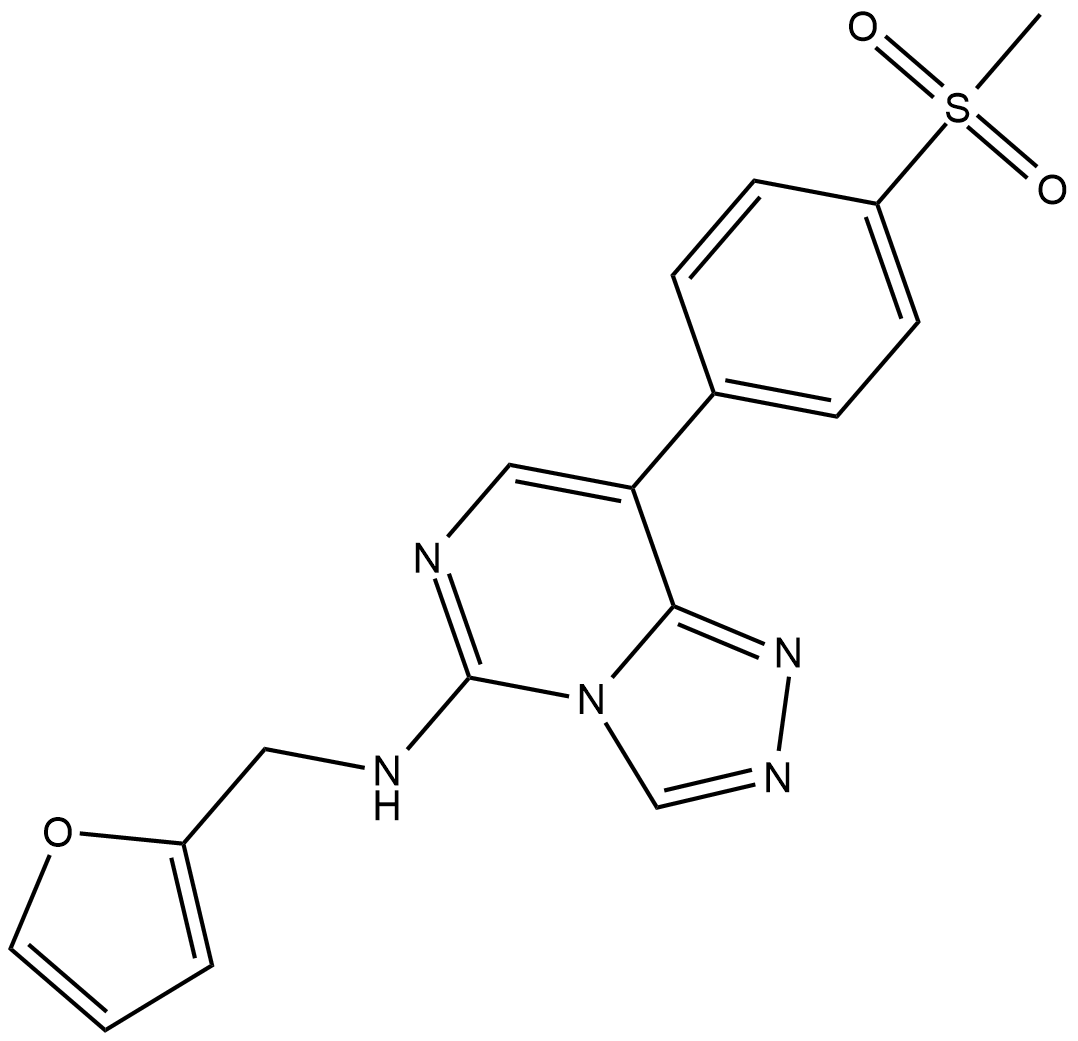
Cas No.: 2083627-02-3
Sample solution is provided at 25 µL, 10mM.
_1-3.$$$39978408@51.jpg');)
_1-9.$$$38538795@65.jpg');)
_1-9.$$$39112701@51.jpg');)
_1-7.$$$37316672@70.jpg');)
_366-372.$$$36198801@70.jpg');)
.$$$38565142@65.jpg');)
_1867-1883.$$$33248023@67.jpg');)
_eads6055.$$$39977546@45.jpg');)
_eadm9805.$$$40080571@45.jpg');)
_eadj3020.$$$39666821@45.jpg');)
_1-20.$$$39757301@28.jpg');)
_1-24.$$$38898113@28.jpg');)
_273-287.$$$36806353@46.jpg');)
_1-16.$$$37156877@44.jpg');)
_1-19.$$$37460805@44.jpg');)
_1291-1307.$$$34518654@46.jpg');)
EED226 is a potent inhibitor of Polycomb repressive complex 2 (PRC2) with an IC50 value of 22.3nM [1]. EED226 binds to the H3K27Me3 binding pocket of EED through a allosteric mechanism, thereby inhibiting the function of PRC2. It effectively suppresses the level of H3K27Me3 in the cell and regulates the expression of target genes. [2]. EED226 has been widely used in cell and animal models to inhibit tumor progression[3].
In vitro, EED226 treatment for 5 days significantly inhibited the proliferation of NGP and IMR32 cells, with IC50 values of 2.64μM and 2.05μM, respectively[4]. EED226 treatment at 5μM for 48 hours significantly enhanced the proliferation of female germline stem cells (FGSCs), promoted the expression of OCT4, and inhibited the expression of P53 and P63[5].
In vivo, EED226 treatment via daily intragastric administration (40mg/kg) twice for 2 days improved renal function and alleviated renal injury in the mouse model of acute kidney injury (AKI) induced by cisplatin[6]. Oral administration of EED226 twice daily (40mg/kg) for 32 days can inhibit tumor growth in the Karpas422-xenograft mouse models[7]. Oral administration of EED226 twice daily (40mg/kg) for 30 days effectively alleviated the symptoms of experimental autoimmune encephalomyelitis (EAE) in mice and improved inflammatory infiltration[8].
References:
[1] Cook N, Chen J, Zhou J, et al. Embryonic ectoderm development (EED) as a novel target for cancer treatment[J]. Current topics in medicinal chemistry, 2021, 21(31): 2771-2777.
[2] Liu K L, Zhu K, Zhang H. An overview of the development of EED inhibitors to disable the PRC2 function[J]. RSC Medicinal Chemistry, 2022, 13(1): 39-53.
[3] Atadja P W. Abstract IA19: Targeting the PRC2 complex through EED for anti-cancer therapy[J]. Cancer Research, 2017, 77(22_Supplement): IA19-IA19.
[4] Shaliman D, Takenobu H, Sugino R P, et al. The PRC2 molecule EED is a target of epigenetic therapy for neuroblastoma[J]. European Journal of Cell Biology, 2022, 101(3): 151238.
[5] Wang J, Fang J, Feng M, et al. Inhibition of EED activity enhances cell survival of female germline stem cell and improves the oocytes production during oogenesis in vitro[J]. Open Biology, 2023, 13(1).
[6] Yu C, Li T, Li J, et al. Inhibition of polycomb repressive complex 2 by targeting EED protects against cisplatin‐induced acute kidney injury[J]. Journal of Cellular and Molecular Medicine, 2022, 26(14): 4061-4075.
[7] Qi W, Zhao K, Gu J, et al. An allosteric PRC2 inhibitor targeting the H3K27me3 binding pocket of EED[J]. Nature chemical biology, 2017, 13(4): 381-388.
[8] Hong W, Ma H, Li Z, et al. Inhibition of EED-mediated histone methylation alleviates neuroinflammation by suppressing WNT-mediated dendritic cell migration[J]. Journal of Neuroinflammation, 2025, 22(1): 97.
| Cell experiment [1]: | |
Cell lines | IMR32 cells |
Preparation Method | IMR32 cells were cultured in RPMI1640 medium supplemented with 10% fetal bovine serum (FBS) and 50µg/ml penicillin in a humidified atmosphere containing 5% CO2 at 37°C. IMR32 cells were seeded in 96-well plates at a density of 103 cells/well. Cells were treated with different concentrations of EED226 (0, 1, 2, 5, and 10μM) for 5 days. Then, the cell viability was analyzed. |
Reaction Conditions | 0, 1, 2, 5, and 10μM; 5 days |
Applications | EED226 treatment significantly reduced the cell viability of IMR32 cells in a dose-dependent manner. |
| Animal experiment [2]: | |
Animal models | C57BL/6J mice |
Preparation Method | C57BL/6J mice (20-23g) were kept in temperature-controlled (21°C-25°C) and humidity-maintained (40%-70%) rooms with a 12-h light/dark cycle. Water and food were provided freely. To establish a mouse model of cisplatin-induced AKI, the mice were injected intraperitoneally with cisplatin (25mg/kg) in saline. EED226 (40mg/kg) dissolved in corn oil and DMSO was administered intragastrically immediately after cisplatin injection, and then administered twice a day for 2 days. The control group received the same amount of vehicle. Mice were euthanized and kidney samples were collected for histological examination. |
Dosage form | 40mg/kg; twice a day for 2 days; p.o. |
Applications | EED226 treatment improved renal function and attenuated renal tubular cell injury in the murine model of cisplatin-induced AKI. |
References: | |
| Cas No. | 2083627-02-3 | SDF | |
| Canonical SMILES | O=S(C1=CC=C(C2=CN=C(NCC3=CC=CO3)N4C2=NN=C4)C=C1)(C)=O | ||
| Formula | C17H15N5O3S | M.Wt | 369.4 |
| Löslichkeit | DMSO : ≥ 29 mg/mL (78.51 mM);Water : < 0.1 mg/mL (insoluble) | Storage | Store at -20°C |
| General tips | Please select the appropriate solvent to prepare the stock solution according to the
solubility of the product in different solvents; once the solution is prepared, please store it in
separate packages to avoid product failure caused by repeated freezing and thawing.Storage method
and period of the stock solution: When stored at -80°C, please use it within 6 months; when stored
at -20°C, please use it within 1 month. To increase solubility, heat the tube to 37°C and then oscillate in an ultrasonic bath for some time. |
||
| Shipping Condition | Evaluation sample solution: shipped with blue ice. All other sizes available: with RT, or with Blue Ice upon request. | ||
| Prepare stock solution | |||

|
1 mg | 5 mg | 10 mg |
| 1 mM | 2.7071 mL | 13.5355 mL | 27.0709 mL |
| 5 mM | 541.4 μL | 2.7071 mL | 5.4142 mL |
| 10 mM | 270.7 μL | 1.3535 mL | 2.7071 mL |
Step 1: Enter information below (Recommended: An additional animal making an allowance for loss during the experiment)
 g
μL
g
μL
Step 2: Enter the in vivo formulation (This is only the calculator, not formulation. Please contact us first if there is no in vivo formulation at the solubility Section.)
Calculation results:
Working concentration: mg/ml;
Method for preparing DMSO master liquid: mg drug pre-dissolved in μL DMSO ( Master liquid concentration mg/mL, Please contact us first if the concentration exceeds the DMSO solubility of the batch of drug. )
Method for preparing in vivo formulation: Take μL DMSO master liquid, next addμL PEG300, mix and clarify, next addμL Tween 80, mix and clarify, next add μL saline, mix and clarify.
Method for preparing in vivo formulation: Take μL DMSO master liquid, next add μL Corn oil, mix and clarify.
Note: 1. Please make sure the liquid is clear before adding the next solvent.
2. Be sure to add the solvent(s) in order. You must ensure that the solution obtained, in the previous addition, is a clear solution before proceeding to add the next solvent. Physical methods such as vortex, ultrasound or hot water bath can be used to aid dissolving.
3. All of the above co-solvents are available for purchase on the GlpBio website.
Quality Control & SDS
- View current batch:
- Purity: >98.50% Appearance: A solid
- COA (Certificate of Analysis)
- SDS (Safety Data Sheet)
- Datasheet
Average Rating: 5 (Based on Reviews and 12 reference(s) in Google Scholar.)