

SH-4-54 |
Catalog No.GC14658
 One-Click Copy Product Info
|

SH-4-54 is a specific STAT3 inhibitor with a KD of 300 nM. It is commonly used in the study of treatments for brain cancers such as glioblastoma.
Products are for research use only. Not for human use. We do not sell to patients.
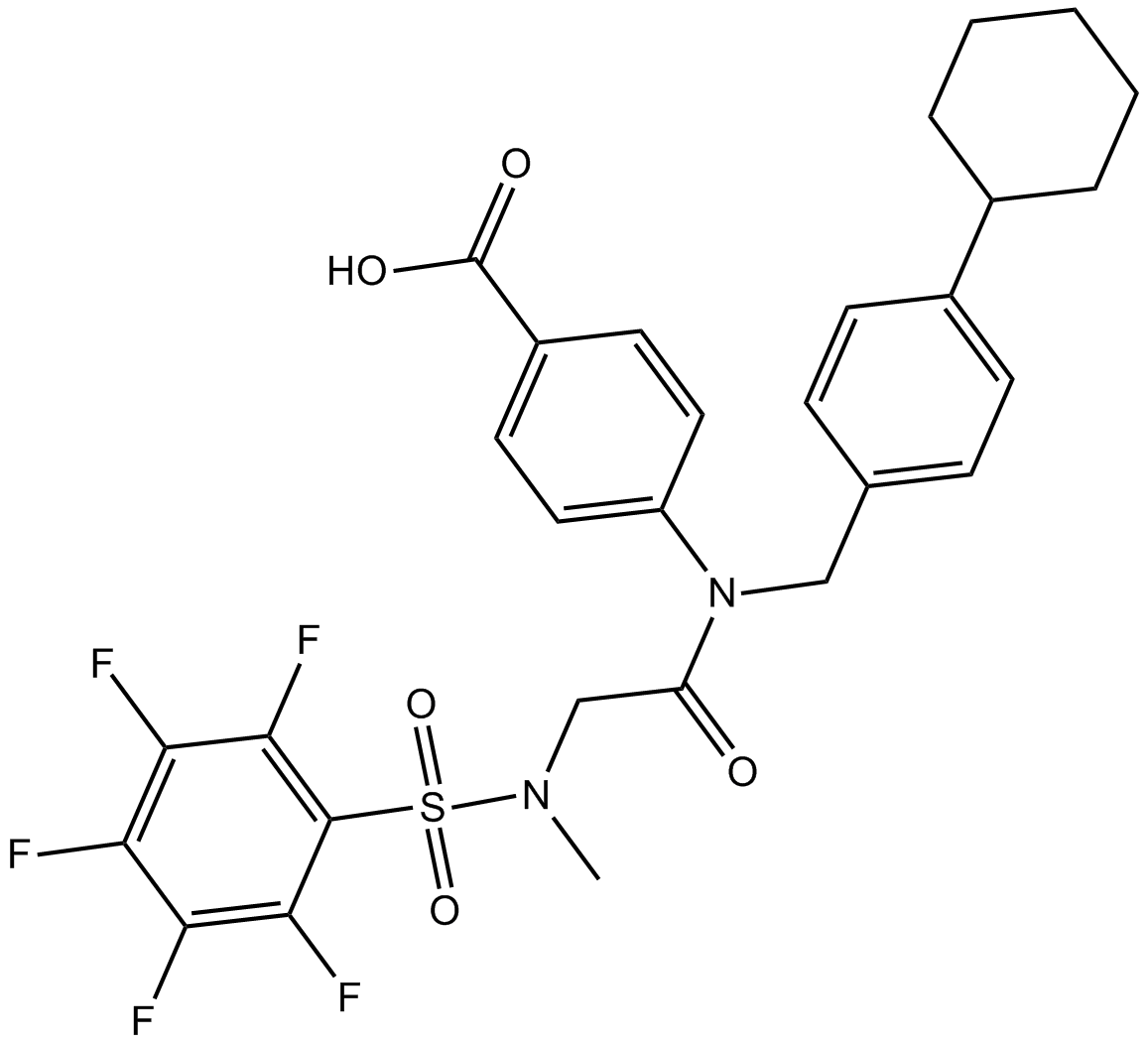
Cas No.: 1456632-40-8
Sample solution is provided at 25 µL, 10mM.
_1-3.$$$39978408@51.jpg');)
_1-9.$$$38538795@65.jpg');)
_1-9.$$$39112701@51.jpg');)
_1-7.$$$37316672@70.jpg');)
_366-372.$$$36198801@70.jpg');)
.$$$38565142@65.jpg');)
_1867-1883.$$$33248023@67.jpg');)
_eads6055.$$$39977546@45.jpg');)
_eadm9805.$$$40080571@45.jpg');)
_eadj3020.$$$39666821@45.jpg');)
_1-20.$$$39757301@28.jpg');)
_1-24.$$$38898113@28.jpg');)
_273-287.$$$36806353@46.jpg');)
_1-16.$$$37156877@44.jpg');)
_1-19.$$$37460805@44.jpg');)
_1291-1307.$$$34518654@46.jpg');)
SH-4-54 is a specific STAT3 inhibitor with a KD of 300 nM[1]. It is commonly used in the study of treatments for brain cancers such as glioblastoma[2-3].
SH-4-54 demonstrates potent cytotoxic effects on tumor cells with aberrantly active STAT3, exhibiting an IC50 range of 1.0-2.7μM for glioma U251MG and U87MG cells[3]. SH-4-54 (16μM; 72h) effectively induces apoptosis in temozolomide-resistant glioblastoma multiforme cells by mitoSTAT3 pathway, leading to disrupted oxidative phosphorylation and negative regulation of mitochondrial-encoded genes[4]. In addition, SH-4-54 reduces cell survival and phosphorylated STAT3 levels in various tumors, including bladder cancer and pancreatic cancer[5-6].
SH-4-54 (6 mg/kg; every 2 or 3 days; intravenous administration) effectively blocked the DNA binding activity of STAT3, leading to the inhibition of STAT3-dependent gene transcription in human glioma, breast, and prostate cancer cells, as well as in v-Src-transformed murine fibroblasts. And effectively suppressed tumor growth in mouse xenograft models of glioma and breast cancer [3].
References:
[1]. Haftchenary S, Luchman HA, Jouk AO, et al. Potent Targeting of the STAT3 Protein in Brain Cancer Stem Cells: A Promising Route for Treating Glioblastoma. ACS Med Chem Lett. 2013 Sep 8;4(11):1102-7.
[2]. Yu D, Wang S, Wang J, et al. EZH2-STAT3 signaling pathway regulates GSDMD-mediated pyroptosis in glioblastoma. Cell Death Discov. 2024 Jul 28;10(1):341.
[3]. Yue P, Lopez-Tapia F, Paladino D, et al. Hydroxamic Acid and Benzoic Acid-Based STAT3 Inhibitors Suppress Human Glioma and Breast Cancer Phenotypes In Vitro and In Vivo. Cancer Res. 2016 Feb 1;76(3):652-63.
[4]. Cui P, Wei F, Hou J, et al. STAT3 inhibition induced temozolomide-resistant glioblastoma apoptosis via triggering mitochondrial STAT3 translocation and respiratory chain dysfunction. Cell Signal. 2020 Jul;71:109598.
[5]. Hindupur SV, Schmid SC, Koch JA, et al. STAT3/5 Inhibitors Suppress Proliferation in Bladder Cancer and Enhance Oncolytic Adenovirus Therapy. Int J Mol Sci. 2020 Feb 7;21(3):1106.
[6]. Arpin CC, Mac S, Jiang Y, et al. Applying Small Molecule Signal Transducer and Activator of Transcription-3 (STAT3) Protein Inhibitors as Pancreatic Cancer Therapeutics. Mol Cancer Ther. 2016 May;15(5):794-805.
| Cell experiment [1]: | |
Cell lines | U251MG; U87MG |
Preparation Method | Cells were cultured in Roswell Park Memorial Institute medium-1640 supplemented with 1% nonessential amino acids and 10% heat-inactivated fetal bovine serum. Cells in 96-well plates were treated with either SH-4-54 or a vehicle control for 72 hours, after which they were subjected to a CyQuant cell proliferation assay. Alternatively, cells were harvested, and viable cells were counted using trypan blue exclusion and phase contrast microscopy. |
Reaction Conditions | 0-10 μM ; 72 hours |
Applications | SH-4-54 exhibits potent cytotoxic effects against malignant cells harboring aberrantly active Stat3. |
| Animal experiment [2]: | |
Animal models | NOD-SCID mice (Glioma model) |
Preparation Method | NOD-SCID mice were orthotopically xenografted with 105 BT73 glioma cells. Starting on day 7, the mice received intraperitoneal injections of 10 mg/kg of SH-4-54 or vehicle control on a schedule of 4 days on followed by 3 days off. Animals were sacrificed 2 hours after the last dose, and brain tumors were extracted for immunohistochemical analysis of pSTAT3, Ki67 (proliferation), and TUNEL (apoptosis). |
Dosage form | 10 mg/kg; 4 days on/3 days off; i.p. |
Applications | SH-4-54 reduced pSTAT3 expression in tumor cells and decreased proliferation while increasing apoptosis in treated tumors. |
References: | |
| Cas No. | 1456632-40-8 | SDF | |
| Canonical SMILES | FC(C(S(=O)(N(C)CC(N(C1=CC=C(C(O)=O)C=C1)CC2=CC=C(C=C2)C3CCCCC3)=O)=O)=C(C(F)=C4F)F)=C4F | ||
| Formula | C29H27F5N2O5S | M.Wt | 610.59 |
| Solubility | ≥ 20.25mg/mL in DMSO | Storage | Desiccate at -20°C |
| General tips | Please select the appropriate solvent to prepare the stock solution according to the
solubility of the product in different solvents; once the solution is prepared, please store it in
separate packages to avoid product failure caused by repeated freezing and thawing.Storage method
and period of the stock solution: When stored at -80°C, please use it within 6 months; when stored
at -20°C, please use it within 1 month. To increase solubility, heat the tube to 37°C and then oscillate in an ultrasonic bath for some time. |
||
| Shipping Condition | Evaluation sample solution: shipped with blue ice. All other sizes available: with RT, or with Blue Ice upon request. | ||
| Prepare stock solution | |||

|
1 mg | 5 mg | 10 mg |
| 1 mM | 1.6378 mL | 8.1888 mL | 16.3776 mL |
| 5 mM | 327.6 μL | 1.6378 mL | 3.2755 mL |
| 10 mM | 163.8 μL | 818.9 μL | 1.6378 mL |
Step 1: Enter information below (Recommended: An additional animal making an allowance for loss during the experiment)
 g
μL
g
μL
Step 2: Enter the in vivo formulation (This is only the calculator, not formulation. Please contact us first if there is no in vivo formulation at the solubility Section.)
Calculation results:
Working concentration: mg/ml;
Method for preparing DMSO master liquid: mg drug pre-dissolved in μL DMSO ( Master liquid concentration mg/mL, Please contact us first if the concentration exceeds the DMSO solubility of the batch of drug. )
Method for preparing in vivo formulation: Take μL DMSO master liquid, next addμL PEG300, mix and clarify, next addμL Tween 80, mix and clarify, next add μL saline, mix and clarify.
Method for preparing in vivo formulation: Take μL DMSO master liquid, next add μL Corn oil, mix and clarify.
Note: 1. Please make sure the liquid is clear before adding the next solvent.
2. Be sure to add the solvent(s) in order. You must ensure that the solution obtained, in the previous addition, is a clear solution before proceeding to add the next solvent. Physical methods such as vortex, ultrasound or hot water bath can be used to aid dissolving.
3. All of the above co-solvents are available for purchase on the GlpBio website.
Quality Control & SDS
- View current batch:
- Purity: >99.50% Appearance: A solid
- COA (Certificate of Analysis)
- SDS (Safety Data Sheet)
- Datasheet
Average Rating: 5 (Based on Reviews and 30 reference(s) in Google Scholar.)