

BLT-1 (Synonyms: Block Lipid Transport-1) |
Catalog No.GC60648
 One-Click Copy Product Info
|

BLT-1 is a selective scavenger receptor B, type 1 (SR-BI) inhibitor that inhibits DiI-labeled high-density lipoprotein (HDL) uptake with an IC50 value of 0.021μM.
Products are for research use only. Not for human use. We do not sell to patients.
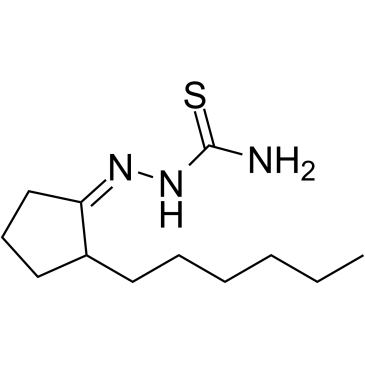
Cas No.: 321673-30-7
Sample solution is provided at 25 µL, 10mM.
_1-3.$$$39978408@51.jpg');)
_1-9.$$$38538795@65.jpg');)
_1-9.$$$39112701@51.jpg');)
_1-7.$$$37316672@70.jpg');)
_366-372.$$$36198801@70.jpg');)
.$$$38565142@65.jpg');)
_1867-1883.$$$33248023@67.jpg');)
_eads6055.$$$39977546@45.jpg');)
_eadm9805.$$$40080571@45.jpg');)
_eadj3020.$$$39666821@45.jpg');)
_1-20.$$$39757301@28.jpg');)
_1-24.$$$38898113@28.jpg');)
_273-287.$$$36806353@46.jpg');)
_1-16.$$$37156877@44.jpg');)
_1-19.$$$37460805@44.jpg');)
_1291-1307.$$$34518654@46.jpg');)
BLT-1 is a selective scavenger receptor B, type 1 (SR-BI) inhibitor that inhibits DiI-labeled high-density lipoprotein (HDL) uptake with an IC50 value of 0.021μM [1]. BLT-1 blocks lipid transport, including selective uptake and efflux, to prevent SR-BI-mediated cholesterol efflux from cells to HDL[2]. BLT-1 has been widely used to prevent hepatitis C virus (HCV) infection of cells and enhance viral clearance [3].
In vitro, BLT-1 treatment for 3 hours significantly inhibited the proliferation of MCF-7 and MDA-MB-468 cells with the IC50 values of 55nM and 48nM, respectively[4]. Treatment with 10μM BLT-1 for 24 hours in HUVECs enhanced the pro-inflammatory effect induced by sphingosine-1-phosphate (S1P), accompanied by an increase in the protein levels of TNF-α and IL-1β[5]. BLT-1 (10μM) combined with SR-BI siRNA pretreatment for 2 hours on THP-1 macrophages significantly inhibited baicalin-induced cholesterol efflux[6].
In vivo, BLT-1 treatment (25mg/kg/day; p.o.) for 15 days can lead to higher levels of lipid peroxides in the acute myeloid leukemia model of mice, thereby inhibiting the progression of leukemia through ferroptosis[7]. Oral administration of 25mg/kg dose of BLT-1 daily for 4 consecutive weeks inhibited the tumor growth in a PC3 cell-xenograft mouse model, without affecting the body weight [8].
References:
[1] Nieland T J F, Shaw J T, Jaipuri F A, et al. Identification of the molecular target of small molecule inhibitors of HDL receptor SR-BI activity[J]. Biochemistry, 2008, 47(1): 460-472.
[2] Nieland T J F, Penman M, Dori L, et al. Discovery of chemical inhibitors of the selective transfer of lipids mediated by the HDL receptor SR-BI[J]. Proceedings of the national academy of sciences, 2002, 99(24): 15422-15427.
[3] Ohashi H, Koizumi Y, Fukano K, et al. Reply to Padmanabhan and Dixit: Hepatitis C virus entry inhibitors for optimally boosting direct-acting antiviral-based treatments[J]. Proceedings of the National Academy of Sciences, 2017, 114(23): E4527-E4529.
[4] Karimi N, Tehrani F S K. Expression of SR-B1 receptor in breast cancer cell lines, MDAMB-468 and MCF-7: Effect on cell proliferation and apoptosis[J]. Iranian Journal of Basic Medical Sciences, 2021, 24(8): 1069.
[5] Ren K, Lu Y J, Mo Z C, et al. ApoA-I/SR-BI modulates S1P/S1PR2-mediated inflammation through the PI3K/Akt signaling pathway in HUVECs[J]. Journal of physiology and biochemistry, 2017, 73(2): 287-296.
[6] Yu R, Lv Y, Wang J, et al. Baicalin promotes cholesterol efflux by regulating the expression of SR-BI in macrophages[J]. Experimental and Therapeutic Medicine, 2016, 12(6): 4113-4120.
[7] Shi J, Cheng Y, Wang L, et al. SR-B1 deficiency suppresses progression in acute myeloid leukemia via ferroptosis and reverses resistance to venetoclax[J]. Free Radical Biology and Medicine, 2025, 233: 24-38.
[8] Gordon J A, Noble J W, Midha A, et al. Upregulation of scavenger receptor B1 is required for steroidogenic and nonsteroidogenic cholesterol metabolism in prostate cancer[J]. Cancer research, 2019, 79(13): 3320-3331.
| Cell experiment [1]: | |
Cell lines | MDA-MB-468 cells |
Preparation Method | MDA-MB-468 cells were cultured in RPMI 1640 medium supplemented with 10% (v/v) FCF, 100µg/ml streptomycin and 100U/ml penicillin in an incubator at 37℃, 100% humidity and 5% CO2. 7.5×10³ cells in 200µl/well were added to 96-well plates, and after overnight cell attachment, the cells were stimulated with different concentrations of BLT-1 (15, 30, 50, 100, and 200nM) for 1, 3, and 5h to analyze cell viability. |
Reaction Conditions | 15, 30, 50, 100, and 200nM; 1, 3, and 5h |
Applications | BLT-1 treatment decreased the cell viability of MDA-MB-468 cells in a dose- and time-dependent fashion. |
| Animal experiment [2]: | |
Animal models | Athymic nude mice (Crl:NU-Foxn1nu) |
Preparation Method | Athymic nude mice (Crl:NU-Foxn1nu) were housed in a specific pathogen-free (SPF) animal house at 24±2°C temperature and 55±5% humidity and maintained on a 12h light/12h dark circadian rhythm. A total of 2×10⁶ PC3 cells were inoculated subcutaneously on the hind flank of athymic nude mice. Once tumors exceeded 100mm3, mice were randomized into vehicle (propylene glycol) or 25mg/kg BLT-1 treatment (by oral gavage) cohorts administered daily for 4 weeks. Tumor volumes (TV) were measured using calipers and the equation TV=length×width×height×0.5326. |
Dosage form | 25mg/kg/day for 4 weeks; p.o. |
Applications | BLT-1 treatment suppressed PC3 tumor growth in mice without affecting body weight. |
References: | |
| Cas No. | 321673-30-7 | SDF | |
| Synonyms | Block Lipid Transport-1 | ||
| Canonical SMILES | CCCCCCC1CCC/C1=N/NC(N)=S | ||
| Formula | C12H23N3S | M.Wt | 241.4 |
| Solubility | DMSO: 41.67 mg/mL (172.62 mM); Water: < 0.1 mg/mL (insoluble) | Storage | Store at -20°C |
| General tips | Please select the appropriate solvent to prepare the stock solution according to the
solubility of the product in different solvents; once the solution is prepared, please store it in
separate packages to avoid product failure caused by repeated freezing and thawing.Storage method
and period of the stock solution: When stored at -80°C, please use it within 6 months; when stored
at -20°C, please use it within 1 month. To increase solubility, heat the tube to 37°C and then oscillate in an ultrasonic bath for some time. |
||
| Shipping Condition | Evaluation sample solution: shipped with blue ice. All other sizes available: with RT, or with Blue Ice upon request. | ||
| Prepare stock solution | |||

|
1 mg | 5 mg | 10 mg |
| 1 mM | 4.1425 mL | 20.7125 mL | 41.425 mL |
| 5 mM | 828.5 μL | 4.1425 mL | 8.285 mL |
| 10 mM | 414.3 μL | 2.0713 mL | 4.1425 mL |
Step 1: Enter information below (Recommended: An additional animal making an allowance for loss during the experiment)
 g
μL
g
μL
Step 2: Enter the in vivo formulation (This is only the calculator, not formulation. Please contact us first if there is no in vivo formulation at the solubility Section.)
Calculation results:
Working concentration: mg/ml;
Method for preparing DMSO master liquid: mg drug pre-dissolved in μL DMSO ( Master liquid concentration mg/mL, Please contact us first if the concentration exceeds the DMSO solubility of the batch of drug. )
Method for preparing in vivo formulation: Take μL DMSO master liquid, next addμL PEG300, mix and clarify, next addμL Tween 80, mix and clarify, next add μL saline, mix and clarify.
Method for preparing in vivo formulation: Take μL DMSO master liquid, next add μL Corn oil, mix and clarify.
Note: 1. Please make sure the liquid is clear before adding the next solvent.
2. Be sure to add the solvent(s) in order. You must ensure that the solution obtained, in the previous addition, is a clear solution before proceeding to add the next solvent. Physical methods such as vortex, ultrasound or hot water bath can be used to aid dissolving.
3. All of the above co-solvents are available for purchase on the GlpBio website.
Quality Control & SDS
- View current batch:
- Purity: >98.00% Appearance: A solid
- COA (Certificate of Analysis)
- SDS (Safety Data Sheet)
- Datasheet
Average Rating: 5 (Based on Reviews and 9 reference(s) in Google Scholar.)