

CBL0137 (Synonyms: CBLC137,Curaxin 137) |
Catalog No.GC14634
 One-Click Copy Product Info
|

CBL0137 is a first-in-class small molecule compound that targets the FACT complex to modulate chromatin structure and gene expression. It can inhibit the activity of the NF-κB signaling pathway and has anti-cancer and anti-inflammatory properties.
Products are for research use only. Not for human use. We do not sell to patients.
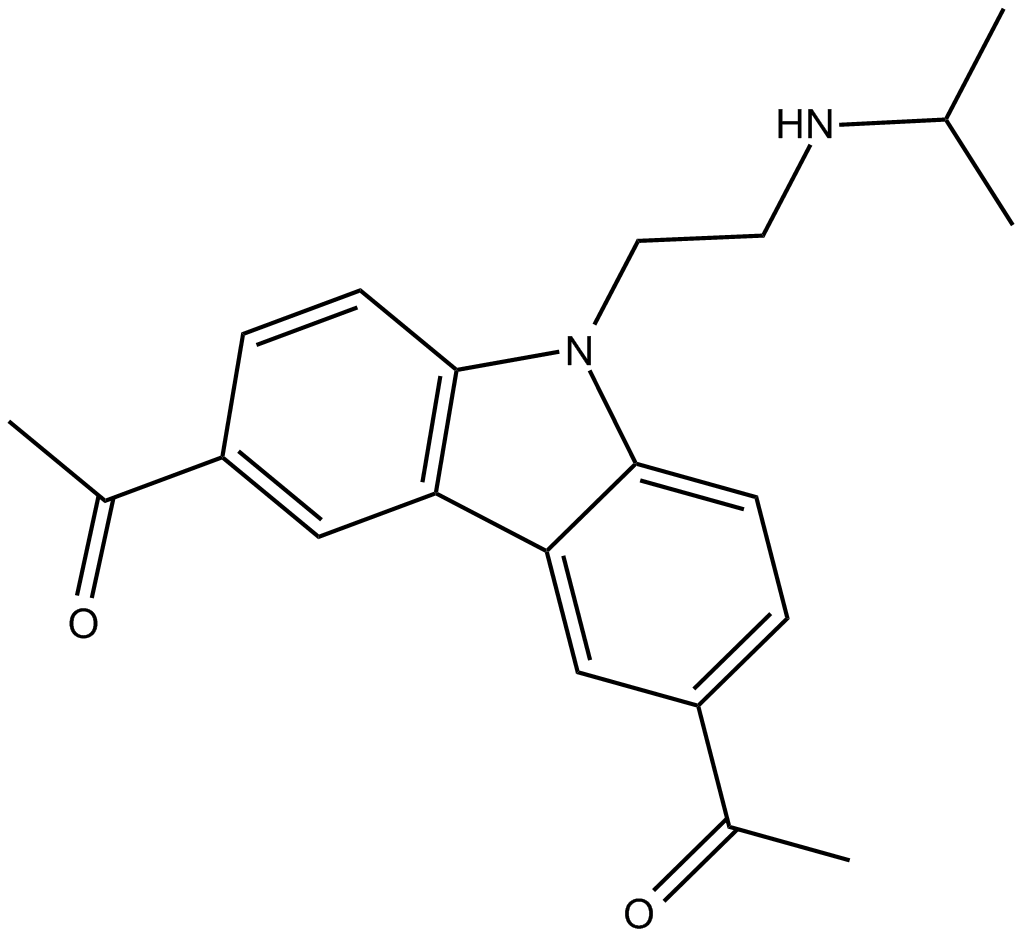
Cas No.: 1197996-80-7
Sample solution is provided at 25 µL, 10mM.
_1-3.$$$39978408@51.jpg');)
_1-9.$$$38538795@65.jpg');)
_1-9.$$$39112701@51.jpg');)
_1-7.$$$37316672@70.jpg');)
_366-372.$$$36198801@70.jpg');)
.$$$38565142@65.jpg');)
_1867-1883.$$$33248023@67.jpg');)
_eads6055.$$$39977546@45.jpg');)
_eadm9805.$$$40080571@45.jpg');)
_eadj3020.$$$39666821@45.jpg');)
_1-20.$$$39757301@28.jpg');)
_1-24.$$$38898113@28.jpg');)
_273-287.$$$36806353@46.jpg');)
_1-16.$$$37156877@44.jpg');)
_1-19.$$$37460805@44.jpg');)
_1291-1307.$$$34518654@46.jpg');)
CBL0137 is a first-in-class small molecule compound that targets the FACT complex to modulate chromatin structure and gene expression. It can inhibit the activity of the NF-κB signaling pathway and has anti-cancer and anti-inflammatory properties[1]. As a selective inhibitor of the NF-κB transcription factor, which plays a key role in regulating inflammation, cell survival, and proliferation, CBL0137 can effectively reduce the expression of pro-inflammatory cytokines and chemokines, thereby alleviating inflammatory responses in various disease models[2-3]. CBL0137 has demonstrated significant anti-tumor activity in preclinical studies. Its unique mechanism of action and broad-spectrum activity make CBL0137 a promising candidate for further clinical development in oncology and inflammatory diseases[4].
In vitro, CBL0137 (0.25–4μM) was used to treat ovarian cancer cell lines (A2780, A2780CP, ID8, OVCAR3, and SKOV3). CBL0137 inhibits the function of the chromatin remodeling complex FACT, leading to decreased transcription of antioxidant genes and increased intracellular reactive oxygen species (ROS) levels. The elevated ROS levels induce the aggregation of BAX protein on the mitochondrial membrane, leading to the release of cytochrome c (Cyt c), activation of caspase-3, and subsequent cleavage of GSDME. This forms pores in the cell membrane, causing cell swelling, rupture, and release of lactate dehydrogenase (LDH), ultimately inducing pyroptosis[5]. CBL0137 (250nM) in combination with Rovalpituzumab tesirine (Rova-T) was used to treat tumor-initiating cells (TICs) in small cell lung cancer (SCLC). The combination significantly reduced the viability of TICs and decreased SOX2 protein levels, indicating enhanced targeting of TICs[6].
In vivo, CBL0137 (60mg/kg) in combination with cisplatin (5mg/kg) was administered to mice bearing small cell lung cancer (SCLC) tumors via intravenous and intraperitoneal injection, respectively, once a week. The combination of CBL0137 and cisplatin significantly inhibited SCLC tumor growth and extended the survival of mice without noticeable toxicity[7]. In another study, CBL0137 (70mg/kg) was administered intravenously to nude mice bearing glioblastoma (GBM) tumors, once a week for four doses. Mice received 2.5Gy of radiotherapy 24 hours after CBL0137 treatment. The combination of CBL0137 and radiotherapy significantly prolonged the survival of mice. Additionally, the combination treatment significantly reduced the frequency of cancer stem cells (CSCs) in tumors and decreased the number of Sox2-positive cells[8].
References:
[1] Jin MZ, Xia BR, Xu Y, et al. Curaxin CBL0137 Exerts Anticancer Activity via Diverse Mechanisms. Front Oncol. 2018 Dec 7;8:598.
[2] Singh A, Pruett N, Dixit S, et al. Targeting FAcilitates Chromatin Transcription complex inhibits pleural mesothelioma and enhances immunotherapy. J Exp Clin Cancer Res. 2023 Nov 16;42(1):304.
[3] Yu L, Yang Y, Wang J, et al. PDCD4 promotes inflammation/fibrosis by activating the PPAR‑γ/NF‑κB pathway in mouse atrial myocytes. Mol Med Rep. 2024 Nov;30(5):209.
[4] Forgione MO, McClure BJ, Page EC, et al. TP53 loss‑of‑function mutations reduce sensitivity of acute leukaemia to the curaxin CBL0137. Oncol Rep. 2022 May;47(5):99.
[5] Yang C, Wang ZQ, Zhang ZC, et al. CBL0137 activates ROS/BAX signaling to promote caspase-3/GSDME-dependent pyroptosis in ovarian cancer cells. Biomed Pharmacother. 2023 May;161:114529.
[6] Lindner DJ, Wildey G, Parker Y, et al. CBL0137 increases the targeting efficacy of Rovalpituzumab tesirine against tumour-initiating cells in small cell lung cancer. Br J Cancer. 2021 Mar;124(5):893-895.
[7] De S, Lindner DJ, Coleman CJ, et al. The FACT inhibitor CBL0137 Synergizes with Cisplatin in Small-Cell Lung Cancer by Increasing NOTCH1 Expression and Targeting Tumor-Initiating Cells. Cancer Res. 2018 May 1;78(9):2396-2406.
[8] Tallman MM, Zalenski AA, Deighen AM, et al. The small molecule drug CBL0137 increases the level of DNA damage and the efficacy of radiotherapy for glioblastoma. Cancer Lett. 2021 Feb 28;499:232-242.
| Cell experiment [1]: | |
|
Cell lines |
OVCAR3 cells |
|
Preparation Method |
OVCAR3 cells were seeded into 96-well plates at a density of 1.5 × 10⁴ cells per well and cultured overnight at 37°C in a 5% CO₂ incubator. The cells were then treated with different concentrations of CBL0137 (0, 0.25, 0.5, 1, 2, and 4μM) for 24 hours. To identify the type of cell death, apoptosis inhibitor Z-VAD-FMK (50μM), necrosis inhibitor necrostatin-1 (30μM), ferroptosis inhibitor ferrostatin-1 (2μM), autophagy inhibitor 3-methyladenine (50μM), and pyroptosis inhibitor emricasan (50μM) were added to the cells for 30 minutes before CBL0137 treatment. |
|
Reaction Conditions |
0, 0.25, 0.5, 1, 2, and 4μM; 24h |
|
Applications |
CBL0137 significantly induced pyroptosis in ovarian cancer cells by activating the caspase-3/GSDME pathway via the ROS/BAX signaling pathway. |
| Animal experiment [2]: | |
|
Animal models |
Nude mice (athymic Nu/Nu) |
|
Preparation Method |
Male and female athymic Nu/Nu mice were used. For subcutaneous tumor studies, 1 × 10⁵ GBM cells were injected into the left flank of 6–8 week old mice. Once tumors reached approximately 0.12cm³ in volume, mice were randomized into four treatment groups: vehicle, CBL0137(10mg/kg daily, intraperitoneal), vehicle + irradiation (2.5Gy on days 1, 3, and 5), or CBL0137 + irradiation. |
|
Dosage form |
10 mg/kg daily of CBL0137, intraperitoneal; 2.5Gy of Irradiation. |
|
Applications |
CBL0137 significantly increased DNA damage and reduced cancer stem cell frequency in tumors. |
|
References: |
|
| Cas No. | 1197996-80-7 | SDF | |
| Synonyms | CBLC137,Curaxin 137 | ||
| Chemical Name | 1,1'-[9-[2-[(1-methylethyl)amino]ethyl]-9H-carbazole-3,6-diyl]bis-ethanone | ||
| Canonical SMILES | CC(C1=CC=C2C(C(C=C(C(C)=O)C=C3)=C3N2CCNC(C)C)=C1)=O | ||
| Formula | C21H24N2O2 | M.Wt | 336.4 |
| Solubility | ≤2mg/ml in ethanol;5mg/ml in DMSO;5mg/ml in dimethyl formamide | Storage | Store at -20°C |
| General tips | Please select the appropriate solvent to prepare the stock solution according to the
solubility of the product in different solvents; once the solution is prepared, please store it in
separate packages to avoid product failure caused by repeated freezing and thawing.Storage method
and period of the stock solution: When stored at -80°C, please use it within 6 months; when stored
at -20°C, please use it within 1 month. To increase solubility, heat the tube to 37°C and then oscillate in an ultrasonic bath for some time. |
||
| Shipping Condition | Evaluation sample solution: shipped with blue ice. All other sizes available: with RT, or with Blue Ice upon request. | ||
| Prepare stock solution | |||

|
1 mg | 5 mg | 10 mg |
| 1 mM | 2.9727 mL | 14.8633 mL | 29.7265 mL |
| 5 mM | 594.5 μL | 2.9727 mL | 5.9453 mL |
| 10 mM | 297.3 μL | 1.4863 mL | 2.9727 mL |
Step 1: Enter information below (Recommended: An additional animal making an allowance for loss during the experiment)
 g
μL
g
μL
Step 2: Enter the in vivo formulation (This is only the calculator, not formulation. Please contact us first if there is no in vivo formulation at the solubility Section.)
Calculation results:
Working concentration: mg/ml;
Method for preparing DMSO master liquid: mg drug pre-dissolved in μL DMSO ( Master liquid concentration mg/mL, Please contact us first if the concentration exceeds the DMSO solubility of the batch of drug. )
Method for preparing in vivo formulation: Take μL DMSO master liquid, next addμL PEG300, mix and clarify, next addμL Tween 80, mix and clarify, next add μL saline, mix and clarify.
Method for preparing in vivo formulation: Take μL DMSO master liquid, next add μL Corn oil, mix and clarify.
Note: 1. Please make sure the liquid is clear before adding the next solvent.
2. Be sure to add the solvent(s) in order. You must ensure that the solution obtained, in the previous addition, is a clear solution before proceeding to add the next solvent. Physical methods such as vortex, ultrasound or hot water bath can be used to aid dissolving.
3. All of the above co-solvents are available for purchase on the GlpBio website.
Quality Control & SDS
- View current batch:
- Purity: >98.00% Appearance: A solid
- COA (Certificate of Analysis)
- SDS (Safety Data Sheet)
- Datasheet
Average Rating: 5 (Based on Reviews and 12 reference(s) in Google Scholar.)