

KF 38789 |
Catalog No.GC14589
 One-Click Copy Product Info
|

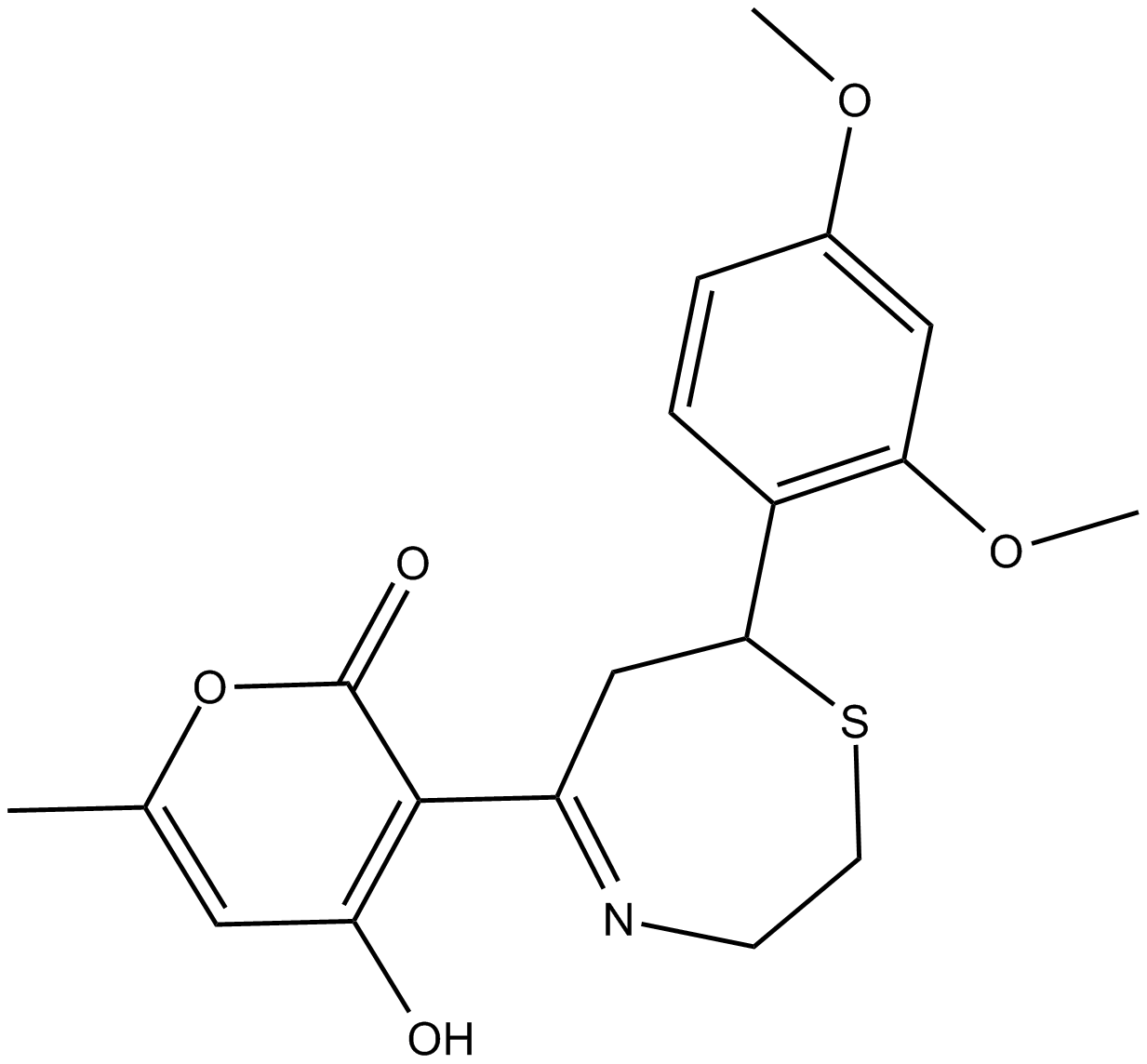
KF 38789 is a novel, low molecular weight P-selectin inhibitors displayed an IC50 of 1.97µM.
Products are for research use only. Not for human use. We do not sell to patients.
Cas No.: 257292-29-8
Sample solution is provided at 25 µL, 10mM.
_1-3.$$$39978408@51.jpg');)
_1-9.$$$38538795@65.jpg');)
_1-9.$$$39112701@51.jpg');)
_1-7.$$$37316672@70.jpg');)
_366-372.$$$36198801@70.jpg');)
.$$$38565142@65.jpg');)
_1867-1883.$$$33248023@67.jpg');)
_eads6055.$$$39977546@45.jpg');)
_eadm9805.$$$40080571@45.jpg');)
_eadj3020.$$$39666821@45.jpg');)
_1-20.$$$39757301@28.jpg');)
_1-24.$$$38898113@28.jpg');)
_273-287.$$$36806353@46.jpg');)
_1-16.$$$37156877@44.jpg');)
_1-19.$$$37460805@44.jpg');)
_1291-1307.$$$34518654@46.jpg');)
KF 38789 is a novel, low molecular weight P-selectin inhibitors displayed an IC50 of 1.97µM. P-selectin is a cell adhesion molecule of the selectin family[1][5]. KF 38789 can effectively inhibit P-selectin-dependent cell adhesion and leukocyte recruitment[2][3][5]. KF 38789 also has potential in reducing inflammation and inhibiting tumor growth[4][6][7].
In vitro, KF 38789 (0.5μM) incubating gastric cancer MKN-74 and MGC-803 cells for 24h dose-dependently decreased the cell viability ratio. KF 38789 treatment decreased the level of epithelial-mesenchymal transition (EMT)-related proteins and significantly decreased the migration of MKN-74 and MGC-803 cells by inhibiting P-selectin[2]. Corneal epithelial HCE-T cell cultures were established in regular serum-supplemented growth medium using 2-well culture inserts (0.22cm2 per well) in 35mm diameter culture dishes to expose a cell free gap of approximately 500μm in width. Cells were then cultured for an additional 8h in growth medium with or without 5μM of KF 38789. KF 38789 treatment reduced HCE-T cell migration and culture gap-closure[3]. Human mesothelial cell LP-9 in coculture devices were treated with 10μM of the KF 38789 1 hour prior to the addition ovarian cancer cells. KF 38789 significantly reduced the adhesion of cancer cells to mesothelial cells and effectively inhibited the rolling behavior of cancer cells on mesothelial surfaces[4].
In vivo, The thioglycollate (TG)-induced accumulation of leukocytes in mice was measured 6h after the treatment. KF 38789 (1mg/kg) injected intravenously prior to TG injection and at 3h following initial injection specifically inhibited P-selectin-dependent leukocyte recruitment in mouse peritonitis[5]. KF 38789 (10, 1 and 0.1mg/kg) administered to mouse carrageenan-injected model of hyperalgesia via intraperitoneal injection for 12 days, while others received a vehicle control (1% DMSO). The results showed that mice treated with the KF 38789 exhibited significantly reduced mechanical allodynia from the 3rd to the 9th day after carrageenan injection[6]. KF 38789 (10mg/kg) administered i.p. into human intrahepatic cholangiocarcinoma (ICC) cell line HUCCT1 xenograft mouse model decreased the volumes and weights of HUCCT1 formed tumor nodes in vivo. KF 38789 reduced the level of Ki67, but increased cleaved-caspase3 in tumor tissue[7].
References:
[1] Chhabra S R, Abdul Rahim A S A, Kellam B.Recent progress in the design of selectin inhibitors. Mini Rev Med Chem. 2003 Nov;3(7):679-87.
[2] Wu Y, Liu J Y, Yin T, et al. SELP can affect the immune microenvironment of gastric cancer and is associated with poor prognosis. Discov Oncol. 2025 May 21;16(1):846.
[3] Gillies P J, Richardson N A, Walshe J, et al. Demonstration of P-selectin expression and potential function in human corneal epithelial cells. Exp Eye Res. 2018 Nov:176:196-206.
[4] Carroll M J, Fogg K C, Patel H A, et al. Alternatively-Activated Macrophages Upregulate Mesothelial Expression of P-Selectin to Enhance Adhesion of Ovarian Cancer Cells. Cancer Res. 2018 Jul 1;78(13):3560-3573.
[5] Ohta S, Inujima Y, Abe M,et al. Inhibition of P-selectin specific cell adhesion by a low molecular weight, non-carbohydrate compound, KF 38789. Inflamm Res. 2001 Nov;50(11):544-51.
[6] Poh K W, Lutfun N, Manikandan J,et al. Global gene expression analysis in the mouse brainstem after hyperalgesia induced by facial carrageenan injection--evidence for a form of neurovascular coupling?. Pain. 2009 Mar;142(1-2):133-41.
[7] Du X J, Qi Z R, Chen S N, et al. Synthetic Retinoid Sulfarotene Selectively Inhibits Tumor-Repopulating Cells of Intrahepatic Cholangiocarcinoma via Disrupting Cytoskeleton by P-Selectin/PSGL1 N-Glycosylation Blockage. Adv Sci (Weinh). 2025 Jan;12(3):e2407519.
| Cell experiment [1]: | |
Cell lines | Gastric cancer MKN-74 and MGC-803 cells |
Preparation Method | We used the scratch assay to test the migratory abilities of MKN-74 and MGC-803 cells were seeded in 6-well plates (5×10⁵ cells/well), and after adherence, the cells were treated with 0.5μM of KF 38789 for 24h. |
Reaction Conditions | 0.5μM; 24h |
Applications | Under the effect of KF 38789, the colonies of MKN-74 and MGC-803 cells were smaller than those in the control group. The western blot experiments showed that the levels of EMT-related proteins in gastric cancers cells changed significantly after 24h of KF 38789 treatment. Transwell and wound healing assays were performed to determine the effect of KF 38789 on the migration of MKN-74 and MGC-803 cells. The results indicated that culture in KF 38789 significantly decreased the migration of MKN-74 and MGC-803 cells compared to the control groups. |
| Animal experiment [2]: | |
Animal models | Male C57BL/6J mice |
Preparation Method | Seven groups of mice were used in this portion of the study. The first five groups (4 mice per group) received right facial carrageenan injection and daily intraperitoneal injection of 10, 1, 0.1, 0.01 or 0.001mg/kg of P-selectin inhibitor, KF 38789 (dissolved in 1% DMSO) for 12 days. The sixth group (4 mice) received right facial carrageenan injection and daily intraperitoneal injection of 1% DMSO (vehicle control) for 12 days. The last group (4 mice) did not receive facial carrageenan injection, but received daily intraperitoneal injection of 10mg/kg of KF 38789 in 1% DMSO for 12 days. |
Dosage form | 10, 1, 0.1, 0.01 or 0.001mg/kg; i.p.; 12 days |
Applications | Mice treated with the higher doses of KF 38789 (10, 1 and 0.1mg/kg) exhibited significantly reduced mechanical allodynia from the 3rd to the 9th day after carrageenan injection. Mice treated with the lower doses (0.01 and 0.001mg/kg) did not show a significant difference from the vehicle-treated group. |
References: | |
| Cas No. | 257292-29-8 | SDF | |
| Chemical Name | 3-(7-(2,4-dimethoxyphenyl)-2,3,6,7-tetrahydro-1,4-thiazepin-5-yl)-4-hydroxy-6-methyl-2H-pyran-2-one | ||
| Canonical SMILES | CC(O1)=CC(O)=C(C1=O)C2=NCCSC(C3=C(OC)C=C(OC)C=C3)C2 | ||
| Formula | C19H21NO5S | M.Wt | 375.44 |
| Solubility | <37.54mg/ml in DMSO | Storage | Store at -20°C |
| General tips | Please select the appropriate solvent to prepare the stock solution according to the
solubility of the product in different solvents; once the solution is prepared, please store it in
separate packages to avoid product failure caused by repeated freezing and thawing.Storage method
and period of the stock solution: When stored at -80°C, please use it within 6 months; when stored
at -20°C, please use it within 1 month. To increase solubility, heat the tube to 37°C and then oscillate in an ultrasonic bath for some time. |
||
| Shipping Condition | Evaluation sample solution: shipped with blue ice. All other sizes available: with RT, or with Blue Ice upon request. | ||
| Prepare stock solution | |||

|
1 mg | 5 mg | 10 mg |
| 1 mM | 2.6635 mL | 13.3177 mL | 26.6354 mL |
| 5 mM | 532.7 μL | 2.6635 mL | 5.3271 mL |
| 10 mM | 266.4 μL | 1.3318 mL | 2.6635 mL |
Step 1: Enter information below (Recommended: An additional animal making an allowance for loss during the experiment)
 g
μL
g
μL
Step 2: Enter the in vivo formulation (This is only the calculator, not formulation. Please contact us first if there is no in vivo formulation at the solubility Section.)
Calculation results:
Working concentration: mg/ml;
Method for preparing DMSO master liquid: mg drug pre-dissolved in μL DMSO ( Master liquid concentration mg/mL, Please contact us first if the concentration exceeds the DMSO solubility of the batch of drug. )
Method for preparing in vivo formulation: Take μL DMSO master liquid, next addμL PEG300, mix and clarify, next addμL Tween 80, mix and clarify, next add μL saline, mix and clarify.
Method for preparing in vivo formulation: Take μL DMSO master liquid, next add μL Corn oil, mix and clarify.
Note: 1. Please make sure the liquid is clear before adding the next solvent.
2. Be sure to add the solvent(s) in order. You must ensure that the solution obtained, in the previous addition, is a clear solution before proceeding to add the next solvent. Physical methods such as vortex, ultrasound or hot water bath can be used to aid dissolving.
3. All of the above co-solvents are available for purchase on the GlpBio website.
Quality Control & SDS
- View current batch:
- Purity: >98.00% Appearance: A solid
- COA (Certificate of Analysis)
- SDS (Safety Data Sheet)
- Datasheet
Average Rating: 5 (Based on Reviews and 22 reference(s) in Google Scholar.)