

EHop-016 |
Catalog No.GC10030
 One-Click Copy Product Info
|

EHop-016 is a potent inhibitor of Rac GTPase Rac1, with an IC50 value of 1.1μM.
Products are for research use only. Not for human use. We do not sell to patients.
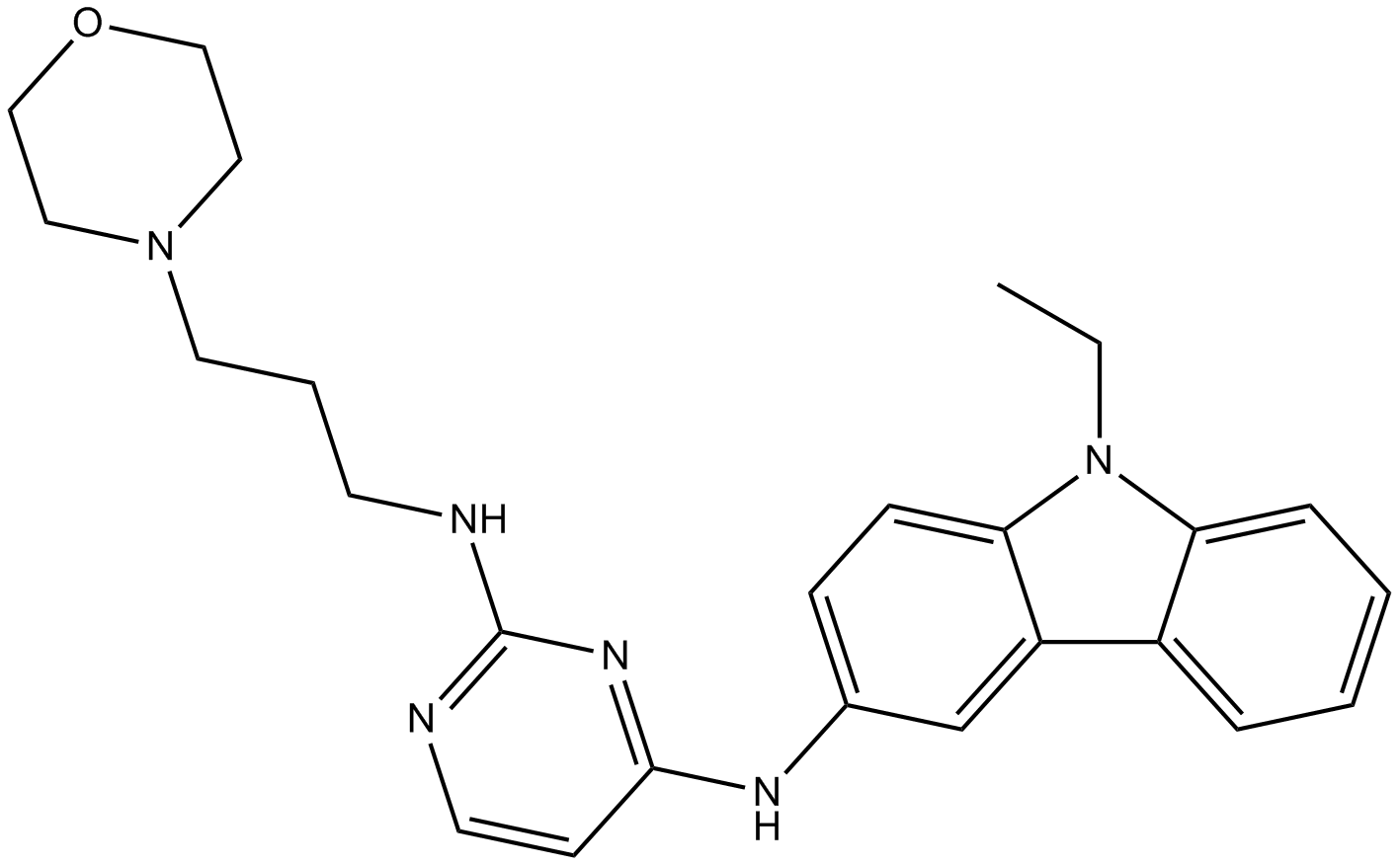
Cas No.: 1380432-32-5
Sample solution is provided at 25 µL, 10mM.
_1-3.$$$39978408@51.jpg');)
_1-9.$$$38538795@65.jpg');)
_1-9.$$$39112701@51.jpg');)
_1-7.$$$37316672@70.jpg');)
_366-372.$$$36198801@70.jpg');)
.$$$38565142@65.jpg');)
_1867-1883.$$$33248023@67.jpg');)
_eads6055.$$$39977546@45.jpg');)
_eadm9805.$$$40080571@45.jpg');)
_eadj3020.$$$39666821@45.jpg');)
_1-20.$$$39757301@28.jpg');)
_1-24.$$$38898113@28.jpg');)
_273-287.$$$36806353@46.jpg');)
_1-16.$$$37156877@44.jpg');)
_1-19.$$$37460805@44.jpg');)
_1291-1307.$$$34518654@46.jpg');)
EHop-016 is a potent inhibitor of Rac GTPase Rac1, with an IC50 value of 1.1μM[1]. EHop-016 targets the Rac protein and reduces the activity of the downstream effector molecule, p21-activated kinase (PAK), thereby demonstrating cytotoxicity[2]. EHop-016 has been widely used as an anti-cancer agent, inhibiting tumor growth in both cell models and mouse models[3].
In vitro, EHop-016 treatment for 48 hours significantly inhibited the proliferation of Calu1, A549, and HOP62 cells, with IC50 values of 4.3, 9.12, and 4.8μM, respectively[4]. EHop-016 reduced the number of viable MOLM-13 cells with an EC50 of 11.3µM after 48h incubation[5]. Treatment with 5μM EHop-016 for 1 hour can inhibit the glucose-induced actin remodeling in INS-1 832/13 cells[6].
In vivo, EHop-016 treatment via intraperitoneal injection at a dose of 25mg/kg (three times a week) for 8 weeks significantly reduced tumor growth without causing weight changes in GFP-MDA-MB-435 cell-xenograft mice[7]. Administering a 30mg/kg dose of EHop-016 by intraperitoneal injection three times a week for 55 days led to a reduction in macrophage infiltration in the tumors of breast cancer mouse models, and decreased the activation of myeloid cells[8].
References:
[1] Montalvo-Ortiz B L, Castillo-Pichardo L, Hernández E, et al. Characterization of EHop-016, novel small molecule inhibitor of Rac GTPase[J]. Journal of Biological Chemistry, 2012, 287(16): 13228-13238.
[2] Crespo G E V, Hernández E, Vlaar C, et al. The novel Rac inhibitor HV-107 as a potential therapeutic for metastatic breast cancer[J]. Cancer Research, 2018, 78(13_Supplement): 4185-4185.
[3] Asencio‐Torres G, Hernández E, Vlaar C, et al. Novel Rac Inhibitors as Targeted Therapeutics for Metastatic Breast Cancer[J]. The FASEB Journal, 2018, 32: 804.14-804.14.
[4] Yang J, Qiu Q, Qian X, et al. Long noncoding RNA LCAT1 functions as a ceRNA to regulate RAC1 function by sponging miR-4715-5p in lung cancer[J]. Molecular cancer, 2019, 18(1): 171.
[5] Hemsing A L, Førde J L, Reikvam H, et al. The Rac1-inhibitor EHop-016 attenuates AML cell migration and enhances the efficacy of daunorubicin in MOLM-13 transplanted zebrafish larvae[J]. Translational Oncology, 2024, 40: 101876.
[6] Veluthakal R, Tunduguru R, Arora D K, et al. VAV2, a guanine nucleotide exchange factor for Rac1, regulates glucose-stimulated insulin secretion in pancreatic beta cells[J]. Diabetologia, 2015, 58(11): 2573-2581.
[7] Castillo-Pichardo L, Humphries-Bickley T, De La Parra C, et al. The Rac inhibitor EHop-016 inhibits mammary tumor growth and metastasis in a nude mouse model[J]. Translational oncology, 2014, 7(5): 546-555.
[8] Torres-Sanchez A, Rivera-Robles M, Castillo-Pichardo L, et al. Rac and Cdc42 inhibitors reduce macrophage function in breast cancer preclinical models[J]. Frontiers in Oncology, 2023, 13: 1152458.
| Cell experiment [1]: | |
Cell lines | MDA-MB-435 cells |
Preparation Method | MDA-MB-435 cells were cultured in DMEM medium containing 10% fetal bovine serum (pH 7.5) at 37°C and 5% CO2. Cells were seeded in 96-well plates at a concentration of 2000 cells per well. EHop-016 was incubated in various concentrations (0, 0.1, 0.5, 1, 2, 4, 6, 8, and 10μM) for 24h, then MTT reagent was added, and absorbance was measured at 600nM. |
Reaction Conditions | 0, 0.1, 0.5, 1, 2, 4, 6, 8, and 10μM; 48h |
Applications | EHop-016 treatment significantly inhibited the viability of MDA-MB-435 cells in a dose-dependent manner. |
| Animal experiment [2]: | |
Animal models | Female nude mice |
Preparation Method | Female nude mice, aged 4 to 5 weeks, were housed in cages filtered by high-efficiency particulate air (HEPA) filters (5 mice per cage) and were maintained under pathogen-free (SPF) conditions. The lighting (12 hours of light/12 hours of darkness cycle), temperature (22 to 24°C), and humidity (25%) were all controlled. GFP-MDA-MB-435 cells (approximately 0.5×10⁶ cells) were suspended in Matrigel and injected into the right fourth mammary fat pad of the mice under isoflurane inhalation (isoflurane concentration in the inhalation chamber was 1% to 3%, oxygen concentration was 2L/min) to establish an in situ primary tumor model. After tumor establishment (1 week after inoculation), mice from the same litter with similar body weight and tumor size were randomly divided into each experimental group. The mice received either the vehicle (12.5% ethanol, 12.5% Cremophor, and 75% 1×PBS pH 7.4) or 25mg/kg of EHop-016 by intraperitoneal injection three times a week for 8 weeks, and the tumor tissues were analyzed. |
Dosage form | 25mg/kg; three times a week for 8 weeks; i.p. |
Applications | EHop-016 treatment significantly reduced tumor growth without causing weight changes in GFP-MDA-MB-435 cell-xenograft mice. |
References: | |
| Cas No. | 1380432-32-5 | SDF | |
| Chemical Name | 4-N-(9-ethylcarbazol-3-yl)-2-N-(3-morpholin-4-ylpropyl)pyrimidine-2,4-diamine | ||
| Canonical SMILES | CCN1C2=C(C=C(C=C2)NC3=NC(=NC=C3)NCCCN4CCOCC4)C5=CC=CC=C51 | ||
| Formula | C25H30N6O | M.Wt | 430.55 |
| Solubility | ≥ 25.6mg/mL in DMSO with gentle warming | Storage | Store at -20° C |
| General tips | Please select the appropriate solvent to prepare the stock solution according to the
solubility of the product in different solvents; once the solution is prepared, please store it in
separate packages to avoid product failure caused by repeated freezing and thawing.Storage method
and period of the stock solution: When stored at -80°C, please use it within 6 months; when stored
at -20°C, please use it within 1 month. To increase solubility, heat the tube to 37°C and then oscillate in an ultrasonic bath for some time. |
||
| Shipping Condition | Evaluation sample solution: shipped with blue ice. All other sizes available: with RT, or with Blue Ice upon request. | ||
| Prepare stock solution | |||

|
1 mg | 5 mg | 10 mg |
| 1 mM | 2.3226 mL | 11.6131 mL | 23.2261 mL |
| 5 mM | 464.5 μL | 2.3226 mL | 4.6452 mL |
| 10 mM | 232.3 μL | 1.1613 mL | 2.3226 mL |
Step 1: Enter information below (Recommended: An additional animal making an allowance for loss during the experiment)
 g
μL
g
μL
Step 2: Enter the in vivo formulation (This is only the calculator, not formulation. Please contact us first if there is no in vivo formulation at the solubility Section.)
Calculation results:
Working concentration: mg/ml;
Method for preparing DMSO master liquid: mg drug pre-dissolved in μL DMSO ( Master liquid concentration mg/mL, Please contact us first if the concentration exceeds the DMSO solubility of the batch of drug. )
Method for preparing in vivo formulation: Take μL DMSO master liquid, next addμL PEG300, mix and clarify, next addμL Tween 80, mix and clarify, next add μL saline, mix and clarify.
Method for preparing in vivo formulation: Take μL DMSO master liquid, next add μL Corn oil, mix and clarify.
Note: 1. Please make sure the liquid is clear before adding the next solvent.
2. Be sure to add the solvent(s) in order. You must ensure that the solution obtained, in the previous addition, is a clear solution before proceeding to add the next solvent. Physical methods such as vortex, ultrasound or hot water bath can be used to aid dissolving.
3. All of the above co-solvents are available for purchase on the GlpBio website.
Quality Control & SDS
- View current batch:
- Purity: >99.00% Appearance: A solid
- COA (Certificate of Analysis)
- SDS (Safety Data Sheet)
- Datasheet
Average Rating: 5 (Based on Reviews and 18 reference(s) in Google Scholar.)