

LDN 57444 (Synonyms: Ubiquitin C-terminal Hydrolase L1 Inhibitor, UCHL1 Inhibitor) |
Catalog No.GC10510
 One-Click Copy Product Info
|

LDN 57444 is a small molecular inhibitor that can block UCHL1 deubiquitinase activity (Ki=0.40μM; IC50=0.88μM), with an IC50 value of 25μM for inhibiting UCHL3.
Products are for research use only. Not for human use. We do not sell to patients.
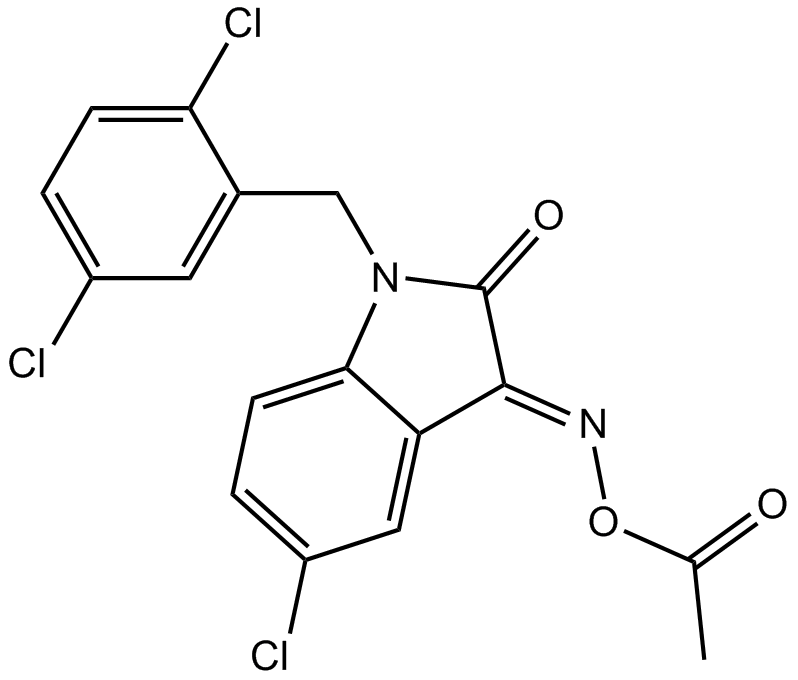
Cas No.: 668467-91-2
Sample solution is provided at 25 µL, 10mM.
_1-3.$$$39978408@51.jpg');)
_1-9.$$$38538795@65.jpg');)
_1-9.$$$39112701@51.jpg');)
_1-7.$$$37316672@70.jpg');)
_366-372.$$$36198801@70.jpg');)
.$$$38565142@65.jpg');)
_1867-1883.$$$33248023@67.jpg');)
_eads6055.$$$39977546@45.jpg');)
_eadm9805.$$$40080571@45.jpg');)
_eadj3020.$$$39666821@45.jpg');)
_1-20.$$$39757301@28.jpg');)
_1-24.$$$38898113@28.jpg');)
_273-287.$$$36806353@46.jpg');)
_1-16.$$$37156877@44.jpg');)
_1-19.$$$37460805@44.jpg');)
_1291-1307.$$$34518654@46.jpg');)
LDN 57444 is a small molecular inhibitor that can block UCHL1 deubiquitinase activity (Ki=0.40μM; IC50=0.88μM), with an IC50 value of 25μM for inhibiting UCHL3 [1]. LDN 57444 suppresses mouse oocyte maturation by improving oxidative stress, attenuating mitochondrial function, curbing spindle body formation and down-regulating extracellular signal-related kinases (ERK1/2) expression [2]. LDN 57444 has been widely used to inhibit the invasive ability of nasopharyngeal cancer cells and reduce the adhesion of cancer cells[3].
In vitro, LDN 57444 treatment (50μM) for 24 hours significantly triggered apoptosis in SK-N-SH cells and inhibited the ubiquitin-proteasome system and induced endoplasmic reticulum stress[4]. Treatment with 10μM LDN 57444 for 24 hours significantly inhibited the migration of human dermal fibroblasts (HDFs) and upregulated the phosphorylation of Smad2 and Smad3[5].
In vivo, LDN 57444 treatment via daily intraperitoneal injection at a dose of 40μg/kg for 3 weeks significantly reduced atrial fibrillation induced by angiotensin II in mice[6]. Daily intraperitoneal injection of 5mg/kg dose of LDN 57444 for 14 days can result in a reduced number of metastatic foci in the lungs and liver of mice with DU-145 xenograft tumors[7]. Daily intraperitoneal injection of 20μg/kg dose of LDN 57444 for 4 months can lower the blood pressure of spontaneously hypertensive rats and improve the cardiac function[8].
References:
[1] Liu Y, Lashuel H A, Choi S, et al. Discovery of inhibitors that elucidate the role of UCH-L1 activity in the H1299 lung cancer cell line[J]. Chemistry & biology, 2003, 10(9): 837-846.
[2] Yuan P, Zhou L, Zhang X, et al. UCH-L1 inhibitor LDN-57444 hampers mouse oocyte maturation by regulating oxidative stress and mitochondrial function and reducing ERK1/2 expression[J]. Bioscience Reports, 2020, 40(10): BSR20201308.
[3] Kobayashi E, Hwang D, Bheda-Malge A, et al. Inhibition of UCH-L1 deubiquitinating activity with two forms of LDN-57444 has anti-invasive effects in metastatic carcinoma cells[J]. International journal of molecular sciences, 2019, 20(15): 3733.
[4] Tan Y Y, Zhou H Y, Wang Z Q, et al. Endoplasmic reticulum stress contributes to the cell death induced by UCH-L1 inhibitor[J]. Molecular and cellular biochemistry, 2008, 318(1): 109-115.
[5] Pan H, Song J, An Q, et al. Inhibition of Ubiquitin C‐Terminal Hydrolase L1 Facilitates Cutaneous Wound Healing via Activating TGF‐β/Smad Signalling Pathway in Fibroblasts[J]. Experimental Dermatology, 2024, 33(10): e15186.
[6] Bi H L, Zhang Y L, Yang J, et al. Inhibition of UCHL1 by LDN-57444 attenuates Ang II–Induced atrial fibrillation in mice[J]. Hypertension Research, 2020, 43(3): 168-177.
[7] Liu S, Garcia-Marques F J, Shen M, et al. Ubiquitin C-terminal hydrolase L1 is a regulator of tumor growth and metastasis in double-negative prostate cancer[J]. American Journal of Clinical and Experimental Urology, 2024, 12(5): 306.
[8] Han X, Zhang Y L, Fu T, et al. Blockage of UCHL1 activity attenuates cardiac remodeling in spontaneously hypertensive rats[J]. Hypertension Research, 2020, 43(10): 1089-1098.
| Cell experiment [1]: | |
Cell lines | SK-N-SH cells |
Preparation Method | SK-N-SH cells were incubated with DMEM-H medium supplemented with 10% fetal calf serum (FCS), and 1% penicillin/streptomycin in a humidified atmosphere at 37°C with 5% CO2. Cells were cultured in a 96-well culture plate at 5×10⁴ cells/well. After 24h cultured at 37°C in the atmosphere of 5% CO2, cells were treated with different concentrations of LDN 57444 (0, 5, 10, 25, 50, 75, and 100μM) and incubated for 24h. Cell viability was measured. |
Reaction Conditions | 0, 5, 10, 25, 50, 75, and 100μM; 24h |
Applications | LDN 57444 treatment significantly reduced the cell viability of SK-N-SH cells in a dose-dependent manner. |
| Animal experiment [2]: | |
Animal models | Spontaneously hypertensive rats |
Preparation Method | Spontaneously hypertensive rats (2-month-old; 240-280g) were kept in an air-conditioned room at 24-25°C with a 12-h light/dark cycle. LDN 57444 was administered intraperitoneally in rats from 2 months of age for 4 months at the dose of 20μg/kg/day. Blood pressure was measured in all rats every month, and the hearts of rats were collected for analysis. |
Dosage form | 20μg/kg/day for 4 months; i.p. |
Applications | LDN 57444 treatment reduced blood pressure and attenuated cardiac hypertrophy and fibrosis in rats. |
References: | |
| Cas No. | 668467-91-2 | SDF | |
| Synonyms | Ubiquitin C-terminal Hydrolase L1 Inhibitor, UCHL1 Inhibitor | ||
| Chemical Name | [(Z)-[5-chloro-1-[(2,5-dichlorophenyl)methyl]-2-oxoindol-3-ylidene]amino] acetate | ||
| Canonical SMILES | CC(=O)ON=C1C2=C(C=CC(=C2)Cl)N(C1=O)CC3=C(C=CC(=C3)Cl)Cl | ||
| Formula | C17H11Cl3N2O3 | M.Wt | 397.64 |
| Solubility | ≥ 16.7 mg/mL in DMSO with gentle warming | Storage | Desiccate at 4°C |
| General tips | Please select the appropriate solvent to prepare the stock solution according to the
solubility of the product in different solvents; once the solution is prepared, please store it in
separate packages to avoid product failure caused by repeated freezing and thawing.Storage method
and period of the stock solution: When stored at -80°C, please use it within 6 months; when stored
at -20°C, please use it within 1 month. To increase solubility, heat the tube to 37°C and then oscillate in an ultrasonic bath for some time. |
||
| Shipping Condition | Evaluation sample solution: shipped with blue ice. All other sizes available: with RT, or with Blue Ice upon request. | ||
| Prepare stock solution | |||

|
1 mg | 5 mg | 10 mg |
| 1 mM | 2.5148 mL | 12.5742 mL | 25.1484 mL |
| 5 mM | 503 μL | 2.5148 mL | 5.0297 mL |
| 10 mM | 251.5 μL | 1.2574 mL | 2.5148 mL |
Step 1: Enter information below (Recommended: An additional animal making an allowance for loss during the experiment)
 g
μL
g
μL
Step 2: Enter the in vivo formulation (This is only the calculator, not formulation. Please contact us first if there is no in vivo formulation at the solubility Section.)
Calculation results:
Working concentration: mg/ml;
Method for preparing DMSO master liquid: mg drug pre-dissolved in μL DMSO ( Master liquid concentration mg/mL, Please contact us first if the concentration exceeds the DMSO solubility of the batch of drug. )
Method for preparing in vivo formulation: Take μL DMSO master liquid, next addμL PEG300, mix and clarify, next addμL Tween 80, mix and clarify, next add μL saline, mix and clarify.
Method for preparing in vivo formulation: Take μL DMSO master liquid, next add μL Corn oil, mix and clarify.
Note: 1. Please make sure the liquid is clear before adding the next solvent.
2. Be sure to add the solvent(s) in order. You must ensure that the solution obtained, in the previous addition, is a clear solution before proceeding to add the next solvent. Physical methods such as vortex, ultrasound or hot water bath can be used to aid dissolving.
3. All of the above co-solvents are available for purchase on the GlpBio website.
Quality Control & SDS
- View current batch:
- Purity: >98.00% Appearance: A solid
- COA (Certificate of Analysis)
- SDS (Safety Data Sheet)
- Datasheet
Average Rating: 5 (Based on Reviews and 30 reference(s) in Google Scholar.)