

MS6076 |
Catalog No.GC79072
 One-Click Copy Product Info
|

MS6076 is a mitochondrial protease ClpP agonist.
Products are for research use only. Not for human use. We do not sell to patients.
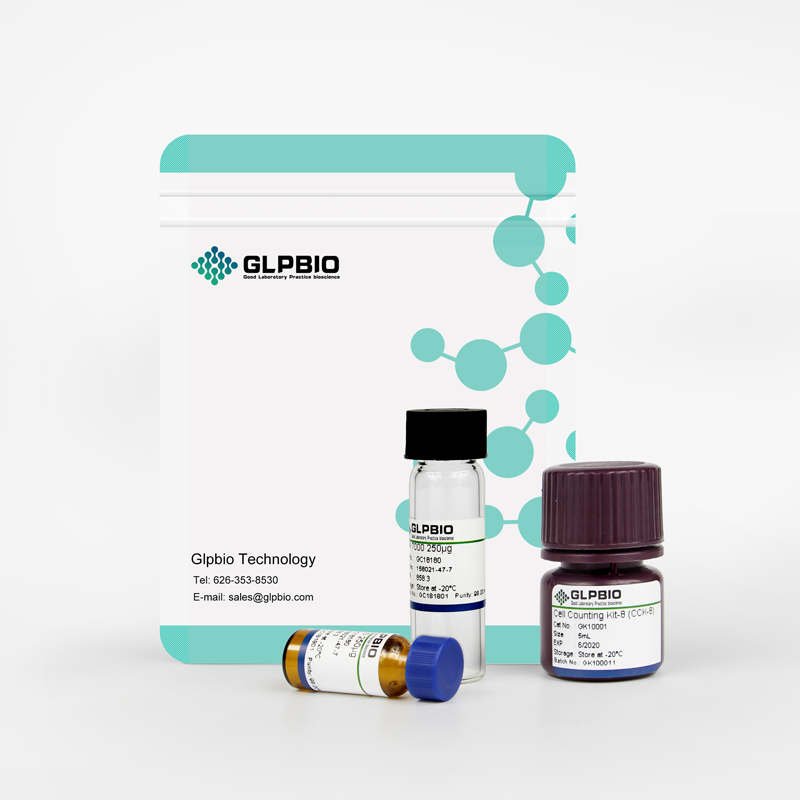
Sample solution is provided at 25 µL, 10mM.
_1-3.$$$39978408@51.jpg');)
_1-9.$$$38538795@65.jpg');)
_1-9.$$$39112701@51.jpg');)
_1-7.$$$37316672@70.jpg');)
_366-372.$$$36198801@70.jpg');)
.$$$38565142@65.jpg');)
_1867-1883.$$$33248023@67.jpg');)
_eads6055.$$$39977546@45.jpg');)
_eadm9805.$$$40080571@45.jpg');)
_eadj3020.$$$39666821@45.jpg');)
_1-20.$$$39757301@28.jpg');)
_1-24.$$$38898113@28.jpg');)
_273-287.$$$36806353@46.jpg');)
_1-16.$$$37156877@44.jpg');)
_1-19.$$$37460805@44.jpg');)
_1291-1307.$$$34518654@46.jpg');)
In Vivo, MS6076 (50 mg/kg; i.p.; single dose) is bioavailable and well tolerated in male Swiss Albino mice[1].
In Vitro, MS6076 (0.313-10.0 μM; 15 min) stabilizes human ClpP in MDA-MB-468 cell lysates more potently than ONC212, with effective stabilization observed at 0.313 μM[1]. MS6076 (1.0-10.0 μM; 2 min) binds and stabilizes purified human ClpP, as measured by a significant increase in thermal shift[1]. MS6076 (0.078-5.0 μM; 30 min) demonstrates potent cellular permeability and ClpP binding in live MDA-MB-468 cells[1]. MS6076 (25-200 nM; 24 h) activates ClpP-mediated proteolysis to degrade DAP13 in MDA-MB-468 cells[1]. MS6076 (50 nM; 12-48 h) disrupts mitochondrial respiration (basal, ATP-linked, and maximal) in MDA-MB-468 cells[1]. MS6076 (1.0 μM; 72 h) effectively induces apoptosis in MDA-MB-468 cells at 1.0 μM over 72 h, as evidenced by increased cleavage of caspase 3 and PARP[1]. MS6076 (72 h) potently reduces MDA-MB-468 breast cancer cell viability with an IC50 of 10.6 nM over 72 h[1]. MS6076 (72 h) potently reduces viability across multiple breast cancer cell lines, with IC50 values ranging from 7.0 to 13.9 nM[1]. MS6076 (72 h) potently reduces viability of ONC212-resistant MDA-MB-468 breast cancer cells with an IC50 of 27.7 nM[1].
References:
[1]. Xu Z, et al. Targeting the Mitochondrial Protease ClpP for Anticancer Therapy. J Med Chem. 2025;68(20):21377-21393.
| Cas No. | SDF | ||
| Formula | C27H27F3N6O2 | M.Wt | 524.54 |
| Solubility | Storage | Store at -20°C | |
| Shipping Condition | Evaluation sample solution: shipped with blue ice. All other sizes available: with RT, or with Blue Ice upon request. | ||
| Prepare stock solution | |||

|
1 mg | 5 mg | 10 mg |
| 1 mM | 1.9064 mL | 9.5322 mL | 19.0643 mL |
| 5 mM | 381.3 μL | 1.9064 mL | 3.8129 mL |
| 10 mM | 190.6 μL | 953.2 μL | 1.9064 mL |
Step 1: Enter information below (Recommended: An additional animal making an allowance for loss during the experiment)
 g
μL
g
μL
Step 2: Enter the in vivo formulation (This is only the calculator, not formulation. Please contact us first if there is no in vivo formulation at the solubility Section.)
Calculation results:
Working concentration: mg/ml;
Method for preparing DMSO master liquid: mg drug pre-dissolved in μL DMSO ( Master liquid concentration mg/mL, Please contact us first if the concentration exceeds the DMSO solubility of the batch of drug. )
Method for preparing in vivo formulation: Take μL DMSO master liquid, next addμL PEG300, mix and clarify, next addμL Tween 80, mix and clarify, next add μL saline, mix and clarify.
Method for preparing in vivo formulation: Take μL DMSO master liquid, next add μL Corn oil, mix and clarify.
Note: 1. Please make sure the liquid is clear before adding the next solvent.
2. Be sure to add the solvent(s) in order. You must ensure that the solution obtained, in the previous addition, is a clear solution before proceeding to add the next solvent. Physical methods such as vortex, ultrasound or hot water bath can be used to aid dissolving.
3. All of the above co-solvents are available for purchase on the GlpBio website.
Quality Control & SDS
- View current batch:
- Purity: >98.00% Appearance: A solid
- COA (Certificate of Analysis)
- SDS (Safety Data Sheet)
- Datasheet
Average Rating: 5 (Based on Reviews and 30 reference(s) in Google Scholar.)