

TPI-1 (Synonyms: Tyrosine Phosphatase Inhibitor 1) |
Catalog No.GC18239
 One-Click Copy Product Info
|

TPI-1 (tyrosine phosphatase inhibitor 1) is a SHP-1 inhibitor (IC50 = 40nM) and can be used to study melanomas.
Products are for research use only. Not for human use. We do not sell to patients.
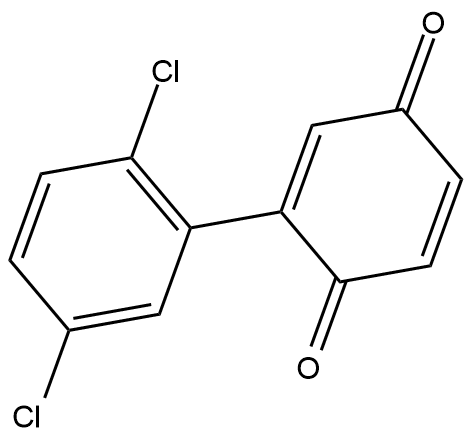
Cas No.: 79756-69-7
Sample solution is provided at 25 µL, 10mM.
_1-3.$$$39978408@51.jpg');)
_1-9.$$$38538795@65.jpg');)
_1-9.$$$39112701@51.jpg');)
_1-7.$$$37316672@70.jpg');)
_366-372.$$$36198801@70.jpg');)
.$$$38565142@65.jpg');)
_1867-1883.$$$33248023@67.jpg');)
_eads6055.$$$39977546@45.jpg');)
_eadm9805.$$$40080571@45.jpg');)
_eadj3020.$$$39666821@45.jpg');)
_1-20.$$$39757301@28.jpg');)
_1-24.$$$38898113@28.jpg');)
_273-287.$$$36806353@46.jpg');)
_1-16.$$$37156877@44.jpg');)
_1-19.$$$37460805@44.jpg');)
_1291-1307.$$$34518654@46.jpg');)
TPI-1 (tyrosine phosphatase inhibitor 1) is a SHP-1 inhibitor (IC50 = 40nM) and can be used to study melanomas[1].
TPI-1 (0.01μg/ml, 0.1μg/ml, 1μg/ml, and 3μg/ml; 10min) selectively increases SHP-1 phospho-substrates in Jurkat T cells at low nM (0.01-0.1μg/ml)[1]. TPI-1 (5μM, 30min) increased macrophage phagocytosis through activating STAT3 and STAT6 signaling pathways[2]. TPI-1 (5μM, 2h) could reverse the decreased phosphorylation of both ERK and STAT3 and restore NK cell cytotoxicity under hypoxia in the NK cell line KHYG-1[3].
TPI-1 (1 or 3mg/kg/day, 4 days, s.c.) increases spleen pLck-pY394 and IFNγ+ cells in C57BL/6J mice[1]. TPI-1 (3mg/kg/d, 5 days/week, terminated by the third week, p.o.) inhibited tumor growth, inducing approximately 83% growth inhibition (p < 0.002) compared to the control in the B16 melanoma mouse model[1].
References:
[1] Kundu S, Fan K, Cao M, et al. Novel SHP-1 inhibitors tyrosine phosphatase inhibitor-1 and analogs with preclinical anti-tumor activities as tolerated oral agents. The Journal of Immunology. 2010 Jun 1;184(11):6529-36.
[2] Shen Q, Zhao L, Pan L, et al. Soluble SIRP-alpha promotes murine acute lung injury through suppressing macrophage phagocytosis. Frontiers in Immunology. 2022 May 12;13:865579.
[3] Teng R, Wang Y, Lv N, et al. Hypoxia Impairs NK Cell Cytotoxicity through SHP‐1‐Mediated Attenuation of STAT3 and ERK Signaling Pathways. Journal of Immunology Research. 2020;2020(1):4598476.
| Cell experiment [1]: | |
|
Cell lines |
Jurkat human T cell line |
|
Preparation Method |
Jurkat cells in culture medium (3×10⁶ cells/ml) were untreated or treated with TPI-1 at various doses (0.01μg/ml, 0.1μg/ml, 1μg/ml, and 3μg/ml) for 10min. After brief centrifuging in a microfuge (4,000rpm, 2min), the cell pellet was lysed on ice for 30min in 100µl of cold lysis buffer (1% NP40, 50mM Tris, pH 7.4, 150mM NaCl, 20mM NaF, 0.2mM Na3VO4 and 1mM Na3MO4) containing a cocktail of proteinase inhibitors. The lysates were cleared by centrifuging (14,000rpm, 10min) in a microfuge at 4°C to remove insoluble parts, mixed with equal volume of 2×SDS-PAGE sample buffer, boiled for 5min and analyzed by SDS-PAGE/Western blotting. |
|
Reaction Conditions |
0.01μg/ml, 0.1μg/ml, 1μg/ml, and 3μg/ml; 10min |
|
Applications |
TPI-1 selectively increases SHP-1 phospho-substrates in Jurkat T cells at low nM (0.01-0.1μg/ml). |
| Animal experiment [1]: | |
|
Animal models |
B16 Melanoma mouse model |
|
Preparation Method |
C57BL/B6 mice (n = 5) were inoculated (s.c.) at the flanks with B16 murine melanoma cells. Four days post-inoculation, the mice were treated with oral TPI-1 (3mg/kg/d, 5 days/week). Tumor volumes were measured during the study period and calculated using the formula for a prolate spheroid (V= 4/3 πa2b). |
|
Dosage form |
3mg/kg/d, 5 days/week, terminated by the third week, p.o. |
|
Applications |
TPI-1 inhibited tumor growth, inducing approximately 83% growth inhibition (p < 0.002) compared to the control in the B16 melanoma mouse model. |
|
References: |
|
| Cas No. | 79756-69-7 | SDF | |
| Synonyms | Tyrosine Phosphatase Inhibitor 1 | ||
| Chemical Name | 2-(2,5-dichlorophenyl)-2,5-cyclohexadiene-1,4-dione | ||
| Canonical SMILES | ClC1=C(C(C(C=C2)=O)=CC2=O)C=C(Cl)C=C1 | ||
| Formula | C12H6Cl2O2 | M.Wt | 253.1 |
| Solubility | DMF: 30 mg/ml,DMSO: 30 mg/ml,Ethanol: 1 mg/ml | Storage | Store at -20°C |
| General tips | Please select the appropriate solvent to prepare the stock solution according to the
solubility of the product in different solvents; once the solution is prepared, please store it in
separate packages to avoid product failure caused by repeated freezing and thawing.Storage method
and period of the stock solution: When stored at -80°C, please use it within 6 months; when stored
at -20°C, please use it within 1 month. To increase solubility, heat the tube to 37°C and then oscillate in an ultrasonic bath for some time. |
||
| Shipping Condition | Evaluation sample solution: shipped with blue ice. All other sizes available: with RT, or with Blue Ice upon request. | ||
| Prepare stock solution | |||

|
1 mg | 5 mg | 10 mg |
| 1 mM | 3.951 mL | 19.755 mL | 39.5101 mL |
| 5 mM | 790.2 μL | 3.951 mL | 7.902 mL |
| 10 mM | 395.1 μL | 1.9755 mL | 3.951 mL |
Step 1: Enter information below (Recommended: An additional animal making an allowance for loss during the experiment)
 g
μL
g
μL
Step 2: Enter the in vivo formulation (This is only the calculator, not formulation. Please contact us first if there is no in vivo formulation at the solubility Section.)
Calculation results:
Working concentration: mg/ml;
Method for preparing DMSO master liquid: mg drug pre-dissolved in μL DMSO ( Master liquid concentration mg/mL, Please contact us first if the concentration exceeds the DMSO solubility of the batch of drug. )
Method for preparing in vivo formulation: Take μL DMSO master liquid, next addμL PEG300, mix and clarify, next addμL Tween 80, mix and clarify, next add μL saline, mix and clarify.
Method for preparing in vivo formulation: Take μL DMSO master liquid, next add μL Corn oil, mix and clarify.
Note: 1. Please make sure the liquid is clear before adding the next solvent.
2. Be sure to add the solvent(s) in order. You must ensure that the solution obtained, in the previous addition, is a clear solution before proceeding to add the next solvent. Physical methods such as vortex, ultrasound or hot water bath can be used to aid dissolving.
3. All of the above co-solvents are available for purchase on the GlpBio website.
Quality Control & SDS
- View current batch:
- Purity: >98.00% Appearance: A solid
- COA (Certificate of Analysis)
- SDS (Safety Data Sheet)
- Datasheet
Average Rating: 5 (Based on Reviews and 33 reference(s) in Google Scholar.)