

TTA-Q6 |
Catalog No.GC30950
 One-Click Copy Product Info
|

TTA-Q6 is a selective antagonist of T-type Ca2+ channel and can be used in neurological research.
Products are for research use only. Not for human use. We do not sell to patients.
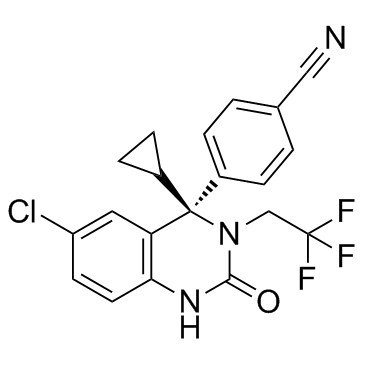
Cas No.: 910484-28-5
Sample solution is provided at 25 µL, 10mM.
_1-3.$$$39978408@51.jpg');)
_1-9.$$$38538795@65.jpg');)
_1-9.$$$39112701@51.jpg');)
_1-7.$$$37316672@70.jpg');)
_366-372.$$$36198801@70.jpg');)
.$$$38565142@65.jpg');)
_1867-1883.$$$33248023@67.jpg');)
_eads6055.$$$39977546@45.jpg');)
_eadm9805.$$$40080571@45.jpg');)
_eadj3020.$$$39666821@45.jpg');)
_1-20.$$$39757301@28.jpg');)
_1-24.$$$38898113@28.jpg');)
_273-287.$$$36806353@46.jpg');)
_1-16.$$$37156877@44.jpg');)
_1-19.$$$37460805@44.jpg');)
_1291-1307.$$$34518654@46.jpg');)
TTA-Q6 is a selective antagonist of T-type Ca2+ channel and can be used in neurological research[1].
In vivo, TTA-Q6 (10mg/kg; p.o.; once) significantly inhibited seizures in the WAG/Rij rat model of epilepsy[2]. Oral administration of TTA-Q6 (10mg/kg) prior to the sleep period produced a further suppression of active wakefulness for 0.5 to 2 hours after dosing in rats[2]. TTA-Q6 (1, 3, or 10mg/kg; p.o.; once) dose-dependently reduced amphetamine-induced psychomotor activity in SD rats[3].
References:
[1] Schlegel KA, Yang ZQ, et,al.Discovery and expanded SAR of 4,4-disubstituted quinazolin-2-ones as potent T-type calcium channel antagonists. Bioorg Med Chem Lett. 2010 Sep 1;20(17):5147-52.
[2] Barrow JC, Rittle KE, et,al. Discovery of 4,4-Disubstituted Quinazolin-2-ones as T-Type Calcium Channel Antagonists. ACS Med Chem Lett. 2010 Feb 1;1(2):75-9.
[3] Uslaner JM, Smith SM, et,al. T-type calcium channel antagonism produces antipsychotic-like effects and reduces stimulant-induced glutamate release in the nucleus accumbens of rats. Neuropharmacology. 2012 Mar;62(3):1413-21.
| Animal experiment [1]: | |
|
Animal models |
WAG/Rij epilepsy model SD rat |
|
Preparation Method |
To evaluate the effects of T-type antagonists on sleep and wake, telemetric recordings of electrocorticogram (ECoG) and electromyogram (EMG) signals were measured in rats. Vehicle or TTA-Q6 was dosed orally every day, 30min before the inactive phase. The ECoG and EMG signals were collected and scored for the amount of time awake or each phase of sleep. |
|
Dosage form |
10mg/kg; p.o.; once |
|
Applications |
A 10mg/kg dose of TTA-Q6 to rats right before their sleep period produced a further suppression of active wake for 0.5-2h after dosing. |
References: [1] Barrow JC, Rittle KE, et,al. Discovery of 4,4-Disubstituted Quinazolin-2-ones as T-Type Calcium Channel Antagonists. ACS Med Chem Lett. 2010 Feb 1;1(2):75-9. | |
| Cas No. | 910484-28-5 | SDF | |
| Canonical SMILES | N#CC1=CC=C([C@]2(C3CC3)N(CC(F)(F)F)C(NC4=C2C=C(Cl)C=C4)=O)C=C1 | ||
| Formula | C20H15ClF3N3O | M.Wt | 405.8 |
| Solubility | DMSO : 125 mg/mL (308.03 mM) | Storage | Store at -20°C |
| Shipping Condition | Evaluation sample solution: shipped with blue ice. All other sizes available: with RT, or with Blue Ice upon request. | ||
| Prepare stock solution | |||

|
1 mg | 5 mg | 10 mg |
| 1 mM | 2.4643 mL | 12.3213 mL | 24.6427 mL |
| 5 mM | 492.9 μL | 2.4643 mL | 4.9285 mL |
| 10 mM | 246.4 μL | 1.2321 mL | 2.4643 mL |
Step 1: Enter information below (Recommended: An additional animal making an allowance for loss during the experiment)
 g
μL
g
μL
Step 2: Enter the in vivo formulation (This is only the calculator, not formulation. Please contact us first if there is no in vivo formulation at the solubility Section.)
Calculation results:
Working concentration: mg/ml;
Method for preparing DMSO master liquid: mg drug pre-dissolved in μL DMSO ( Master liquid concentration mg/mL, Please contact us first if the concentration exceeds the DMSO solubility of the batch of drug. )
Method for preparing in vivo formulation: Take μL DMSO master liquid, next addμL PEG300, mix and clarify, next addμL Tween 80, mix and clarify, next add μL saline, mix and clarify.
Method for preparing in vivo formulation: Take μL DMSO master liquid, next add μL Corn oil, mix and clarify.
Note: 1. Please make sure the liquid is clear before adding the next solvent.
2. Be sure to add the solvent(s) in order. You must ensure that the solution obtained, in the previous addition, is a clear solution before proceeding to add the next solvent. Physical methods such as vortex, ultrasound or hot water bath can be used to aid dissolving.
3. All of the above co-solvents are available for purchase on the GlpBio website.
Quality Control & SDS
- View current batch:
- Purity: >99.50% Appearance: A solid
- COA (Certificate of Analysis)
- SDS (Safety Data Sheet)
- Datasheet
Average Rating: 5 (Based on Reviews and 34 reference(s) in Google Scholar.)