

VB124 |
Catalog No.GC63496
 One-Click Copy Product Info
|

VB124 is a safe, effective and orally active selective monocarboxylate transport protein 4(MCT4) inhibitor. VB124 blocks the input (IC50 = 8.6nM) and output (IC50 = 19nm) of lactic acid in MDA-MB-231 cells.
Products are for research use only. Not for human use. We do not sell to patients.
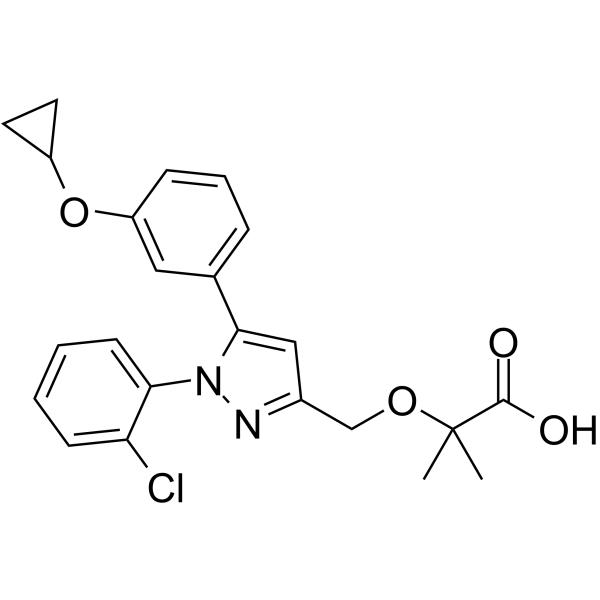
Cas No.: 2230186-18-0
Sample solution is provided at 25 µL, 10mM.
_1-3.$$$39978408@51.jpg');)
_1-9.$$$38538795@65.jpg');)
_1-9.$$$39112701@51.jpg');)
_1-7.$$$37316672@70.jpg');)
_366-372.$$$36198801@70.jpg');)
.$$$38565142@65.jpg');)
_1867-1883.$$$33248023@67.jpg');)
_eads6055.$$$39977546@45.jpg');)
_eadm9805.$$$40080571@45.jpg');)
_eadj3020.$$$39666821@45.jpg');)
_1-20.$$$39757301@28.jpg');)
_1-24.$$$38898113@28.jpg');)
_273-287.$$$36806353@46.jpg');)
_1-16.$$$37156877@44.jpg');)
_1-19.$$$37460805@44.jpg');)
_1291-1307.$$$34518654@46.jpg');)
VB124 is a safe, effective and orally active selective monocarboxylate transport protein 4(MCT4) inhibitor. VB124 blocks the input (IC50 = 8.6nM) and output (IC50 = 19nm) of lactic acid in MDA-MB-231 cells[1].
In vitro, mouse primary cardiomyocytes (ACM) subjected to hypoxia-reoxygenation were treated with VB124 to mitigate intracellular reactive oxygen species (ROS) levels and reduce cardiomyocyte apoptosis[2]. Treatment of HMCC97H and Hepa1-6 cells with VB124 (2,10μM) significantly inhibited lactic acid effusion caused by MCT4, reduced extracellular lactic acid levels, and further led to a decrease in glucose uptake and an increase in glutamine uptake[3].
In vivo, a single-dose oral administration of VB124 (30mg/kg) by gavage was used to create an acute cardiac ischemia-reperfusion model in mice. VB124 inhibited MCT4, resulting in a decrease in intracellular lactate and pyruvate levels, further exacerbating hypoxic injury caused by acute cardiac ischemia-reperfusion (I/R) in mice[2,4].
References:
[1]Cluntun AA, Badolia R, Lettlova S, Parnell KM, Shankar TS, Diakos NA, Olson KA, Taleb I, Tatum SM, Berg JA, Cunningham CN, Van Ry T, Bott AJ, Krokidi AT, Fogarty S, Skedros S, Swiatek WI, Yu X, Luo B, Merx S, Navankasattusas S, Cox JE, Ducker GS, Holland WL, McKellar SH, Rutter J, Drakos SG. The pyruvate-lactate axis modulates cardiac hypertrophy and heart failure. Cell Metab. 2021 Mar 2;33(3):629-648.e10.
[2] Visker JR, Cluntun AA, Velasco-Silva JN, Eberhardt DR, Cedeño-Rosario L, Shankar TS, Hamouche R, Ling J, Kwak H, Hillas JY, Aist I, Tseliou E, Navankasattusas S, Chaudhuri D, Ducker GS, Drakos SG, Rutter J. Enhancing mitochondrial pyruvate metabolism ameliorates ischemic reperfusion injury in the heart. JCI Insight. 2024 Jul 25;9(17):e180906.
[3]Fang Y, Liu W, Tang Z, Ji X, Zhou Y, Song S, Tian M, Tao C, Huang R, Zhu G, Jiang X, Gao J, Qu W, Wang H, Zhou P, Wu X, Jin L, Sun H, Ding Z, Peng Y, Zhao S, Zhou J, Fan J, Xu W, Shi Y. Monocarboxylate transporter 4 inhibition potentiates hepatocellular carcinoma immunotherapy through enhancing T cell infiltration and immune attack. Hepatology. 2023 Jan 1;77(1):109-123.
[4]Tuineau MN, Herbert LM, Garcia SM, Resta TC, Jernigan NL. Enhanced glycolysis causes extracellular acidification and activates acid-sensing ion channel 1a in hypoxic pulmonary hypertension. Am J Physiol Lung Cell Mol Physiol. 2024 Oct 1;327(4):L439-L451.
| Cell experiment [1]: | |
Cell lines | MDA-MB-231 |
Preparation Method | MCT4 and MCT1 lactate transport assays that use the pH-sensitive fluorescent dye 2′−7′-bis(carboxyethyl)-5(6)-carboxyfluorescein (BCECF) to detect changes in intracellular pH (pHi) accompanying MCT-mediated lactate/proton symport, were developed in a manner similar to that reported previously.To measure lactate import, 2.5μL BCECF-loaded cells, along with either 10μL DMSO or 100x compound in DMSO, were added to 937.5μL of Tyrode’s Solution in a quartz 1.0mL cuvette. Fluorescence measurements are performed on a PerkinElmer LS55 fluorescence spectrometer with dual excitation wavelengths achieved using a filter wheel. After establishing baseline BCECF fluorescence (around 10–20s), 50μL of M sodium L-lactate was added to the cuvette (final concentration: 50mM) and rapidly mixed. The time-dependent decrease in BCECF fluorescence (490/440 ratio) was fit to an exponential decay curve to determine the rate of lactate transport. Lactate export was measured similarly to import. |
Reaction Conditions | MCT4-mediated import:0-3.3μM; MCT4-mediated export:0-10μM; |
Applications | VB124 treatment reduces intracellular reactive oxygen species (ROS) levels and decreases cardiomyocyte death. |
| Animal experiment [2]: | |
Animal models | C57BL/6J |
Preparation Method | To test this, we replicated our I/R protocol administering either a single dose of placebo or VB124 (30 mg/kg) via oral gavage prior to performing I/R. Unlike in the acute model, the mice were permitted to recover after surgery, and we performed serial echocardiography over a 3-week period to assess cardiac structure and function . |
Dosage form | 30mg/kg; i.g; |
Applications | VB124 inhibits MCT4, resulting in a decrease in intracellular lactate and pyruvate levels, further exacerbating hypoxic injury caused by acute cardiac ischemia-reperfusion (I/R) in mice. |
References: | |
| Cas No. | 2230186-18-0 | SDF | |
| Formula | C23H23ClN2O4 | M.Wt | 426.89 |
| Solubility | DMSO : 100 mg/mL (234.25 mM; Need ultrasonic) | Storage | Store at -20°C |
| General tips | Please select the appropriate solvent to prepare the stock solution according to the
solubility of the product in different solvents; once the solution is prepared, please store it in
separate packages to avoid product failure caused by repeated freezing and thawing.Storage method
and period of the stock solution: When stored at -80°C, please use it within 6 months; when stored
at -20°C, please use it within 1 month. To increase solubility, heat the tube to 37°C and then oscillate in an ultrasonic bath for some time. |
||
| Shipping Condition | Evaluation sample solution: shipped with blue ice. All other sizes available: with RT, or with Blue Ice upon request. | ||
| Prepare stock solution | |||

|
1 mg | 5 mg | 10 mg |
| 1 mM | 2.3425 mL | 11.7126 mL | 23.4252 mL |
| 5 mM | 468.5 μL | 2.3425 mL | 4.685 mL |
| 10 mM | 234.3 μL | 1.1713 mL | 2.3425 mL |
Step 1: Enter information below (Recommended: An additional animal making an allowance for loss during the experiment)
 g
μL
g
μL
Step 2: Enter the in vivo formulation (This is only the calculator, not formulation. Please contact us first if there is no in vivo formulation at the solubility Section.)
Calculation results:
Working concentration: mg/ml;
Method for preparing DMSO master liquid: mg drug pre-dissolved in μL DMSO ( Master liquid concentration mg/mL, Please contact us first if the concentration exceeds the DMSO solubility of the batch of drug. )
Method for preparing in vivo formulation: Take μL DMSO master liquid, next addμL PEG300, mix and clarify, next addμL Tween 80, mix and clarify, next add μL saline, mix and clarify.
Method for preparing in vivo formulation: Take μL DMSO master liquid, next add μL Corn oil, mix and clarify.
Note: 1. Please make sure the liquid is clear before adding the next solvent.
2. Be sure to add the solvent(s) in order. You must ensure that the solution obtained, in the previous addition, is a clear solution before proceeding to add the next solvent. Physical methods such as vortex, ultrasound or hot water bath can be used to aid dissolving.
3. All of the above co-solvents are available for purchase on the GlpBio website.
Quality Control & SDS
- View current batch:
- Purity: >99.00% Appearance: A solid
- COA (Certificate of Analysis)
- SDS (Safety Data Sheet)
- Datasheet
Average Rating: 5 (Based on Reviews and 26 reference(s) in Google Scholar.)