

Xylazine |
Catalog No.GC12073
 One-Click Copy Product Info
|

Xylazine (BAY 1470) is a potent agonist of α2-adrenergic receptors and is widely used as a sedative in veterinary medicine. It can also induce muscle relaxation.
Products are for research use only. Not for human use. We do not sell to patients.
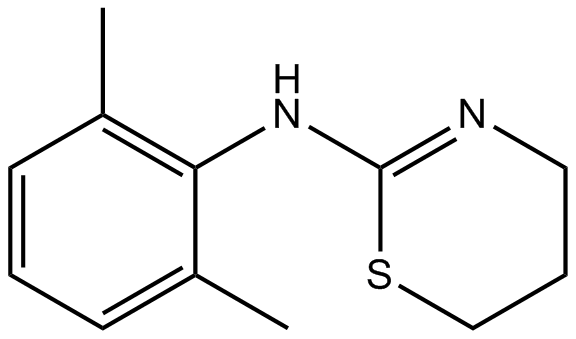
Cas No.: 7361-61-7
Sample solution is provided at 25 µL, 10mM.
_1-3.$$$39978408@51.jpg');)
_1-9.$$$38538795@65.jpg');)
_1-9.$$$39112701@51.jpg');)
_1-7.$$$37316672@70.jpg');)
_366-372.$$$36198801@70.jpg');)
.$$$38565142@65.jpg');)
_1867-1883.$$$33248023@67.jpg');)
_eads6055.$$$39977546@45.jpg');)
_eadm9805.$$$40080571@45.jpg');)
_eadj3020.$$$39666821@45.jpg');)
_1-20.$$$39757301@28.jpg');)
_1-24.$$$38898113@28.jpg');)
_273-287.$$$36806353@46.jpg');)
_1-16.$$$37156877@44.jpg');)
_1-19.$$$37460805@44.jpg');)
_1291-1307.$$$34518654@46.jpg');)
Xylazine (BAY 1470) is a potent agonist of α2-adrenergic receptors and is widely used as a sedative in veterinary medicine. It can also induce muscle relaxation[1, 2]. Xylazine is often co-administered with ketamine for safe and effective anesthesia of small experimental animals[3].
In vitro, Xylazine (0.9, 1.8, 2.7, 3.6, 4.5, 5.4, 6.3μM) treatment of PC12 cells for 3h significantly reduced cell viability. When the dose was 4.5μM, the cell survival rate was 61%. It also inhibited the expression of extracellular regulated protein kinase (ERK) and protein kinase A (PKA)[4]. Xylazine (1, 4, 25mg/mL) was used to treat horse articular chondrocytes for 15min, which reduced cell viability in a dose-dependent manner. At a dose of 25mg/mL, cells showed apoptotic morphologies such as cell shrinkage, membrane blebbing, nuclear chromatin condensation, and nuclear fragmentation[5].
In vivo, Xylazine (5.2mg/kg) was used to treat SD rats by intraperitoneal injection for 10-60min. When the rats were killed 40min after administration, the mRNA level of liver kinase B1 (LKB1) in the brainstem was significantly reduced, while the mRNA level of LKB1 in the cerebral cortex, hippocampus, thalamus, and cerebellum was significantly increased[6].
References:
[1] Park J W, Chung H W, Lee E J, et al. α2-Adrenergic agonists including xylazine and dexmedetomidine inhibit norepinephrine transporter function in SK-N-SH cells[J]. Neuroscience Letters, 2013, 541: 184-189.
[2] Da Silveira J G, Cappelari B E, Varela A P M, et al. Evaluation of the effects of acepromazine and xylazine on viability in an equine dermal cell line[J]. Acta Veterinaria Brasilica, 2020, 14(4).
[3] Saha J K, Xia J, Grondin J M, et al. Acute hyperglycemia induced by ketamine/xylazine anesthesia in rats: mechanisms and implications for preclinical models[J]. Experimental Biology and Medicine, 2005, 230(10): 777-784.
[4] Zhao J, Zhang Y, Liu W, et al. Molecular mechanisms of the sedation and analgesia induced by xylazine on Wistar rats and PC12 cell[J]. Experimental animals, 2019, 68(3): 351-360.
[5] Mancini F, Nannarone S, Buratta S, et al. Effects of xylazine and dexmedetomidine on equine articular chondrocytes in vitro[J]. Veterinary anaesthesia and analgesia, 2017, 44(2): 295-308.
[6] Shi X X, Yin B S, Yang P, et al. Xylazine activates adenosine monophosphate-activated protein kinase pathway in the central nervous system of rats[J]. PLoS One, 2016, 11(4): e0153169.
| Cell experiment [1]: | |
Cell lines | PC12 cells |
Preparation Method | 100μl (approximately 1×10⁴ cells) of cell suspension was added to wells of a 96-well plate. The plate was pre-incubated in the incubator for 24h. Then, 100μl of cell culture medium containing different concentrations of Xylazine (0.9, 1.8, 2.7, 3.6, 4.5, 5.4, 6.3μM) was added to the plate. CCK-8 solution was added to each well at 3h after adding Xylazine, and incubated for 1-4h. The absorbance at 450nm was measured using a microplate reader. |
Reaction Conditions | 0.9, 1.8, 2.7, 3.6, 4.5, 5.4, 6.3μM; 3h |
Applications | Xylazine significantly reduced cell viability, and the cell survival rate reached 61% at a dose of 4.5μM. |
| Animal experiment [2]: | |
Animal models | Sprague-Dawley rats |
Preparation Method | Healthy male Sprague-Dawley rats (n=30) were randomly assigned to control or Xylazine groups. Six rats received intraperitoneal injection of saline (0.5mL, control group) and were sacrificed 10min later. Twenty-four rats in the Xylazine group were further subdivided into four groups. After receiving an injection of Xylazine (5.2mg/kg diluted in 0.5mL saline), the rats were sacrificed 10min(Xyl1 group), 20min(Xyl2 group), 40min(Xyl3 group) or 60min(Xyl4 group) respectively. Then the brains were immediately removed and placed in ice-cold slurry of 0.9% NaCl. Five brain structures were dissected under a microscope: cerebral cortex, cerebellum, hippocampus, thalamus and brainstem. Dissected tissues were immediately frozen in liquid nitrogen and stored at −80°C for pending analysis. |
Dosage form | 5.2mg/kg; i.p. |
Applications | Xylazine induced a significant decrease in the mRNA levels of LKB1 in the brainstem at 40min after rats received Xylazine, whereas a significant increase was observed in the cerebral cortex, hippocampus, thalamus, and cerebellum. |
References: | |
| Cas No. | 7361-61-7 | SDF | |
| Chemical Name | N-(2,6-dimethylphenyl)-5,6-dihydro-4H-1,3-thiazin-2-amine | ||
| Canonical SMILES | CC1=C(C(=CC=C1)C)NC2=NCCCS2 | ||
| Formula | C12H16N2S | M.Wt | 220.33 |
| Solubility | ≥ 9.8mg/mL in DMSO,insoluble in water and in alkali solutions | Storage | Store at -20°C |
| General tips | Please select the appropriate solvent to prepare the stock solution according to the
solubility of the product in different solvents; once the solution is prepared, please store it in
separate packages to avoid product failure caused by repeated freezing and thawing.Storage method
and period of the stock solution: When stored at -80°C, please use it within 6 months; when stored
at -20°C, please use it within 1 month. To increase solubility, heat the tube to 37°C and then oscillate in an ultrasonic bath for some time. |
||
| Shipping Condition | Evaluation sample solution: shipped with blue ice. All other sizes available: with RT, or with Blue Ice upon request. | ||
| Prepare stock solution | |||

|
1 mg | 5 mg | 10 mg |
| 1 mM | 4.5386 mL | 22.6932 mL | 45.3865 mL |
| 5 mM | 907.7 μL | 4.5386 mL | 9.0773 mL |
| 10 mM | 453.9 μL | 2.2693 mL | 4.5386 mL |
Step 1: Enter information below (Recommended: An additional animal making an allowance for loss during the experiment)
 g
μL
g
μL
Step 2: Enter the in vivo formulation (This is only the calculator, not formulation. Please contact us first if there is no in vivo formulation at the solubility Section.)
Calculation results:
Working concentration: mg/ml;
Method for preparing DMSO master liquid: mg drug pre-dissolved in μL DMSO ( Master liquid concentration mg/mL, Please contact us first if the concentration exceeds the DMSO solubility of the batch of drug. )
Method for preparing in vivo formulation: Take μL DMSO master liquid, next addμL PEG300, mix and clarify, next addμL Tween 80, mix and clarify, next add μL saline, mix and clarify.
Method for preparing in vivo formulation: Take μL DMSO master liquid, next add μL Corn oil, mix and clarify.
Note: 1. Please make sure the liquid is clear before adding the next solvent.
2. Be sure to add the solvent(s) in order. You must ensure that the solution obtained, in the previous addition, is a clear solution before proceeding to add the next solvent. Physical methods such as vortex, ultrasound or hot water bath can be used to aid dissolving.
3. All of the above co-solvents are available for purchase on the GlpBio website.
Quality Control & SDS
- View current batch:
- Purity: >98.00% Appearance: A solid
- COA (Certificate of Analysis)
- SDS (Safety Data Sheet)
- Datasheet
Average Rating: 5 (Based on Reviews and 18 reference(s) in Google Scholar.)