

CX 546 |
Catalog No.GC14495
 One-Click Copy Product Info
|

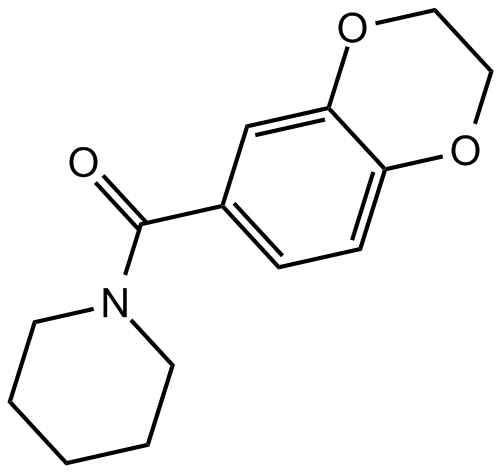
CX 546 is a potent activator of 3-hydroxy-5-methyl-4-isoxazolepropionic acid (AMPA) receptor, with an EC50 value of 93.2µM.
Products are for research use only. Not for human use. We do not sell to patients.
Cas No.: 215923-54-9
Sample solution is provided at 25 µL, 10mM.
_1-3.$$$39978408@51.jpg');)
_1-9.$$$38538795@65.jpg');)
_1-9.$$$39112701@51.jpg');)
_1-7.$$$37316672@70.jpg');)
_366-372.$$$36198801@70.jpg');)
.$$$38565142@65.jpg');)
_1867-1883.$$$33248023@67.jpg');)
_eads6055.$$$39977546@45.jpg');)
_eadm9805.$$$40080571@45.jpg');)
_eadj3020.$$$39666821@45.jpg');)
_1-20.$$$39757301@28.jpg');)
_1-24.$$$38898113@28.jpg');)
_273-287.$$$36806353@46.jpg');)
_1-16.$$$37156877@44.jpg');)
_1-19.$$$37460805@44.jpg');)
_1291-1307.$$$34518654@46.jpg');)
CX 546 is a potent activator of 3-hydroxy-5-methyl-4-isoxazolepropionic acid (AMPA) receptor, with an EC50 value of 93.2µM[1]. CX 546 greatly prolonged the duration of synaptic responses and hippocampal excitatory postsynaptic currents in animals[2]. CX 546 has been widely used as a regulator of central nervous system functions and is involved in influencing various energy metabolism pathways[3].
In vitro, CX 546 treatment at 50μM for 48 hours led to an increase in cell proliferation and enhanced viability in subventricular zone (SVZ) cells of mice[4]. CX 546 treatment at 200μM for 72 hours reversed the inhibition of viability caused by cisplatin (10μM) and reduced cell death[5].
In,vivo, CX 546 treatment (0.5mg/kg/day) via intraperitoneally administration into the infarction rat model for 4 weeks exacerbated the infarction symptoms and tissue damage, activated the TLR4/NF-κB pathway, and impaired the cardiac function[6]. A single intraperitoneal injection of CX 546 at a dose of 16mg/kg into newborn rats can effectively reverse the respiratory depression caused by opioid drugs and barbiturate drugs within 60min[7]. Intraperitoneally injecting a single dose of CX 546 (10mg/kg) into the rat model could suppress chronic neuropathic pain caused by acute noxious stimulus within 5 minutes[8].
References:
[1] Pellerin L, Magistretti P J. Ampakine™ CX546 bolsters energetic response of astrocytes: a novel target for cognitive‐enhancing drugs acting as α‐amino‐3‐hydroxy‐5‐methyl‐4‐isoxazolepropionic acid (AMPA) receptor modulators[J]. Journal of neurochemistry, 2005, 92(3): 668-677.
[2] Arai A C, Xia Y F, Rogers G, et al. Benzamide-type AMPA receptor modulators form two subfamilies with distinct modes of action[J]. The Journal of pharmacology and experimental therapeutics, 2002, 303(3): 1075-1085.
[3] Nagarajan N, Quast C, Boxall A R, et al. Mechanism and impact of allosteric AMPA receptor modulation by the AmpakineTM CX546[J]. Neuropharmacology, 2001, 41(6): 650-663.
[4] Schitine C, Xapelli S, Agasse F, et al. Ampakine CX546 increases proliferation and neuronal differentiation in subventricular zone stem/progenitor cell cultures[J]. European Journal of Neuroscience, 2012, 35(11): 1672-1683.
[5] Lomeli N, Pearre D C, Cruz M, et al. Cisplatin induces BDNF downregulation in middle-aged female rat model while BDNF enhancement attenuates cisplatin neurotoxicity[J]. Experimental neurology, 2024, 375: 114717.
[6] Li Z, Yu Z, Cui S, et al. AMPA receptor inhibition alleviates inflammatory response and myocardial apoptosis after myocardial infarction by inhibiting TLR4/NF-κB signaling pathway[J]. International Immunopharmacology, 2024, 133: 112080.
[7] Ren J, Poon B Y, Tang Y, et al. Ampakines alleviate respiratory depression in rats[J]. American journal of respiratory and critical care medicine, 2006, 174(12): 1384-1391.
[8] Talay R S, Liu Y, Michael M, et al. Pharmacological restoration of anti-nociceptive functions in the prefrontal cortex relieves chronic pain[J]. Progress in neurobiology, 2021, 201: 102001.
| Cell experiment [1]: | |
Cell lines | OVCAR8 cells |
Preparation Method | The established OVCAR8 cell line was cultured in RPMI 1640 medium, which contained 300mg/L l-glutamine, 10% fetal bovine serum and 1× penicillin/streptomycin. The cells were seeded at a density of approximately 1 × 10⁴ cells per well in transparent 96-well plates, with a final volume of 200μL. The culture plates were incubated at 37 °C and 5% CO2 exposed to 10μM Cisplatin with or without increasing concentrations of CX 546 (50μM, 100μM, 200μM, 300μM) for 72 hours. Cell viability was determined using a cell viability kit. |
Reaction Conditions | 50μM, 100μM, 200μM, 300μM; 72h |
Applications | CX 546 significantly reversed the inhibition of viability caused by cisplatin in a dose-dependent manner. |
| Animal experiment [2]: | |
Animal models | Sprague-Dawley (SD) rats |
Preparation Method | Male Sprague-Dawley (SD) rats were raised in a pathogen-free environment with a temperature of 20-22 °C and a relative humidity of 50-55%. The rats had free access to food and water. The rats were randomly divided into the following four groups: (1) Sham group; (2) Myocardial infarction group (MI), with the left coronary artery (left anterior descending branch [LAD]) ligated; (3) MI + CX 546 treatment group (MI + CX); (4) MI + NBQX treatment group (MI + NB). The second, third, and fourth groups underwent LAD ligation surgery. The rats that underwent the surgery were anesthetized intraperitoneally with a 3% pentobarbital sodium solution (2mL/kg) and had their tracheas intubated to support breathing. The Sham group only sutured the heart without ligation. The remaining rats underwent open-chest surgery and then ligated the left anterior descending branch (LAD), followed by closing the chest. The successful induction of the myocardial infarction model was confirmed by observing ST segment elevation on the electrocardiogram recorder or the appearance of pale areas in the proximal ventricular region at the distal end of the ligated line. After the surgery, all rats were intramuscularly injected with penicillin (200,000IU/day) for one week. CX 546 (0.5mg/kg/day) and NBQX (1mg/kg/day) were intraperitoneally injected into rats in groups (3) and (4) for 4 consecutive weeks after performing the LAD ligation procedure. The rats were anesthetized with a lethal dose and sacrificed, and their hearts were removed and rapidly fixed in 4% paraformaldehyde solution for more than 24 hours. The fixed heart tissues were embedded in paraffin and cut into 5μm thick sections. Masson's trichrome staining was used to observe the morphology of the heart tissue and evaluate the degree of fibrosis in the infarcted myocardium. |
Dosage form | 0.5mg/kg/day for 4 weeks; i.p. |
Applications | CX 546 treatment exacerbated the symptoms and tissue damage of the infarction in infarcted rats. |
References: | |
| Cas No. | 215923-54-9 | SDF | |
| Chemical Name | (2,3-dihydrobenzo[b][1,4]dioxin-6-yl)(piperidin-1-yl)methanone | ||
| Canonical SMILES | O=C(C1=CC=C2OCCOC2=C1)N3CCCCC3 | ||
| Formula | C14H17NO3 | M.Wt | 247.29 |
| Solubility | Soluble in DMSO | Storage | Store at -20°C |
| General tips | Please select the appropriate solvent to prepare the stock solution according to the
solubility of the product in different solvents; once the solution is prepared, please store it in
separate packages to avoid product failure caused by repeated freezing and thawing.Storage method
and period of the stock solution: When stored at -80°C, please use it within 6 months; when stored
at -20°C, please use it within 1 month. To increase solubility, heat the tube to 37°C and then oscillate in an ultrasonic bath for some time. |
||
| Shipping Condition | Evaluation sample solution: shipped with blue ice. All other sizes available: with RT, or with Blue Ice upon request. | ||
| Prepare stock solution | |||

|
1 mg | 5 mg | 10 mg |
| 1 mM | 4.0438 mL | 20.2192 mL | 40.4384 mL |
| 5 mM | 808.8 μL | 4.0438 mL | 8.0877 mL |
| 10 mM | 404.4 μL | 2.0219 mL | 4.0438 mL |
Step 1: Enter information below (Recommended: An additional animal making an allowance for loss during the experiment)
 g
μL
g
μL
Step 2: Enter the in vivo formulation (This is only the calculator, not formulation. Please contact us first if there is no in vivo formulation at the solubility Section.)
Calculation results:
Working concentration: mg/ml;
Method for preparing DMSO master liquid: mg drug pre-dissolved in μL DMSO ( Master liquid concentration mg/mL, Please contact us first if the concentration exceeds the DMSO solubility of the batch of drug. )
Method for preparing in vivo formulation: Take μL DMSO master liquid, next addμL PEG300, mix and clarify, next addμL Tween 80, mix and clarify, next add μL saline, mix and clarify.
Method for preparing in vivo formulation: Take μL DMSO master liquid, next add μL Corn oil, mix and clarify.
Note: 1. Please make sure the liquid is clear before adding the next solvent.
2. Be sure to add the solvent(s) in order. You must ensure that the solution obtained, in the previous addition, is a clear solution before proceeding to add the next solvent. Physical methods such as vortex, ultrasound or hot water bath can be used to aid dissolving.
3. All of the above co-solvents are available for purchase on the GlpBio website.
Quality Control & SDS
- View current batch:
- Purity: >99.00% Appearance: A solid
- COA (Certificate of Analysis)
- SDS (Safety Data Sheet)
- Datasheet
Average Rating: 5 (Based on Reviews and 26 reference(s) in Google Scholar.)