

Alternariol (Synonyms: AOH,NSC 638263) |
Catalog No.GC10779
 One-Click Copy Product Info
|

Alternariol is a mycotoxin produced by Alternariafungi, which is widely distributed in nature, particularly in grains, fruits, and vegetables under warm and humid conditions. Alternariol inhibits the catalytic activity of topoisomerase I and IIα, interferes with normal DNA function, and exhibits cytotoxicity, genotoxicity, mutagenicity, and endocrine-disrupting effects.
Products are for research use only. Not for human use. We do not sell to patients.
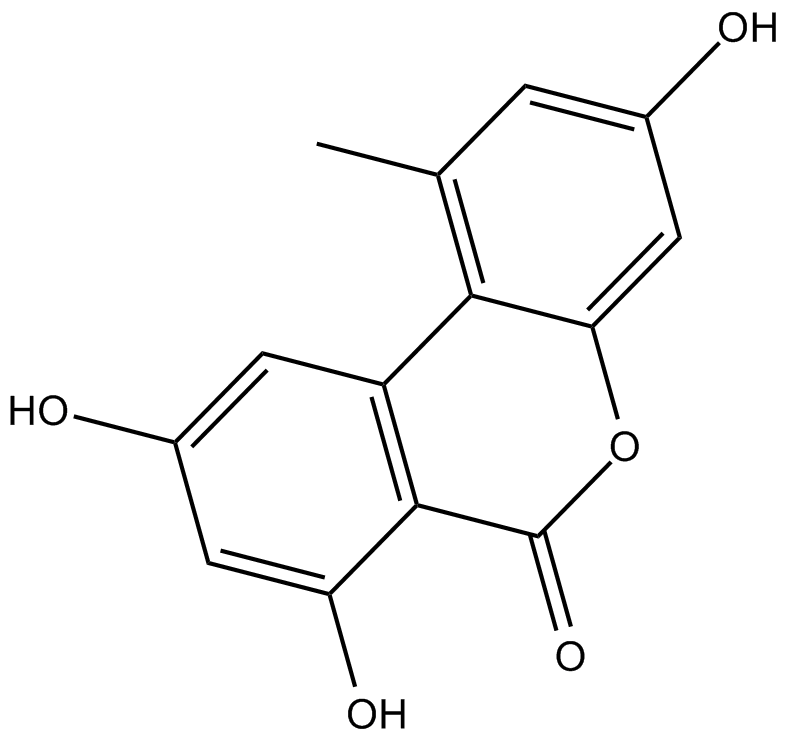
Cas No.: 641-38-3
Sample solution is provided at 25 µL, 10mM.
_1-3.$$$39978408@51.jpg');)
_1-9.$$$38538795@65.jpg');)
_1-9.$$$39112701@51.jpg');)
_1-7.$$$37316672@70.jpg');)
_366-372.$$$36198801@70.jpg');)
.$$$38565142@65.jpg');)
_1867-1883.$$$33248023@67.jpg');)
_eads6055.$$$39977546@45.jpg');)
_eadm9805.$$$40080571@45.jpg');)
_eadj3020.$$$39666821@45.jpg');)
_1-20.$$$39757301@28.jpg');)
_1-24.$$$38898113@28.jpg');)
_273-287.$$$36806353@46.jpg');)
_1-16.$$$37156877@44.jpg');)
_1-19.$$$37460805@44.jpg');)
_1291-1307.$$$34518654@46.jpg');)
Alternariol is a mycotoxin produced by Alternariafungi, which is widely distributed in nature, particularly in grains, fruits, and vegetables under warm and humid conditions[1]. Alternariol inhibits the catalytic activity of topoisomerase I and IIα, interferes with normal DNA function, and exhibits cytotoxicity, genotoxicity, mutagenicity, and endocrine-disrupting effects[2]. While demonstrating toxicity, Alternariol has also been found to possess various biological activities such as antimicrobial, anti-HIV, anticancer, and immunomodulatory properties[3-4].
In vitro, treatment of human colon adenocarcinoma Caco-2 cells with Alternariol (15–60μM) for 24–48 hours induced cell cycle arrest in the S and G2/M phases, accompanied by loss of mitochondrial membrane potential and necrotic/apoptotic cell death[5]. Treatment of mouse RAW 264.7 macrophages with Alternariol (15–30μM) for 24–48 hours resulted in G2/M phase cell cycle arrest, along with abnormal nuclear morphology and polyploid formation[6].
In vivo, a single topical application of Alternariol (12.5–50μg per mouse) to the skin of Swiss albino mice for 24 hours induced an increase in skin fold thickness, edema, epidermal hyperplasia, and inflammatory responses[7]. Dietary exposure of C57BL/6 mice to Alternariol (5–20μg/kg) for 90 days caused dose-dependent hepatotoxicity, characterized by an increased liver index, elevated serum ALT and AST levels, and histopathological alterations in liver tissue[8].
References:
[1] Siegel D, Troyanov S, Noack J, et al. Acta Crystallogr Sect E Struct Rep Online. 2010 May 15;66(Pt 6):o1366.
[2] Saleh I, Zeidan R, Abu-Dieyeh M. The characteristics, occurrence, and toxicological effects of alternariol: a mycotoxin. Arch Toxicol. 2024 Jun;98(6):1659-1683.
[3] Islam MT, Martorell M, González-Contreras C, et al. An updated overview of anticancer effects of alternariol and its derivatives: underlying molecular mechanisms. Front Pharmacol. 2023 Mar 23;14:1099380.
[4] Ding J, Zhao J, Yang Z, et al. Microbial Natural Product Alternariol 5-O-Methyl Ether Inhibits HIV-1 Integration by Blocking Nuclear Import of the Pre-Integration Complex. Viruses. 2017 May 10;9(5):105.
[5] Fernández-Blanco C, Juan-García A, Juan C, et al. Alternariol induce toxicity via cell death and mitochondrial damage on Caco-2 cells. Food Chem Toxicol. 2016 Feb;88:32-9.
[6] Solhaug A, Holme JA, Haglund K, et al. Alternariol induces abnormal nuclear morphology and cell cycle arrest in murine RAW 264.7 macrophages. Toxicol Lett. 2013 May 10;219(1):8-17.
[7] Bansal M, Singh N, Alam S, et al. Alternariol induced proliferation in primary mouse keratinocytes and inflammation in mouse skin is regulated via PGE2/EP2/cAMP/p-CREB signaling pathway. Toxicology. 2019 Jan 15;412:79-88.
[8] Yu S, Shen X, Huang Y, et al. Mycotoxin Alternariol Exposure Promotes Endoplasmic Reticulum Stress-induced Hepatotoxicity to Exacerbate Chronic Liver Injury. Environ Pollut. 2025 Oct 6:127217.
| Cell experiment [1]: | |
Cell lines | Caco-2 cells (human colon adenocarcinoma cell line) |
Preparation Method | Caco-2 cells were maintained in Dulbecco's Modified Eagle's Medium (DMEM) supplemented with 25mM HEPES buffer, 1% non-essential amino acids, 100U/mL penicillin, 100µg/mL streptomycin, and 10% fetal bovine serum at 37°C, 5% CO₂. Caco-2 cells were treated with Alternariol at sub-cytotoxic concentrations (15, 30, and 60µM) for 24 and 48 hours. |
Reaction Conditions | 15-60μM; 24-48 hours |
Applications | Alternariol significantly disrupted the cell cycle by decreasing the proportion of cells in the G1 phase and increasing accumulation in the S and G2/M phases in a dose- and time-dependent manner. Alternariol also induced necrosis and apoptosis/necrosis, as evidenced, and caused a loss of mitochondrial membrane potential indicating mitochondrial damage. |
| Animal experiment [2]: | |
Animal models | C57BL/6 mice |
Preparation Method | Male C57BL/6 mice (4-week-old) were fed a diet containing Alternariol (AOH) at doses of 5, 10, and 20µg/kg daily for 90 days. A separate intervention group received co-administration of Alternariol (10µg/kg) with Tauroursodeoxycholic acid (TUDCA, 500mg/kg) via drinking water. Mice were sacrificed after 90 days of exposure for analysis. |
Dosage form | 5, 10, and 20mg/kg; dietary administration. |
Applications | Alternariol exposure induced dose-dependent hepatotoxicity characterized by increased liver index, elevated serum ALT and AST levels, and histopathological liver injury including parenchymal congestion, sinusoidal dilatation, and inflammatory cell infiltration. |
References: | |
| Cas No. | 641-38-3 | SDF | |
| Synonyms | AOH,NSC 638263 | ||
| Chemical Name | 3,7,9-trihydroxy-1-methyl-6H-dibenzo[b,d]pyran-6-one | ||
| Canonical SMILES | CC1=C(C2=C(C(O3)=O)C(O)=CC(O)=C2)C3=CC(O)=C1 | ||
| Formula | C14H10O5 | M.Wt | 258.2 |
| Solubility | ≤0.5mg/ml in ethanol;30mg/ml in DMSO;30mg/ml in dimethyl formamide | Storage | Store at -20°C,protect from light |
| General tips | Please select the appropriate solvent to prepare the stock solution according to the
solubility of the product in different solvents; once the solution is prepared, please store it in
separate packages to avoid product failure caused by repeated freezing and thawing.Storage method
and period of the stock solution: When stored at -80°C, please use it within 6 months; when stored
at -20°C, please use it within 1 month. To increase solubility, heat the tube to 37°C and then oscillate in an ultrasonic bath for some time. |
||
| Shipping Condition | Evaluation sample solution: shipped with blue ice. All other sizes available: with RT, or with Blue Ice upon request. | ||
| Prepare stock solution | |||

|
1 mg | 5 mg | 10 mg |
| 1 mM | 3.873 mL | 19.3648 mL | 38.7297 mL |
| 5 mM | 774.6 μL | 3.873 mL | 7.7459 mL |
| 10 mM | 387.3 μL | 1.9365 mL | 3.873 mL |
Step 1: Enter information below (Recommended: An additional animal making an allowance for loss during the experiment)
 g
μL
g
μL
Step 2: Enter the in vivo formulation (This is only the calculator, not formulation. Please contact us first if there is no in vivo formulation at the solubility Section.)
Calculation results:
Working concentration: mg/ml;
Method for preparing DMSO master liquid: mg drug pre-dissolved in μL DMSO ( Master liquid concentration mg/mL, Please contact us first if the concentration exceeds the DMSO solubility of the batch of drug. )
Method for preparing in vivo formulation: Take μL DMSO master liquid, next addμL PEG300, mix and clarify, next addμL Tween 80, mix and clarify, next add μL saline, mix and clarify.
Method for preparing in vivo formulation: Take μL DMSO master liquid, next add μL Corn oil, mix and clarify.
Note: 1. Please make sure the liquid is clear before adding the next solvent.
2. Be sure to add the solvent(s) in order. You must ensure that the solution obtained, in the previous addition, is a clear solution before proceeding to add the next solvent. Physical methods such as vortex, ultrasound or hot water bath can be used to aid dissolving.
3. All of the above co-solvents are available for purchase on the GlpBio website.
Quality Control & SDS
- View current batch:
- Purity: >98.00% Appearance: A solid
- COA (Certificate of Analysis)
- SDS (Safety Data Sheet)
- Datasheet
Average Rating: 5 (Based on Reviews and 19 reference(s) in Google Scholar.)